Iran and Oman Near Final Deal on New Hormuz Route as Trump Halts Strikes for Quick Agreement
Tehran and Muscat progress towards a new maritime route, while US-Iran tensions impact global oil markets.

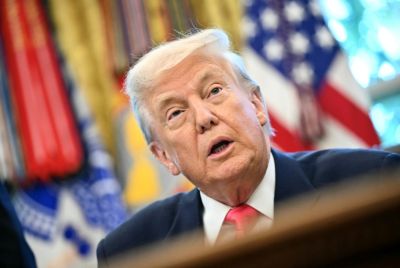
Iran's foreign minister said Sunday that negotiations with Oman over arrangements for the Strait of Hormuz have entered their final stages, as Tehran seeks a new maritime route that would recognize the sovereign rights of both coastal states. The announcement came hours after President Donald Trump said he had canceled planned U.S. strikes on Iran to allow time for a deal that would fully reopen the vital waterway.
Abbas Araghchi told Iran's cabinet that the talks with Muscat were "on the way to being finalised," according to a report he presented and later shared on Telegram. Foreign Ministry spokesman Esmail Baghaei said the two sides were close to an understanding on a route that is "neither the northern route nor the southern route" but one that "respects the sovereign rights of both sides and safeguards our national interests and security."
Baghaei emphasized that any agreement with Oman on a shipping corridor would not by itself reopen the strait. "The closure of the Strait of Hormuz was not because of Oman, but because of U.S. treaty violations, the naval blockade of Iran and the harassing actions the U.S. has taken against Iran," he said in a state television interview. Reopening the waterway, he added, remains a separate matter.
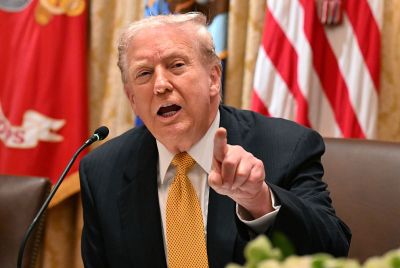
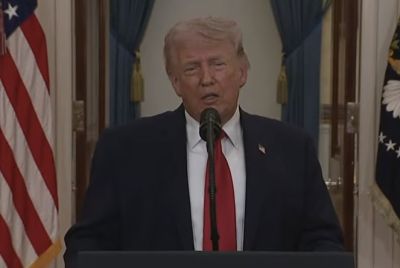
Trump said late Saturday that Iran and other Middle Eastern countries had requested time to complete a deal. In a post on Truth Social, he wrote that the agreement would include the "Immediate, Complete, and Total OPENING OF THE HORMUZ STRAIT, and an end to Iran's nuclear threat." He said Israel joined him in the commitment to hold off on attacks "subject to being able to rapidly make a DEAL." The U.S. naval blockade of Iranian ports would remain in effect until any transaction is finalized, he added.
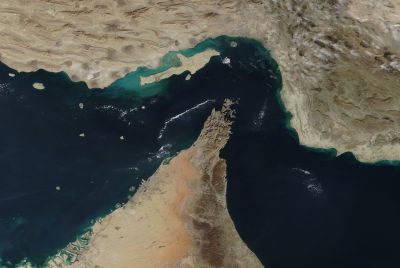
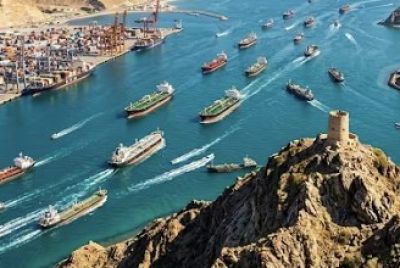
The Strait of Hormuz, a narrow chokepoint between Iran and Oman at the entrance to the Persian Gulf, carried roughly one-fifth of the world's seaborne oil trade and a significant share of liquefied natural gas before hostilities began. Shipping through the waterway largely halted after the United States and Israel launched airstrikes on Iran on Feb. 28. Iran responded by mining the traditional traffic separation scheme, warning vessels against unauthorized passage, and asserting control through its Islamic Revolutionary Guard Corps Navy.
A preliminary memorandum of understanding signed in mid-June between Tehran and Washington aimed to restore freedom of navigation for at least 60 days without fees or tolls while Iran engaged Oman on future administration of the strait. Traffic briefly rebounded in late June, with some days seeing more than 70 vessels transit, according to maritime data firms. That recovery proved fragile. Iranian forces struck commercial ships using routes not approved by Tehran, prompting U.S. retaliatory strikes on Iranian coastal radar, missile sites and small boats. Iran responded with attacks on U.S. facilities in Gulf states, and both sides declared the ceasefire effectively over at various points in July.
Iran has insisted throughout that the strait will not return to its pre-war status. Officials have argued that as a coastal state, Iran has the right to manage traffic and potentially collect service fees once any temporary toll-free window expires. The United States and Gulf Arab states have rejected any Iranian tolls or unilateral control, emphasizing free and unrestricted navigation under international law. Oman, which shares sovereignty over the narrowest section of the strait, has engaged Tehran in a joint working group while also coordinating temporary evacuation corridors with the International Maritime Organization earlier in the crisis.
Those earlier efforts faced repeated setbacks. In late June, Iran struck a Singapore-flagged container ship, the Ever Lovely, near Oman with what U.S. officials described as a drone. The attack prompted the U.N. maritime agency to pause an evacuation of stranded vessels. Subsequent incidents, including strikes on tankers and LNG carriers in July, drove transit volumes far below the pre-war daily average of about 130 ships. War-risk insurance premiums soared, and many operators rerouted or delayed voyages.
Deputy Foreign Minister Kazem Gharibabadi stated in June that safe passage "cannot be guaranteed under ambiguous arrangements, parallel routes or decision-making that does not take Iran's role as a coastal state into account." Iranian state media has repeatedly warned that vessels ignoring designated routes face consequences. At the same time, Tehran has pursued diplomacy with Oman, forming technical committees to discuss routes, maritime services and related costs.
The latest Iranian statements suggest progress on a middle-lane arrangement that would avoid both the northern corridor favored by Tehran and the southern corridor hugging the Omani coast preferred by many commercial operators and Western navies. Whether such a route can gain the acceptance of the Revolutionary Guard Corps, shipping companies and the United States remains unclear. Iranian hardliners have publicly rejected reports of any interim compromise that would divide control or reopen the waterway under external pressure.
Oil markets have remained sensitive to every development. Prices rose sharply after ship attacks in June and July, then eased when traffic partially recovered, only to climb again amid renewed strikes. Producers in Saudi Arabia and other Gulf states have continued loading at key terminals when possible, but overall export volumes through the strait stay well below pre-conflict levels. Some vessels have used alternative routes or shuttle arrangements to move crude out of the Gulf.
U.S. Central Command has repeatedly stated that commercial transits continue under its watch and that American forces remain ready to ensure freedom of navigation. Trump's decision to pause further strikes reflects pressure from regional partners, including Saudi Arabia, whose leadership urged restraint to avoid broader escalation that could target energy infrastructure across the Gulf.
For seafarers still stranded or operating in the region, the diplomatic activity offers limited immediate relief. Hundreds of vessels and thousands of crew members were trapped for weeks or months earlier in the crisis. Evacuation efforts were repeatedly interrupted by security incidents. Maritime authorities continue to advise caution, with threat levels elevated for the waterway.
The coming days will test whether the reported progress between Iran and Oman can translate into a workable arrangement that also satisfies Washington's demand for a full reopening without Iranian control or fees. Araghchi's cabinet report and Baghaei's public comments mark the most concrete indication in weeks that technical talks are advancing. Yet Tehran's insistence that the strait's future status will differ from the past, combined with ongoing military posturing on both sides, leaves the outcome uncertain.
Global energy markets, shipping companies and regional governments are watching closely. The Strait of Hormuz has long been a flashpoint. The current crisis, now more than five months old, has demonstrated how quickly disruptions there can ripple through oil prices, insurance markets and supply chains. Any lasting solution will require not only agreement between Iran and Oman but also broader acceptance by the United States, other Gulf states and the commercial operators who rely on the waterway.
As of early August, traffic remains constrained, military forces on both sides stay on alert, and the diplomatic window Trump described as temporary hangs over the negotiations. Iranian officials continue to frame the discussions as a matter of sovereign rights rather than a return to previous norms. Whether that framing can produce a durable reopening of one of the world's most critical energy arteries is the central question now facing diplomats in Tehran, Muscat and Washington.
© Copyright 2026 IBTimes AU. All rights reserved.
- Recommended For You