Nancy Guthrie Sheriff Reveals Hair Sample Was Inconclusive as the Search Passes the Six-Month Mark Today
Sheriff Chris Nanos discusses forensic challenges and investigation progress in the case of missing Nancy Guthrie.

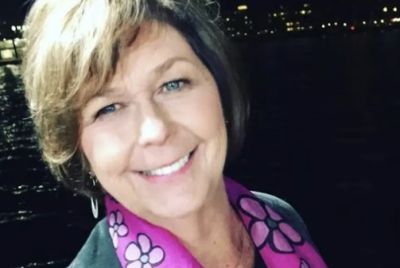
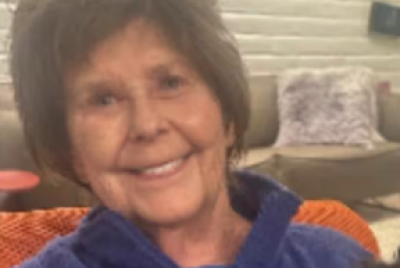
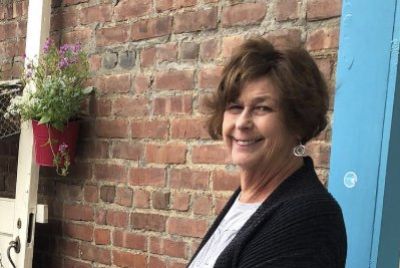
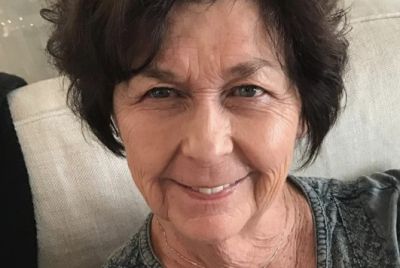
The sheriff leading the investigation into the disappearance of Nancy Guthrie revealed new details about the case in a recent interview with CBS News, disclosing that a hair sample collected from Guthrie's Tucson, Arizona, home came back inconclusive as the search for the 84-year-old mother of "Today" show co-host Savannah Guthrie passes the six-month mark.
Pima County Sheriff Chris Nanos told CBS News correspondent Jonathan Vigliotti that forensic testing on the hair sample, found at Guthrie's home following her disappearance, did not produce results pointing to a suspect. "It came back with no results," Nanos said. According to the sheriff's department, the results from the hair sample were actually verified in early June, but Thursday marked the first time investigators shared that specific finding with the public.
Guthrie was reported missing Feb. 1 after failing to appear for a scheduled Sunday church livestream, with authorities believing she was forcibly taken from her Catalina Foothills home in the middle of the night. The case has remained an active investigation involving both the Pima County Sheriff's Department and the FBI in the months since, even as the passage of time without a named suspect has drawn increased public scrutiny of the investigation's progress.
Nanos addressed broader questions about the pace of the investigation directly during a separate, more extensive interview given in late July, pushing back firmly against any suggestion that the case has gone cold. "I think every day we're closer only because we have a lot of work ahead of us in terms of lab work, scientific work with DNA, working with not just our lab or the FBI lab, but labs across the country," Nanos said. "All of these labs work together. They're sharing information."
The sheriff has also faced questions about his agency's forensic testing protocols, including its longstanding practice of sending DNA evidence to a laboratory in Florida rather than splitting evidence across multiple facilities. Nanos defended that approach in his interview with Vigliotti, explaining that his agency has worked with the same Florida lab for years and sees no benefit in dividing evidence between separate labs. "It adds a step that's not needed," Nanos said. "If you have two labs you're looking at, and one's bad or one's better, that's fine."
Investigators previously disclosed that DNA collected from Guthrie's property did not match either Guthrie herself or individuals known to have been in close contact with her, though the sheriff's department has not disclosed where on the property that DNA evidence was found. Authorities have said they continue working to identify whose DNA it is.
Throughout the investigation, Nanos has consistently maintained his belief that Guthrie remains alive, a position he reaffirmed and explained further during his late-July interview. "I understand why people would say she's dead," Nanos said. "But where's the benefit in me believing she's dead when there's no proof of her death in front of me? ... Everybody has a right to have an opinion and voice it. But as the sheriff of Pima County, as the head of the law enforcement here in this community, what is the benefit of the sheriff saying she's dead? If the family believes that there's hope, that there's some chance that she might still be with us, why should I crush that hope?" Nanos has separately said that while investigators have not received proof that Guthrie is alive, there has also been no sign of her death.
The investigation has faced complications beyond the forensic evidence itself. A pair of ransom notes sent to Guthrie's family in February, including one indicating that she had died, are believed by investigators to have likely originated from her abductor, according to CBS News reporting. Separately, local officials in Arizona have pushed to remove Nanos from his position, alleging he lied under oath during a deposition connected to an unrelated lawsuit when he denied having been suspended during his earlier career as a police officer in El Paso, Texas, before joining the Pima County Sheriff's Department in the 1980s. Records obtained by CBS News showed Nanos had in fact been suspended multiple times during his time with the El Paso Police Department for a range of alleged infractions, including "unnecessary violence" and tardiness.
Nanos has also publicly disputed characterizations of the investigation's early handling made by FBI Director Kash Patel, who has placed some blame on local officials in Arizona over how the case was managed. The sheriff has said certain claims made by Patel about the investigation were inaccurate, adding another layer of tension to an inquiry that has already drawn scrutiny from multiple directions.
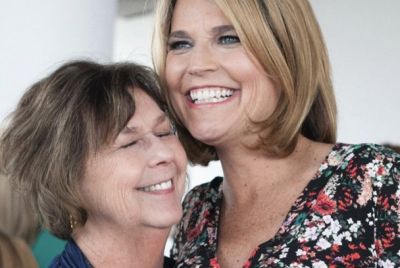
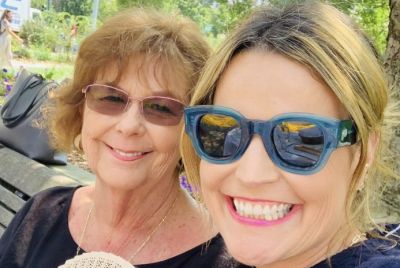
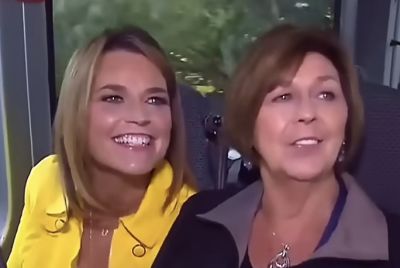
Savannah Guthrie has continued to make public appeals for information throughout the case, including a recent social media post featuring clips from a family home movie showing her mother at a younger age. "We will never give up on her," Guthrie wrote in the post.
With the investigation now well past the six-month mark and no named suspect publicly identified, Nanos has continued to express confidence that the case will ultimately be solved, pointing to the ongoing collaboration among multiple forensic laboratories nationwide and the volume of video evidence investigators continue to review as reasons for that optimism, even as families of missing persons and outside observers alike continue to press for faster answers in a case that has drawn sustained national attention since Guthrie's disappearance in February.
© Copyright 2026 IBTimes AU. All rights reserved.
- Recommended For You