Trump Hosts Netanyahu at White House for Closed-Door Talks Focused on Iran Nuclear Threat and Security
Leaders reaffirm commitment to preventing Iran from acquiring nuclear weapons

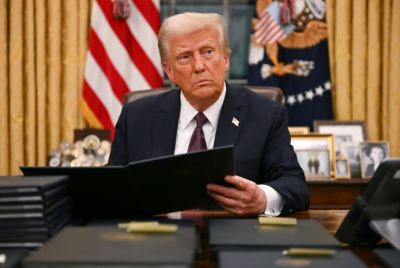
President Donald Trump hosted Israeli Prime Minister Benjamin Netanyahu at the White House on Tuesday for closed-door talks that both leaders described as highly productive, with discussions centered on Iran's nuclear program and broader security cooperation between the two countries.
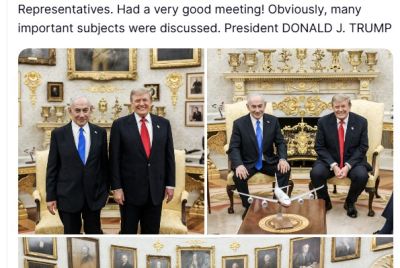
Trump characterized the meeting warmly in a post on his social media platform, Truth Social, writing that it was "a very good meeting" attended by representatives from both governments and that "many important subjects were discussed." Netanyahu, in a video statement released by his office in Hebrew following the meeting, called it one of the best conversations the two leaders have had, describing it as "a conversation of full partnership, of mutual support, with an understanding of the shared goal to ensure that Iran will not have nuclear weapons."
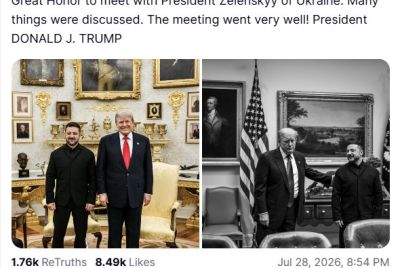
The meeting began at 11:03 a.m. Eastern time and concluded when Netanyahu left the White House at 12:25 p.m., according to the White House. It was closed to reporters throughout, and Trump did not open the session even briefly to the press pool, a departure from his usual practice that he also followed earlier the same day during a separate meeting with Ukrainian President Volodymyr Zelenskyy. Senior officials from both the American and Israeli governments attended alongside the two leaders.
White House press secretary Karoline Leavitt described the talks as "positive and productive." An Israeli official who was present characterized the atmosphere similarly, telling reporters the two leaders held "an excellent and comprehensive discussion on the key issues of the day, first and foremost Iran," and that they "reaffirmed their ironclad commitment to ensuring that Iran never has nuclear weapons." The official added that the leaders also discussed the strength of the U.S.-Israeli partnership and "various opportunities in the Middle East."
Ahead of the meeting, Netanyahu framed the stakes in a video statement posted Monday, saying that navigating the current period required both determination and careful judgment. "In these complex times, you need to act with both great determination and great wisdom," he said, adding that the talks would focus primarily on Iran and on protecting Israel's security while working to expand the circle of peace in the region.
The Tuesday session marked the first in-person meeting between Trump and Netanyahu since the outbreak of the current U.S.-led military conflict with Iran, and it came at a moment of visible strain in the two leaders' relationship. Netanyahu, who has favored continuing military operations against Iran and its regional ally Hezbollah in Lebanon, has found himself increasingly sidelined as Trump has pursued a negotiated settlement with Tehran instead. Disagreements between the Israeli leader and both Trump and Vice President JD Vance over strategy in the Iran conflict have become increasingly public in recent weeks. Israeli journalist and political analyst Amit Segal wrote in the newspaper Israel Hayom this week that American officials have made clear to their Israeli counterparts that Washington is directing the course of the war.
Trump signaled ahead of the meeting that he was seeking to avoid a resumption of direct U.S. bombing of Iranian targets and instead focus on shoring up the diplomatic track after both countries had paused their exchange of strikes. "I think we have a very strong position right now," Trump told Fox News on Tuesday.
The meeting took place against the backdrop of escalating tension in the region more broadly. U.S. Central Command said Tuesday that more than 20 Navy warships were operating across the Middle East in support of ongoing military missions, including what the command described as strict enforcement of a blockade targeting Iranian shipping. Central Command said that as of Tuesday it had redirected 18 commercial vessels, disabled two and boarded two others to ensure compliance with the blockade. Discussions between Trump and Netanyahu were expected to address Iran's alleged expansion of an underground nuclear facility known as Pickaxe Mountain, according to a senior source who traveled with Netanyahu to Washington and spoke with reporters.
Beyond Iran, the two leaders also discussed the possibility of expanding the Abraham Accords, the series of diplomatic normalization agreements between Israel and several Arab nations first brokered during Trump's earlier term in office. That discussion follows repeated public calls from Trump for Saudi Arabia to normalize relations with Israel as part of a broader regional realignment. According to people familiar with the meeting, no final agreements were reached during Tuesday's talks, though the sides reported making progress on several fronts. "It was an extremely positive meeting," one senior Israeli official who attended said. "You could see the chemistry between the leaders."
Netanyahu's visit to Washington coincided with a period of significant political vulnerability for the Israeli leader at home, where he is currently seeking reelection amid what analysts have described as a deteriorating relationship with the Trump administration over the handling of the Iran conflict. The Tuesday meeting represented an opportunity for Netanyahu to publicly project unity with Trump at a moment when questions about the alignment between Washington and Jerusalem on Iran strategy have become increasingly prominent in both American and Israeli media coverage.
© Copyright 2026 IBTimes AU. All rights reserved.
- Recommended For You