

(VIDEO) Trump Says Strikes Are Ending Any Chance Iran Gets a Nuclear Missile After Ninth Night of US Attacks
U.S. military campaign against Iran evolves to eliminate nuclear missile threat
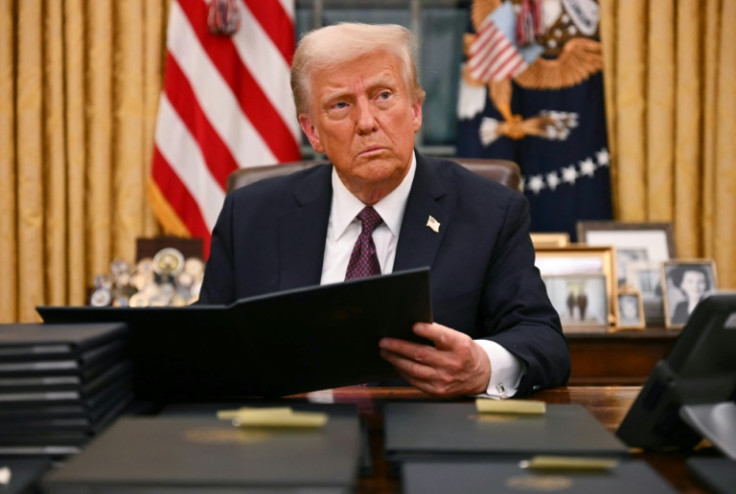
President Donald Trump said Sunday that the ongoing U.S. military campaign against Iran has moved beyond merely slowing the country's weapons programs and is now aimed at permanently eliminating any possibility that Tehran could obtain a nuclear-capable missile, remarks that came as U.S. forces carried out their ninth consecutive night of strikes on Iranian targets.
Speaking to reporters at Joint Base Andrews, Trump characterized the shift in the American approach as a change in scope rather than intensity, describing the campaign's original goal as limiting Iran's capabilities and its current goal as eliminating the threat outright.
President Trump on Iran: "What we're doing now is we're ending any chance where they can have a nuclear missile. If you look at it, after a week and a half... we stopped them from 'probably,' but I don't want to have the word 'probably.'" pic.twitter.com/JSpUEjgr2N
— Breaking911 (@Breaking911) July 20, 2026
"We were doing a little job and stopping them from having a certain capability," Trump told reporters, according to Fox News. "Now we're just ending it, so it's really not the same thing. What we're doing now is we're ending any chance that they can have a nuclear missile."
The president went on to argue that the pace of the campaign had produced faster results than expected. "If you look at it after a week and a half — not four weeks, a week and a half, two weeks — we stopped them from probably," Trump said, adding that he preferred not to qualify the outcome with uncertainty. "But I don't want to use the word 'probably.'"
Strikes continue as conflict enters new phase
Trump's comments came hours after U.S. Central Command confirmed that American strikes had struck Iranian military command centers, air defense installations, coastal surveillance sites, maritime capabilities, missile and drone launch sites, and communications networks. CENTCOM said the operation, completed around 10 p.m. Eastern time Sunday, was intended to further degrade Iran's ability to threaten commercial shipping and civilian mariners transiting the Strait of Hormuz, a waterway that has seen sharply reduced traffic since the conflict escalated.
The strikes marked the ninth straight night of American military action against Iranian targets, according to CENTCOM, which said its forces remained focused and prepared to continue operations at the direction of the commander in chief.
Trump's remarks Sunday also followed a series of developments that underscored the rising human cost of the conflict for American forces. CENTCOM announced earlier in the day that three U.S. service members had died in connection with recent Iranian attacks, including two killed in a missile and drone strike in Jordan and a third who died during operations in Iraq. The losses represented among the most significant American casualties of the conflict since it began earlier this year.
A campaign that has evolved over months
Sunday's comments reflect a notable evolution in how Trump has framed the war's objectives since the United States first became involved. Earlier in the year, administration officials, including Trump's Middle East envoy Steve Witkoff, described Iran's nuclear timeline in terms of probability and estimated risk, with Witkoff previously telling Fox News that Iran was "probably a week away" from obtaining industrial-grade bomb-making material. That kind of hedged language has since given way to Trump's more definitive framing that the current campaign has closed off any path to a nuclear missile entirely.
The president's assessment has not gone unchallenged. Independent nuclear policy analysts have previously raised questions about the pace and scale of Iran's weapons progress, with some experts noting that rebuilding damaged enrichment infrastructure and converting nuclear material into a deliverable weapon would likely take Iran significantly longer than the timelines cited by administration officials. The International Atomic Energy Agency, which monitors Iran's nuclear program, has said it has been unable to access sites that were struck by U.S. forces earlier in the conflict, limiting independent verification of the program's current status.
Diplomatic track remains uncertain
Trump's hardened rhetoric toward Iran's government has intensified in recent weeks alongside the military escalation. Earlier this month, the president said a previous memorandum of understanding between the two countries was effectively finished, using harsh language to describe Iran's leadership while suggesting that broader U.S.-Iranian negotiations over a longer-term agreement could still continue in some form. That earlier framework had called for reopening the Strait of Hormuz to commercial traffic and lifting the U.S. naval blockade of Iranian ports in exchange for renewed Iranian commitments not to pursue nuclear weapons.
Those commitments have since unraveled amid continued strikes on shipping and military targets from both sides. The United States has reimposed its naval blockade on Iran-linked vessels, and Iran has widened its retaliatory strikes to target U.S. allies in the Gulf region, including recent attacks on infrastructure in Kuwait.
Rising stakes as the conflict continues
With American casualties mounting and strikes continuing nightly, Sunday's comments suggest the administration views the current phase of the conflict as a decisive push rather than an open-ended campaign. Trump's insistence on eliminating any "probability" of an Iranian nuclear missile, rather than simply reducing the likelihood, signals an effort to project a sense of finality to a conflict that has now stretched across several months and drawn in multiple U.S. allies in the region.
Whether that assessment holds will likely depend on developments in the days ahead, as U.S. forces continue nightly operations and both governments show little indication of stepping back from the escalating military confrontation. For now, officials have offered no clear timeline for when the campaign might conclude, even as Trump signals growing confidence that its core objective has already been achieved.
© Copyright 2026 IBTimes AU. All rights reserved.