

(VIDEO) President Donald Trump Predicts Iran Conflict Could Last 'Four Weeks or Less'
WASHINGTON — President Donald Trump said Sunday the U.S.-led military operation against Iran could last "four weeks or less," describing it as a planned, time-limited campaign even as strikes escalated into a third day and Iranian retaliatory attacks spread to Israel, Gulf states and U.S. assets, killing American troops and prompting fears of a broader regional war.
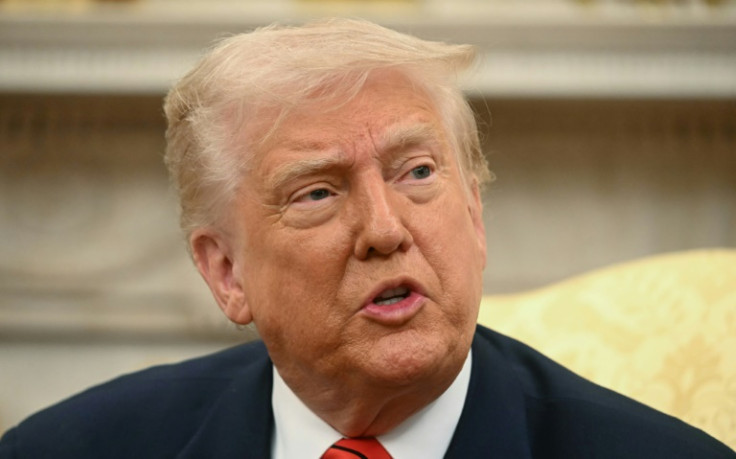
In multiple interviews and statements over the weekend, Trump outlined a four-week timeline for achieving U.S. objectives, which he has not fully detailed but appear to include degrading Iran's military capabilities, nuclear infrastructure and leadership following the killing of Supreme Leader Ayatollah Ali Khamenei in the opening salvos Saturday.
"It's always been a four-week process," Trump told the Daily Mail in a phone interview. "We figured it will be four weeks or so. It's always been about a four-week process so — as strong as it is, it's a big country — it'll take four weeks, or less." He offered similar assessments to The New York Times, suggesting four to five weeks if needed, and emphasized the operation — dubbed "Operation Epic Fury" in some reports — was "ahead of schedule" and proceeding with "heavy and pinpoint bombing" that would continue uninterrupted.
Trump released a video address on Truth Social acknowledging the first U.S. casualties: three service members killed and five seriously wounded, likely in Kuwait where American forces are based. "We pray for the full recovery of the wounded and send our immense love and eternal gratitude to the families of the fallen," he said. "And sadly, there will likely be more before it ends. That's the way it is."
The Pentagon confirmed the deaths Sunday, marking the initial American losses in the conflict that began with massive U.S. and Israeli airstrikes targeting Revolutionary Guard facilities, air defenses, naval assets and nuclear-related sites. Iranian state media reported hundreds killed domestically, including 555 cited by the Red Crescent, with Natanz among sites hit.
Iran responded with waves of missiles and drones targeting Israel, U.S. allies in the Gulf and American installations. Explosions rocked Dubai, Abu Dhabi and Doha, while Israel reported intercepting barrages and retaliating against Hezbollah in Lebanon after the Iran-backed group fired rockets, ending a fragile truce. Beirut's southern suburbs saw heavy Israeli strikes, killing at least 31 and injuring 149, per Lebanese authorities.
In Kuwait, officials reported several U.S. warplanes crashing, with crews surviving, amid drone interceptions. A U.S. Embassy compound in Kuwait was reportedly hit. Saudi Arabia's Ras Tanura refinery sustained damage from a related incident, further disrupting energy flows.
Trump reiterated openness to talks but expressed skepticism. "They want to talk, and I have agreed to talk," he told one outlet, though an Iranian security adviser declared no negotiations with the U.S. would occur. Trump called on Iranian generals to "hand power to the nation's people" or adopt a compliant model like post-Maduro Venezuela, offering contradictory visions of regime change or managed transition.
The escalation has widened dramatically. Hezbollah vowed to confront U.S. and Israeli "aggression," launching projectiles that prompted Israeli warnings of prolonged fighting. Protests erupted in some Iranian cities denouncing the war, while others celebrated Khamenei's death amid uncertainty over succession.
Oil prices surged amid fears of Strait of Hormuz disruptions, with tanker traffic halted and Gulf airspace largely closed, stranding travelers and crippling aviation hubs like those in Abu Dhabi, Dubai, Kuwait and Bahrain.
Critics, including some in Congress and analysts, questioned the lack of a clear endgame or exit strategy, warning the conflict could drag on far beyond Trump's estimate and suck the U.S. into a quagmire. "Where does this go?" one observer asked, noting Iran's size, proxies and alliances with Russia and others complicate a quick resolution.
Trump dismissed such concerns, insisting ample munitions and forces would sustain intensity without difficulty. He threatened overwhelming response if Iran escalated further, posting on Truth Social: "THEY BETTER NOT DO THAT... BECAUSE IF THEY DO, WE WILL HIT THEM WITH A FORCE THAT HAS NEVER BEEN SEEN BEFORE!"
The operation's third day saw continued U.S.-Israeli airstrikes on Iran, with Israel expanding to Hezbollah targets in Lebanon. Iran launched fresh missile volleys at Israel, described by its military as "opening the great gates of fire."
Global responses varied: allies expressed support for defending against Iranian threats, while others urged de-escalation. The U.N. Security Council remained deadlocked.
As combat rages, Trump's timeline offers a benchmark amid mounting casualties and regional chaos. Whether the conflict resolves in weeks or expands remains uncertain, with the Middle East on edge and global markets reacting sharply.
© Copyright 2026 IBTimes AU. All rights reserved.