

Netanyahu Vows Escalating Strikes on Tehran as US-Israel Campaign Against Iran Enters Third Day
Israeli Prime Minister Benjamin Netanyahu declared Sunday that Israeli forces would intensify strikes "at the heart of Tehran" in the coming days, vowing to deliver a decisive blow to Iran's regime with full U.S. support following the killing of Supreme Leader Ayatollah Ali Khamenei in joint U.S.-Israeli airstrikes late last week.
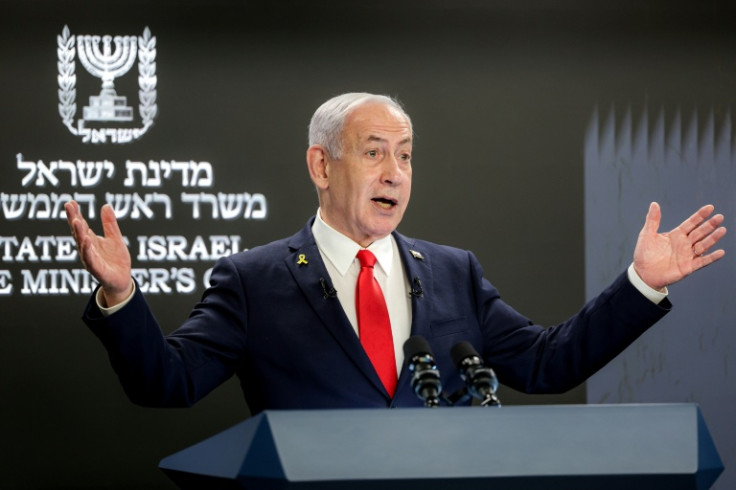
Speaking from the roof of Israel's military headquarters in Tel Aviv after a meeting with Defense Minister Israel Katz, IDF Chief of Staff Lt. Gen. Eyal Zamir and Mossad Director David Barnea, Netanyahu confirmed the elimination of Khamenei and dozens of senior officials. "Yesterday, we eliminated the tyrant Khamenei," he said in a televised statement. "Along with him, dozens of senior figures of the oppressive regime were eliminated."
Netanyahu described the ongoing operation as fulfilling a long-held ambition. "This combination of forces enables us to do what I have hoped to do for 40 years—to strike the terror regime decisively," he said, crediting U.S. President Donald Trump and American military assistance. He acknowledged "painful days" at home, referencing Iranian retaliatory strikes that killed civilians in Tel Aviv and Beit Shemesh, but insisted the campaign would only grow stronger.
The remarks came as the conflict entered its third day Monday, with Israel launching fresh waves of attacks on Tehran and expanding operations against Iranian-backed Hezbollah in Lebanon following rocket fire from the group. Explosions rocked Beirut's southern suburbs, with Lebanon's state news agency reporting at least 31 killed and 149 injured in Israeli strikes. Hezbollah claimed responsibility for launching rockets and drones at a military base near Haifa in northern Israel.
Netanyahu's statements underscored Israel's strategic goals beyond immediate military targets. He urged Iranians to seize the moment for regime change, calling on Persians, Kurds, Azeris, Baloch and Ahwazi to "unshackle themselves from tyranny" and take their destiny into their own hands. Analysts noted the rhetoric aligns with Netanyahu's long-standing view of Iran as an existential threat, likening the regime to historical tyrants.
The joint U.S.-Israeli operation, which began late Saturday with strikes that killed Khamenei and damaged nuclear and military sites, has drawn sharp international reactions. Trump, in interviews, framed the campaign as aimed at decimating Iran's military and paving the way for regime ouster, warning of potential U.S. casualties and indicating operations could last "four or five weeks." Critics, including Iranian officials, accused the U.S. of sacrificing lives to advance Netanyahu's agenda.
In a phone call Monday with Indian Prime Minister Narendra Modi, Netanyahu discussed the regional situation, with Modi expressing concerns over civilian safety and urging an early end to hostilities. Modi had earlier condemned Iranian strikes on the UAE, highlighting India's balancing act in the crisis.
Domestically in Israel, Netanyahu's aggressive stance has met broad support across the political spectrum, even from rivals. Opposition figures like Yair Lapid and Naftali Bennett rallied behind the IDF and government, emphasizing unity in the face of the Iranian threat. Public sentiment, polls suggest, backs enduring hardship for what many see as a historic opportunity to neutralize Iran's capabilities.
The conflict's spillover has disrupted global energy markets, with Brent crude surging amid fears of further attacks on Gulf infrastructure. Strikes have targeted Iranian internal security forces, including Basij bases involved in suppressing protests, potentially weakening the regime's grip amid calls for uprising.
Netanyahu has not outlined a detailed post-Khamenei plan, but sources indicate chaos in Tehran suits Israel's interests by degrading Iran's ability to coordinate proxies like Hezbollah, the Houthis and militias in Iraq and Syria. The decapitation campaign continued, with reports of strikes killing senior IRGC figures and damaging intelligence infrastructure.
As explosions continued in Tehran and retaliatory fire targeted U.S. assets across the Gulf—including reported drone hits on refineries and airports—Netanyahu reiterated resolve. "I promised—and so we will," he said, framing the operation as a turning point against decades of Iranian aggression.
The prime minister's address, delivered amid air raid sirens in parts of Israel, reflected both defiance and acknowledgment of costs. Civilian casualties from Iranian barrages have mounted, with at least nine killed in recent days, yet Netanyahu maintained the campaign's necessity for Israel's long-term security.
With no clear de-escalation in sight, Netanyahu's leadership faces its most intense test yet. The coming days, he warned, would see "thousands" more targets hit, as the U.S.-Israel alliance presses its advantage in a conflict reshaping the Middle East.
© Copyright 2026 IBTimes AU. All rights reserved.