Fighter Jets Deployed in 2026 US-Israel Strikes on Iran: Key Aircraft in Operation Epic Fury
WASHINGTON — The joint U.S.-Israeli military campaign against Iran, dubbed Operation Epic Fury by the United States and Operation Roaring Lion by Israel, has featured an extensive array of fighter jets since strikes began Feb. 28, 2026. U.S. Central Command (CENTCOM) and the Israel Defense Forces (IDF) have employed fifth-generation stealth fighters, fourth-generation multirole aircraft and electronic warfare platforms to achieve air superiority, suppress defenses and conduct precision strikes on Iranian ballistic missile sites, command centers, air defenses and naval assets.
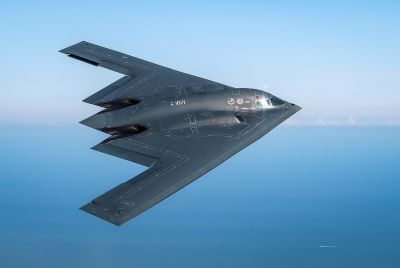
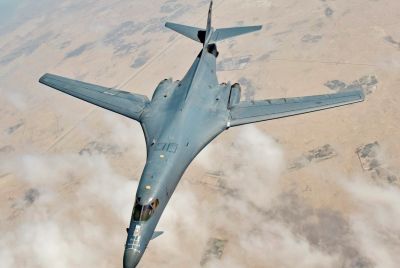
As of March 4, 2026, more than 1,250 targets have been hit in Iran during the operation's first week, with fighter jets playing a central role alongside long-range bombers like the B-2 Spirit and B-1B Lancer. The campaign has involved coordinated waves of aircraft from U.S. carriers in the Arabian Sea and Mediterranean, forward-deployed bases in the Middle East, and direct missions from the United States.
Here are the primary fighter jets confirmed in use during the strikes, based on CENTCOM releases, IDF statements and open-source reporting:

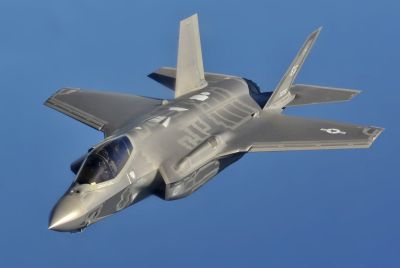
1. **F-35 Lightning II (U.S. and Israel)** — The fifth-generation stealth multirole fighter has been a cornerstone of operations. U.S. Air Force F-35As from the 48th Fighter Wing at RAF Lakenheath and Vermont Air National Guard, plus Marine Corps F-35Cs from the carrier USS Abraham Lincoln, conducted strikes and suppression of enemy air defenses (SEAD). Israel deployed its F-35I Adir variant — known as "Mighty One" — in large numbers, with reports of up to 670 sorties targeting missile systems and leadership. The F-35's low observability enabled initial penetrations against Iranian radars.
2. **F-22 Raptor (U.S.)** — About a dozen F-22s from Joint Base Langley-Eustis, Va., deployed to Israel ahead of the operation, marking the first combat deployment there. Additional Raptors went to RAF Lakenheath. As air superiority fighters, they escorted strike packages, engaged potential air threats and maintained dominance over Iranian airspace. CENTCOM photos showed F-22s in theater by late February.
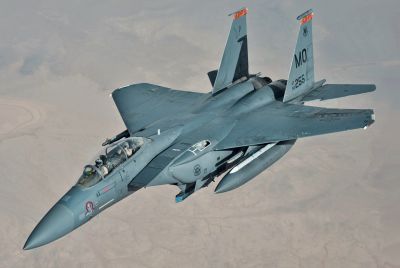
3. **F-15 Variants (U.S. and Israel)** — U.S. Air Force F-15E Strike Eagles provided multirole strike capability, though three were lost to friendly fire over Kuwait on March 2. Israel used F-15s to launch standoff missiles, including Black Sparrow air-launched ballistic missiles, against deep targets. The F-15's range and payload supported extended missions.
4. **F-16 Fighting Falcon (U.S. and Israel)** — Dozens of U.S. F-16s, including Wild Weasel variants for SEAD, operated from regional bases. Israel's F-16s contributed to the initial wave destroying air defenses in western Iran. The multirole fighter's versatility aided in precision strikes and drone intercepts.
5. **F/A-18 Super Hornet (U.S. Navy/Marines)** — Carrier-based F/A-18E/Fs from the USS Abraham Lincoln and USS Gerald R. Ford launched with heavy loads, including AGM-154 Joint Standoff Weapons. Video from CENTCOM showed Super Hornets taking off for strikes. The platform's flexibility supported naval integration in the Gulf.
6. **EA-18G Growler (U.S. Navy)** — Electronic attack variants jammed Iranian radars and communications, suppressing defenses during strike waves. Growlers, based on the F/A-18, operated from carriers and provided critical electronic warfare support.
Israeli Air Force operations involved 200-300 fighter jets in the opening hours, establishing air supremacy over Tehran and western Iran. The IDF claimed strikes on hundreds of targets, including missile launchers and command sites, with fighter jets operating with impunity after neutralizing defenses.
U.S. forces amassed about 30 F-35s in the region pre-operation, alongside F-22s, F-15Es and F-16s. Carrier strike groups provided additional F/A-18s and Growlers. Support aircraft like E-3 Sentry AWACS, P-8 Poseidon maritime patrol and KC-135 tankers enabled long-range missions, while MQ-9 Reapers and new LUCAS one-way attack drones supplemented strikes.
The campaign's air component has drawn from lessons of prior operations, emphasizing stealth, standoff weapons and electronic warfare to minimize risk. Iranian retaliation — including ballistic missiles and drones — has been intercepted by Patriot, THAAD and fighter patrols, though incidents like the F-15 losses highlight operational hazards.
As strikes continue into the second week, fighter jets remain pivotal in maintaining pressure on Iranian capabilities while U.S. officials signal operations could extend weeks. The mix of platforms underscores the integrated, multi-domain approach defining modern air campaigns.
© Copyright 2026 IBTimes AU. All rights reserved.
- Recommended For You