US, Israel Strike Iran's Isfahan Nuclear Sites as Trump Declares No Deal Amid Escalating Middle East Conflict
WASHINGTON — President Donald Trump declared Sunday that the United States is "not ready for a deal" with Iran, hours after U.S. and Israeli forces launched coordinated airstrikes on military and nuclear facilities in Isfahan, escalating a conflict that has claimed hundreds of lives and raised fears of a broader regional war.

The strikes, confirmed by the Pentagon and Israel's Defense Ministry, targeted Iran's Natanz uranium enrichment complex and other sites in Isfahan province, a key hub for the Islamic Republic's nuclear program. U.S. officials described the operation as a "precision response" to Iran's alleged missile attacks on Israeli territory earlier this week, while Tehran denounced it as "barbaric aggression" and vowed retaliation.
Trump, speaking from the White House Rose Garden on March 15, 2026, dismissed calls for diplomatic negotiations amid the violence. "We're not ready for a deal right now — Iran has to stop its aggression first," he said. "They've been playing games for years, and it's time they learn we mean business. No more weak deals like before."
The president's remarks came as global markets reacted sharply to the strikes. Oil prices surged 8% to $112 per barrel on Brent crude futures, reflecting concerns over potential disruptions to Persian Gulf shipping lanes. The Dow Jones Industrial Average futures pointed to a 500-point drop at Monday's open, with analysts citing heightened geopolitical risks.
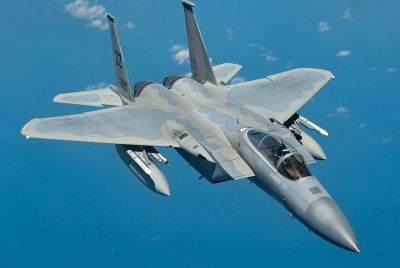
The Isfahan strikes mark the most significant U.S.-Israeli joint operation against Iran since the 2024 escalation over Tehran's support for proxy groups in Gaza and Lebanon. According to U.S. Central Command, American F-35 stealth fighters and Israeli F-15s delivered over 20 precision-guided munitions, destroying centrifuge halls at Natanz and radar installations linked to Iran's air defenses. Satellite imagery from commercial providers like Maxar Technologies showed smoke plumes rising from the sites, though damage assessments remain preliminary.
Iran's Foreign Ministry reported at least 47 deaths, including military personnel and civilians, and accused the U.S. and Israel of violating international law. Supreme Leader Ayatollah Ali Khamenei addressed the nation via state television, calling the attacks "a declaration of war" and urging Iranians to prepare for "decisive resistance." Iranian state media claimed air defenses intercepted 60% of incoming missiles, but independent analysts questioned those figures.
The conflict intensified following Iran's launch of over 200 ballistic missiles toward Israel on March 10, in retaliation for an Israeli strike on a Hezbollah commander in Beirut. That barrage overwhelmed Israel's Iron Dome system in parts, killing 12 civilians and injuring dozens. The U.S. responded by deploying additional carrier strike groups to the region, including the USS Abraham Lincoln, which provided air support for Sunday's operation.
Trump's refusal to pursue a deal echoes his 2018 withdrawal from the Joint Comprehensive Plan of Action (JCPOA), the Obama-era nuclear accord he labeled "the worst deal ever." Efforts to revive negotiations stalled under President Joe Biden and collapsed entirely after Iran's 2025 election of hardliner President Ebrahim Raisi, who accelerated uranium enrichment to near-weapons-grade levels, according to International Atomic Energy Agency reports.
White House Press Secretary Karine Jean-Pierre elaborated on Trump's stance in a briefing. "The president is clear: Iran must cease its nuclear advancements, end support for terrorism, and release American hostages before any talks," she said. Critics, including Senate Democrats, accused Trump of brinkmanship. "This is reckless escalation without a strategy," said Sen. Chuck Schumer, D-N.Y. "We need diplomacy, not more bombs."
International reactions poured in swiftly. United Nations Secretary-General Antonio Guterres called for an immediate ceasefire and emergency Security Council session. China, a key Iranian oil buyer, urged restraint, while Russia condemned the strikes as "imperialist aggression" and pledged military aid to Tehran. European allies like France and Germany expressed support for Israel's right to self-defense but warned against a full-scale war.
On the ground in Isfahan, a city of 2 million known for its historic mosques and nuclear infrastructure, residents reported widespread panic. Local hospitals were overwhelmed, and power outages affected large swaths of the province. Social media footage, verified by Reuters, showed anti-aircraft fire lighting up the night sky and debris scattered across highways.
The strikes targeted facilities central to Iran's nuclear ambitions. Natanz, buried under mountains for protection, has been hit before — notably in a 2021 cyberattack attributed to Israel. U.S. intelligence assessments, declassified in part last week, estimate Iran could produce enough fissile material for a nuclear weapon within months if it chooses, though no evidence suggests an active bomb program.
Trump's administration has ramped up sanctions, freezing $50 billion in Iranian assets and designating additional Revolutionary Guard units as terrorist organizations. The president has also greenlit arms sales to Israel worth $20 billion, including bunker-busting bombs potentially used in Sunday's raid.
Humanitarian concerns mount as the conflict displaces thousands. In Lebanon, Israeli ground incursions against Hezbollah have created refugee flows into Syria, straining resources. Aid groups like Doctors Without Borders report shortages of medical supplies in Gaza, where Iranian-backed Hamas continues sporadic rocket fire.
Analysts warn of spillover risks. "This could draw in Yemen's Houthis, Syrian militias, and even spark U.S.-Russia proxy clashes," said Middle East expert Aaron David Miller of the Carnegie Endowment for International Peace. Oil tanker attacks in the Strait of Hormuz remain a flashpoint, with insurance rates skyrocketing.
Domestically, Trump faces bipartisan pressure. House Republicans praise the strikes as "decisive leadership," but anti-war protests erupted in major U.S. cities, including New York and Los Angeles, with demonstrators chanting "No more war for oil." Polls from Gallup show 52% of Americans support military action against Iran if it threatens allies, up from 45% last year.
As night fell in Tehran, air raid sirens echoed amid reports of Israeli drones overhead. Iranian officials hinted at targeting U.S. bases in Iraq or closing the Strait of Hormuz. Trump, undeterred, tweeted: "Iran started this — we'll finish it strong. America First!"
The path forward remains uncertain. Diplomatic channels through Oman and Qatar are strained, and with the U.N. General Assembly looming in September, world leaders scramble to avert catastrophe. For now, the strikes on Isfahan signal a new, dangerous phase in a decades-old standoff, with no deal in sight.
© Copyright 2026 IBTimes AU. All rights reserved.
- MOST POPULAR IN Politics & Policy