Middle East Airports Face Ongoing Disruptions Amid Escalating Regional Conflict
DUBAI, United Arab Emirates — Major airports across the Middle East remain hampered by airspace restrictions, intermittent closures and security threats as a widening conflict involving Iran, Israel, the United States and several Gulf states enters its third week. Drone and missile attacks have targeted infrastructure near key aviation hubs, stranding travelers and forcing airlines to cancel or reroute flights.
The crisis stems from U.S.-Israeli strikes on Iranian targets beginning late February, prompting retaliatory actions that have closed large swaths of airspace over Iran, Iraq, Bahrain, Kuwait and Syria. Gulf nations including the United Arab Emirates, Qatar and Saudi Arabia have reported intercepts of incoming projectiles, with civilian airports caught in the crossfire.
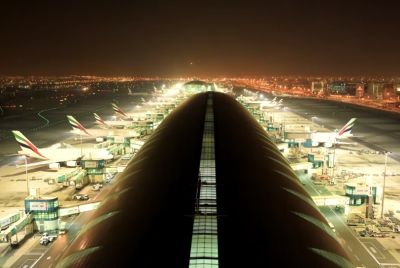
Dubai International Airport (DXB), the world's busiest international gateway, has experienced repeated disruptions. A drone strike near a fuel tank on March 16 triggered a temporary suspension of operations, with fire crews containing the blaze but flights halted for hours. Additional incidents, including ballistic missile threats overnight into March 18, led to further closures as air defenses engaged. Official flight trackers show limited arrivals and departures today, with Emirates and Flydubai operating reduced schedules prioritizing repatriation and essential services. Emirates has advised passengers to check updated timetables, noting ongoing restrictions until further notice.
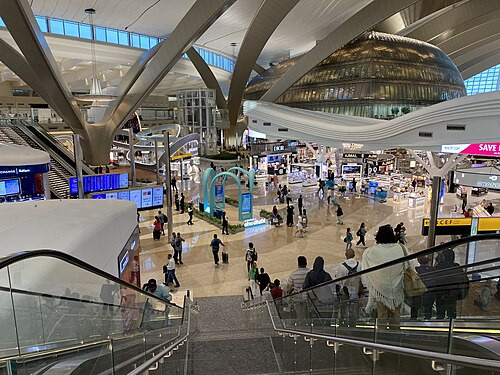
Zayed International Airport in Abu Dhabi (AUH) faces similar challenges. Reports of missile strikes in the vicinity, including one causing fatalities, have prompted suspensions and diversions. Etihad Airways continues limited operations, coordinating with authorities for safety approvals.
Bahrain International Airport remains temporarily suspended due to the ongoing closure of Bahraini airspace. Civil Aviation Affairs relocated non-passenger Gulf Air aircraft and cargo planes to alternative sites to maintain readiness. No timeline for resumption has been announced, exacerbating isolation for the small island nation amid repeated intercepts of Iranian drones and missiles.
Hamad International Airport in Doha, Qatar, operates under partial restrictions following airspace limitations and drone attacks. Qatar Airways has run limited repatriation flights but suspended most scheduled services earlier in the month.
In Saudi Arabia, King Khalid International in Riyadh and King Abdulaziz International in Jeddah stay operational with limitations. Numerous international flights face cancellations or delays as carriers adjust to regional rerouting. The kingdom has intercepted dozens of drones and missiles in recent days, heightening alert levels without full shutdowns.
Airspace over Iran remains fully closed, stranding delegations and travelers. Jordan has reopened its airspace more fully, allowing some resumption of services, while Israel permits only limited priority flights under special approval.
The Federal Aviation Administration and European authorities have issued advisories urging avoidance of the region, with many long-haul carriers rerouting via southern Africa or Central Asia. This has increased flight times, fuel consumption and costs, contributing to a surge in fares on alternative routes.
Travelers report chaos at unaffected hubs as stranded passengers seek rebookings or refunds. Airlines including Emirates, Etihad and Qatar Airways offer flexible policies for affected tickets, extending rebooking windows and waiving change fees through late March or beyond.
Geopolitical analysts attribute the aviation crisis to Iran's retaliation targeting perceived U.S. allies in the Gulf, including strikes near civilian infrastructure. Gulf states deny facilitating attacks on Iran but host U.S. military assets, drawing fire. The Strait of Hormuz closure has compounded economic pressures, though aviation impacts dominate immediate concerns for global connectivity.
The International Air Transport Association has called for de-escalation, warning of prolonged supply chain disruptions and economic fallout. Stranded passengers crowd hotels near airports, with no clear end in sight as diplomatic efforts stall.
Authorities urge checking official sources like airport websites, Flightradar24 or airline apps for real-time updates. The situation evolves rapidly, with new threats potentially triggering fresh closures.
As the conflict persists, the Middle East's role as a global aviation crossroads hangs in the balance, underscoring vulnerabilities in an interconnected world.
© Copyright 2026 IBTimes AU. All rights reserved.
- MOST POPULAR IN Politics & Policy