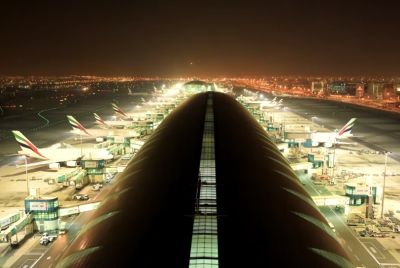
Is Dubai International Airport Opened Today? Airport Remains Open Amid Ongoing Regional Tensions
DUBAI, United Arab Emirates — Dubai International Airport (DXB) is open and handling flights as of Saturday, April 4, 2026, operating on a reduced but steadily expanding schedule despite persistent disruptions from regional geopolitical tensions in the Middle East.

Travelers checking real-time flight information on the official Dubai Airports website see departures such as flydubai services to Moscow and Kathmandu alongside Emirates flights to Seattle and Tunis moving through the airport's three terminals. While not at pre-crisis capacity, operations continue without major new incidents reported overnight, marking a cautious step toward normalization after weeks of suspensions, airspace restrictions and isolated security events.
The airport's status comes as a relief for stranded passengers and the global aviation industry, which has faced cascading cancellations since late February when escalating conflict involving the United States, Israel and Iran prompted widespread airspace closures across the Gulf region. Dubai, home to the world's busiest international airport by passenger traffic in normal times, saw full suspensions at various points, including a notable drone-related fire incident near the facility on March 30 that halted movements for several hours and forced diversions to Dubai World Central-Al Maktoum International Airport (DWC).
Dubai Airports officials continue to urge caution. Passengers are advised not to head to DXB unless their airline has confirmed a departure time directly. "Check your flight status directly with your airline before heading to the airport," the authority emphasized in recent updates. Schedules remain fluid as airlines reposition aircraft and coordinate with regulators amid partial airspace reopenings.
Emirates, the flagship carrier based at DXB, is operating a reduced network with plans to scale up further in coming days. As of early April, the airline reported flying to dozens of destinations while monitoring the situation hourly. Low-cost carrier flydubai has pushed past 100 routes in its limited resumption, focusing on key regional and international connections. Other carriers, including Air India and IndiGo, have run ad-hoc and scheduled repatriation-style flights to maintain essential links, particularly to South Asia.
The disruptions trace back to February 28, when initial retaliatory actions led to a complete halt in operations at both DXB and DWC. Limited flights resumed in early March, but foreign airlines faced temporary bans or severe restrictions at times. A drone strike that ignited a fuel tank fire in mid-March and another incident on March 30 added layers of complexity, briefly shutting down runways and causing diversions. Inbound Emirates flights were rerouted, while flydubai departures faced multi-hour delays.
Regional airspace remains a critical factor. Partial reopenings have allowed some traffic, but many international carriers extended suspensions. Airlines such as Air France, Lufthansa, British Airways and Cathay Pacific have kept Dubai routes on hold through mid-April or later, citing safety and operational challenges. Some long-haul carriers canceled services into May or beyond. The situation has stranded thousands and forced rerouting that increased fuel costs and travel times.
Despite the hurdles, recovery signals are emerging. By early April, DXB processed hundreds of flights over 48-hour periods, with more arrivals than departures noted in some General Directorate of Residency and Foreigners Affairs data — a sign that Dubai is drawing back visitors and residents. Schools reopened April 3, and the UAE's residency grace period ended, helping restore a sense of routine in the city.
Airport officials describe the current phase as "progressive scaling" in coordination with airlines and authorities. Flight schedules could shift daily as networks rebalance. Delays remain low compared to peak disruption periods, but travelers should build in extra time, especially given potential road congestion from any lingering weather effects or heightened security.
For passengers, flexibility is key. Major carriers have extended rebooking waivers and refund options through mid-May or later. Emirates allows changes without fees for travel through May 31 in many cases. Similar policies apply at flydubai and Etihad. Passengers with bookings in the coming weeks should monitor airline apps, emails and the Dubai Airports flight status page, which shows real-time gate information, estimated times and status updates.
The broader impact extends beyond aviation. Dubai's tourism sector, a cornerstone of the economy, has seen a slowdown as visitors hesitate amid uncertainty. Hotels report lower occupancy, and events scheduled for spring face adjustments. Yet authorities project a rebound once full operations stabilize, leveraging DXB's role as a global connector between Europe, Asia and Africa.
Experts note that the airport's resilience stems from its modern infrastructure and strong coordination between Dubai Airports, the General Civil Aviation Authority and carriers. Three terminals handle the load, with Terminal 3 — Emirates' primary hub — seeing the bulk of long-haul traffic even in reduced mode. Special assistance services remain available for passengers with disabilities or needing extra support.
Looking ahead, full stabilization depends on de-escalation in the region. Aviation analysts say it could take weeks or months to restore pre-February schedules, given aircraft repositioning, crew availability and ongoing airspace negotiations. Some routes may see permanent changes or higher fares in the short term due to longer detours.
In the meantime, DXB continues to function as a vital lifeline. On April 4, morning flights departed on schedule or with minimal variance, according to live trackers. Weather conditions showed low delays, with clear operations reported into the afternoon.
Travelers planning trips to or through Dubai should:
- Confirm flight status with their specific airline, not just the airport site.
- Allow extra time for security and check-in amid potential staffing adjustments.
- Prepare for possible rebooking or delays by reviewing airline policies.
- Avoid unnecessary trips to the airport terminals.
Dubai Airports maintains dedicated pages for flight status, special assistance and travel guidance. The authority also coordinates with tourism bodies to provide updates for visitors.
This period tests the adaptability of one of aviation's busiest hubs. From full suspensions in late February and March to the current limited but active operations, DXB has demonstrated incremental progress. No major incidents were logged overnight into April 4, offering a steady — if not fully normal — picture for travelers.
As the situation evolves hourly, staying informed through official channels remains the best defense against disruption. Emirates and flydubai lead the recovery effort, but the full ecosystem of international partners will determine when Dubai reclaims its title as an unchallenged global transit point.
For now, the answer to the question on many travelers' minds is yes: Dubai International Airport is open. Operations continue with care, and the world watches as the hub works to reconnect amid uncertainty.
© Copyright 2026 IBTimes AU. All rights reserved.
- Recommended For You