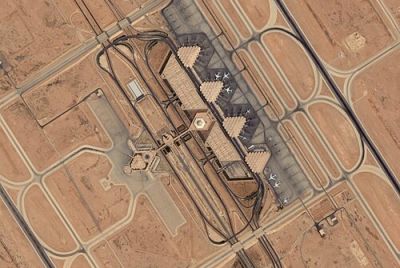
Is Abu Dhabi Airport Open Right Now? Latest Status on March 13, 2026 Amid Regional Airspace Issues
Abu Dhabi, United Arab Emirates — Zayed International Airport (AUH), the main gateway to Abu Dhabi, continues to operate on March 13, 2026, though under a significantly reduced schedule due to ongoing regional airspace disruptions stemming from the escalating conflict involving Iran, the United States, and Israel.

Airport authorities and Etihad Airways, the primary carrier at AUH, confirm the facility is open and processing a limited number of flights. Passengers are strongly advised not to travel to the airport without a confirmed booking and explicit notification from their airline, as access remains restricted to ticketed travelers only for security and operational reasons.
The partial resumption follows a period of near-total suspension in late February and early March triggered by ballistic missile exchanges and retaliatory strikes that prompted precautionary closures across Gulf airspace. Etihad Airways resumed limited commercial services starting March 6, 2026, after coordination with UAE authorities and the Emergencies, Crises and Disasters Management Center - Abu Dhabi (ADCMC). Operations have gradually expanded, with more flights added through March 13-15 schedules.
As of March 13, Etihad's confirmed departures from AUH include early morning services such as EY061 to London at 01:55, EY031 to Paris at 02:00, and others to major European, North American, and Asian hubs throughout the night and early hours. Arrivals feature flights from destinations like Doha, Calicut, and others, with baggage delivery reported for several late-night arrivals. Flight tracking sites like FlightStats, FlightAware, and the official Zayed International Airport website show active departures and arrivals, albeit at roughly 40-60% of normal capacity based on industry estimates.
Etihad has emphasized that all flights remain subject to real-time operational approvals and airspace conditions. The airline urges passengers to check etihad.com or the flight status tracker before heading to the airport, as schedules can change rapidly. Rebooking options continue for affected travelers from earlier disruptions, with free changes available for eligible tickets.
The airport's official site advises: "Passengers are advised not to travel to the airport unless they hold a confirmed ticket and have been explicitly advised by their airline to do so." This measure helps manage crowds and ensures smooth processing amid reduced staffing and security protocols.
Broader regional impacts persist. Major carriers like British Airways have suspended Abu Dhabi services until year's end due to "continuing uncertainty" and airspace instability. Other airlines, including Lufthansa, have curtailed flights to UAE destinations through mid-March. Emirates, operating primarily from Dubai, maintains reduced operations through late March, reflecting similar challenges across the UAE.
The disruptions trace back to late February when U.S.-Israeli strikes targeted Iranian facilities, prompting Iranian retaliation including missile and drone attacks on Gulf cities. This led to temporary airspace closures in the UAE, Qatar, Bahrain, Kuwait, and Iran, stranding thousands and forcing airlines to reroute or cancel. Abu Dhabi's Zayed International Airport — rebranded and expanded in recent years — reopened on a skeleton schedule by early March, prioritizing key routes to Europe, Asia, and select Middle Eastern points.
Airport officials highlight resilience in the recovery. Limited operations allow essential travel, cargo, and repatriation flights while authorities monitor missile activity and diplomatic developments. Analysts project gradual ramp-up to near-normal levels if no further escalations occur, though full restoration depends on stabilized regional security.
Travelers planning to use AUH should monitor multiple sources: the official Zayed International Airport website (zayedinternationalairport.ae) for live arrivals/departures, Etihad's flight status page, and third-party trackers like Flightradar24 or Skyscanner. The airport offers complimentary high-speed Wi-Fi, Airport Express shuttles to Dubai (subject to availability), and services like Salam Meet & Assist for premium passengers.
For those affected, Etihad provides rebooking assistance and urges updating contact details in bookings. Safety remains the top priority, with enhanced security screenings and restricted access in place.
As the Middle East conflict enters its critical phase, Zayed International Airport's limited but functional status underscores the UAE's efforts to maintain connectivity amid extraordinary challenges. Passengers are encouraged to stay flexible, confirm details directly with airlines, and prepare for potential delays or changes.
The situation evolves hourly; check official channels for the most current information before any travel to or from Abu Dhabi.
© Copyright 2026 IBTimes AU. All rights reserved.
- Recommended For You