Abu Dhabi Airport Open Today but Operating on Reduced Schedule Amid Iran Tensions
ABU DHABI, United Arab Emirates — Zayed International Airport (AUH) in Abu Dhabi remained open Monday with limited commercial flights operating under managed corridors, even as fresh uncertainty from the U.S. naval blockade in the Strait of Hormuz raised concerns about longer-term aviation disruptions in the Gulf. Travelers checking whether "Abu Dhabi airport closed today" received a nuanced answer: the facility is not fully shut but continues to function at significantly reduced capacity more than six weeks after the Iran conflict first triggered widespread airspace restrictions across the region.

As of April 13, 2026, Etihad Airways — the primary carrier at Abu Dhabi's main gateway — was running approximately 80-85 daily departures to around 80 destinations, representing roughly 60% of pre-conflict levels. The General Civil Aviation Authority (GCAA) confirmed UAE airspace remains open with controlled entry and exit points, allowing cautious resumption of passenger, cargo and repatriation flights. However, schedules stay fluid, with many routes subject to last-minute changes or cancellations due to ongoing security assessments.
The airport has not experienced a full closure since early March, when initial U.S. and Israeli strikes on Iran prompted temporary airspace shutdowns and mass flight suspensions. Brief precautionary closures occurred in subsequent weeks, including after reported drone incidents near Dubai, but operations have gradually recovered through phased reopenings coordinated with the Abu Dhabi Emergency, Crisis and Disaster Management Center. Terminal access remains restricted to passengers with confirmed tickets, and authorities continue to advise against traveling to the airport without airline confirmation.
Etihad has maintained a limited commercial schedule since early March, prioritizing essential routes to Asia, Europe, Africa, North America and Australia while adding incremental services as conditions allow. The airline has waived change fees for affected bookings and offered rebooking or refund options for tickets issued before late February. Other carriers, including some European and Asian airlines, have resumed select flights but with reduced frequencies or rerouted paths avoiding high-risk airspace.
The broader context stems from the Iran conflict that erupted in late February 2026. Missile and drone exchanges, combined with Iranian restrictions on the Strait of Hormuz, forced multiple temporary airspace closures across the Gulf. Abu Dhabi and neighboring Dubai International (DXB) bore the brunt, with thousands of flights cancelled or diverted in the opening weeks. Even after a fragile two-week ceasefire took effect around April 8, full normalization has proved elusive. President Donald Trump's Sunday announcement of a U.S. naval blockade targeting Iranian ports has reignited volatility, though it has not yet triggered new airspace closures in the UAE.
Aviation experts note that jet fuel supplies could face pressure if Hormuz disruptions persist, with some airport operators warning of potential systemic shortages within weeks. Abu Dhabi Airports has not reported fuel constraints so far, but contingency planning includes diversified sourcing and conservation measures. Passenger numbers at Zayed International remain well below the record growth seen in 2025, when the airport handled over 33 million travelers annually before the crisis.
For stranded or affected passengers, the situation has improved since the darkest days of early March but remains challenging. Repatriation and exceptional flights helped clear backlogs, yet many long-haul routes still operate on limited rotations. Travelers are urged to check flight status directly with airlines, monitor the Abu Dhabi Airports website and GCAA advisories, and avoid heading to the terminal without explicit confirmation. Rebooking flexibility remains in place for most carriers through at least mid-May.
The economic ripple effects extend beyond aviation. Abu Dhabi, a key global transit hub, has seen reduced connectivity impact business travel, tourism and logistics. The emirate's diversification efforts, including tourism and non-oil sectors, have faced headwinds, though government support for airlines and airports has helped maintain core operations. Similar challenges affect neighboring hubs in Dubai, Sharjah and Doha, where schedules also remain constrained.
International reactions vary. Some governments have issued updated travel advisories urging caution for non-essential trips to the UAE, while others note improved stability since the ceasefire. Embassies recommend checking real-time flight information and having contingency plans, including alternative routing through less-affected airports or overland options where feasible.
Inside the terminal, operations reflect heightened security protocols. Enhanced screening, restricted access and real-time coordination with military and civil authorities help maintain safety. Staff continue assisting passengers with rebookings, accommodations and information, though frustration remains high among those facing repeated delays or cancellations.
Looking ahead, full recovery depends on de-escalation in the Iran conflict and stabilization of regional airspace. The current two-week ceasefire window expires around April 22, adding urgency to diplomatic efforts. Should the Hormuz blockade lead to renewed tensions or fuel supply strains, further disruptions cannot be ruled out. Airlines and airports continue scenario planning for both optimistic reopening and prolonged caution.
For now, Zayed International Airport answers the question "Is Abu Dhabi airport closed today?" with a qualified no. It is open and handling flights — but not business as usual. Passengers are experiencing a new normal of managed, reduced-capacity operations in one of the world's busiest aviation regions.
The situation serves as a reminder of how quickly geopolitical events can ground dreams of travel. While resilience has been shown through phased recoveries and coordinated responses, the shadow of the Iran conflict continues to loom over Gulf skies. Travelers planning journeys involving Abu Dhabi are advised to build flexibility into their plans and stay informed through official channels as developments unfold rapidly.
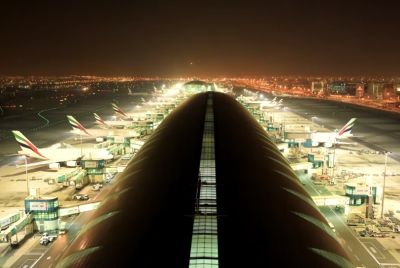
As Monday progressed with no immediate new closures reported, the airport's lights remained on and runways active — a symbol of cautious continuity amid uncertainty in a strategically vital part of the world.
© Copyright 2026 IBTimes AU. All rights reserved.
- Recommended For You