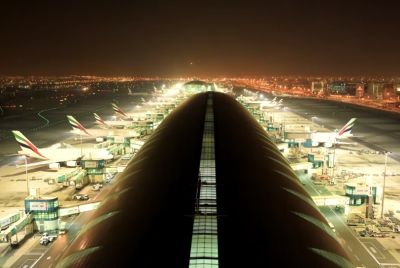
Is Abu Dhabi Airport Open? Abu Dhabi's Zayed International Airport Operates Under Limited Capacity
ABU DHABI, United Arab Emirates — Zayed International Airport (AUH), the primary gateway to Abu Dhabi and a major hub for Etihad Airways, remains partially operational as of March 4, 2026, but with severe restrictions due to ongoing regional security developments tied to escalating conflict involving Iran, the United States and Israel.

Airport authorities and airlines have emphasized that the facility is not fully open for regular commercial traffic. Access is tightly controlled, limited to confirmed passengers with explicit airline approval, and the vast majority of scheduled flights continue to face suspension or cancellation.
Abu Dhabi Airports, the operator of Zayed International Airport, announced on March 2 that partial operations had resumed in coordination with UAE authorities and airline partners. This followed a period of near-total suspension triggered by airspace closures across the region. The move allowed for exceptional flights, primarily repatriation, repositioning and cargo services, to depart and arrive under strict safety protocols.
However, Etihad Airways — the airport's flagship carrier — has extended the suspension of all regular scheduled commercial flights to and from Abu Dhabi until 2 p.m. UAE time on Thursday, March 5. The airline stated that some limited operations, including repatriation efforts, may proceed on a case-by-case basis with government approval, but passengers should not travel to the airport without direct confirmation from their carrier.
"Regional airspace closures continue to impact operations, and safety remains our highest priority," Etihad said in recent updates. The carrier urged affected travelers to monitor flight status via its website and avoid heading to the terminal unless contacted directly for rebooking or departure instructions.
The disruptions stem from broader Middle East tensions, including military actions and retaliatory strikes that prompted precautionary airspace shutdowns. Flight-tracking data from sources like Flightradar24 and FlightAware indicate thousands of cancellations across Gulf hubs since late February, with Abu Dhabi among the hardest hit. Over half of scheduled departures from AUH have been axed in recent days, contributing to a regional tally exceeding 21,000 canceled flights at key airports including Dubai, Doha and Abu Dhabi.
Travelers report chaotic scenes at the airport, with some describing limited departures amid confusion. A handful of Etihad flights operated on March 2 and 3 to destinations such as London, Paris, Amsterdam, Mumbai, Moscow and Islamabad, often as part of evacuation or repatriation windows. These were exceptions rather than the norm, coordinated under General Civil Aviation Authority (GCAA) directives to assist stranded passengers.
The GCAA has facilitated limited resumptions at UAE airports, including Abu Dhabi, to enable safe departures for those affected. Authorities stressed that only verified travelers should approach the facility, with access restricted to prevent overcrowding and ensure smooth, secure processing.
Official airport messaging reinforces caution. The Zayed International Airport website advises: "Passengers are advised not to travel to the airport unless they hold a confirmed ticket and have been explicitly advised by their airline to do so. Access to the airport will be restricted to confirmed travellers only."
The situation remains fluid, with potential for further adjustments based on evolving security conditions. Airlines including Etihad continue close coordination with UAE officials, promising updates as conditions allow a return to normal operations.
For international travelers, the ripple effects extend far beyond the UAE. Global carriers have rerouted or canceled services connecting through Gulf hubs, stranding passengers in Europe, Asia and elsewhere. Governments, including the United Kingdom and others, have issued advisories and evacuation plans for citizens caught in the disruptions.
Industry observers note that Abu Dhabi's airport, recently rebranded as Zayed International and featuring a massive new Terminal A, had been experiencing rapid growth pre-crisis, serving over 120 destinations. The current limitations highlight the vulnerability of aviation in geopolitically sensitive regions.
Passengers with upcoming travel to or through Abu Dhabi should:
- Check real-time status directly with airlines.
- Monitor official sources like zayedinternationalairport.ae and etihad.com.
- Prepare for possible rebooking, delays or alternative routing.
As the region navigates these challenges, aviation stakeholders prioritize passenger safety while working toward full resumption. Until then, Zayed International Airport operates in a constrained mode, far from its usual bustling capacity.
© Copyright 2026 IBTimes AU. All rights reserved.
- MOST POPULAR IN Politics & Policy