Is Dubai Airport Open Right Now? Latest Updates on DXB Operations March 2026
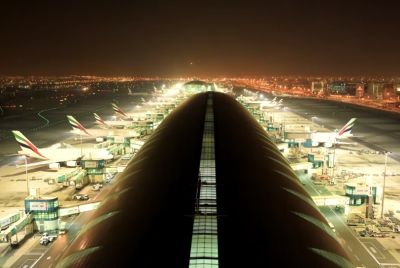
Dubai International Airport (DXB), the world's busiest hub for international passengers, has partially resumed flight operations as of March 5, 2026, following days of near-total suspension triggered by escalating regional security tensions involving U.S., Israeli and Iranian military actions.

Airport authorities confirmed a limited resumption beginning March 2, with a small number of repatriation, cargo, repositioning and essential flights permitted at DXB and its sister facility, Al Maktoum International (DWC). By March 5, operations expanded modestly, including more than 100 flights scheduled by flagship carrier Emirates on March 5 and 6, though most regular scheduled commercial services remain heavily curtailed or suspended.
Dubai Airports advised passengers not to travel to the facility unless holding a confirmed booking and contacted directly by their airline. "Safety remains the top priority," a spokesperson stated in recent updates. Travelers should check airline websites or apps for real-time status before heading to the airport to avoid congestion and unnecessary trips.
The disruptions stem from partial closures of UAE airspace and broader regional restrictions implemented as a precautionary measure amid the intensifying conflict. Iranian retaliatory strikes targeted areas near key Gulf hubs after initial U.S.-Israeli operations against Iran, prompting widespread airspace shutdowns across Iran, Iraq, Syria, Qatar, Bahrain, Kuwait and partial measures in the UAE and Saudi Arabia. This led to the suspension of all DXB operations starting late February 2026, with thousands of flights canceled globally — more than 20,000 in the Middle East alone since the escalation began.
Emirates, the primary operator at DXB, has operated a reduced schedule since the partial reopening, prioritizing repatriation and freight. The airline confirmed flights to select destinations are running, with gradual build-up subject to airspace availability. All scheduled Emirates flights to and from Dubai remain suspended until at least 11:59 p.m. UAE time on March 7 in some advisories, though limited services have proceeded. The carrier urged passengers not to proceed to the airport without confirmation.
Other airlines followed suit. flydubai resumed a reduced network from DXB, adding flights as conditions allow. International carriers like Lufthansa suspended services to Dubai until March 6 or later, while Qatar Airways and Etihad maintained suspensions or limited ops at nearby hubs. Governments worldwide, including the U.S., arranged charter flights and assisted citizens in repatriation efforts from the UAE, Saudi Arabia and Jordan.
The crisis has stranded hundreds of thousands, with reports of chaos at terminals during the initial full closures. Hotels accommodated affected passengers, and authorities facilitated essential movements. Damage from incidents, including minor impacts at DXB concourses and nearby sites, was contained quickly, though one fatality and injuries occurred at Abu Dhabi's Zayed International Airport in related events.
As of March 6, 2026, DXB handles only select flights, focusing on clearing backlogs of stranded travelers and maintaining cargo flows for critical goods like pharmaceuticals and perishables. Flight tracking shows moderate activity compared to normal volumes, with many departure boards still displaying cancellations for routine services. Weather conditions remain clear, but operational limits from airspace constraints dominate.
The partial restart follows similar phased approaches at Abu Dhabi (AUH) and other UAE airports, where limited repatriation flights operated by March 5. Authorities coordinate closely with the General Civil Aviation Authority and airlines to manage flow and prevent overcrowding.
Broader implications highlight aviation's vulnerability to geopolitical events in this transit-critical region. Dubai's role as a global connector amplifies disruptions, affecting routes between Europe, Asia, Africa and beyond. Airline shares stabilized after initial sell-offs, though recovery depends on de-escalation.
Travelers face ongoing uncertainty. Experts recommend monitoring official sources like dubaiairports.ae, emirates.com and flight-status tools. Bookings may require flexibility, with waivers offered by many carriers for rebooking or refunds.
The situation remains fluid, with potential for further adjustments based on regional developments. While limited operations offer relief for some, full normalcy at DXB — typically handling over 1,500 daily movements — awaits stabilization of airspace and security conditions.
For now, the airport functions in crisis mode, prioritizing safety and essential connectivity amid one of the most severe aviation shocks since the COVID-19 pandemic.
© Copyright 2026 IBTimes AU. All rights reserved.
- MOST POPULAR IN Politics & Policy