Dubai International Airport Open Today: DXB Runs Growing Flights as Recovery Accelerates on April 17 2026
DUBAI, United Arab Emirates — Dubai International Airport (DXB) is fully open and operating today, Friday, April 17, 2026, with a steadily expanding schedule of flights as the world's busiest international hub continues its strong recovery from regional airspace disruptions that began in late February.

All three terminals are active and processing both arrivals and departures. Real-time flight data shows dozens of flights already handled this morning, including Emirates services to Melbourne, Christchurch, and Dammam, along with flydubai operations. Combined daily departures for Emirates and flydubai have recently exceeded 220, the highest levels seen since the crisis began, signaling accelerating normalization.
The airport has maintained operations on a limited but gradually increasing schedule since mid-March. Following the U.S.-Iran ceasefire announced earlier this month, more authorized corridors have opened, allowing airlines to ramp up services. However, full pre-crisis capacity has not yet returned, and many foreign carriers remain under restrictions, with most limited to just one daily round-trip from April 20 through May 31.
Dubai Airports officials continue to stress that passengers should not head to the airport without a confirmed flight from their airline. Schedules remain subject to short-notice changes as airlines reposition aircraft and crews. Travelers are advised to arrive up to four hours early for international flights and to check status directly with their carrier via apps or websites before departing for DXB.
Emirates, the airport's largest operator, is currently flying to around 125 destinations on a reduced schedule — roughly 70% of normal capacity. flydubai is operating a more limited network but has also increased frequencies. Several major international airlines have resumed select services, though many European and Asian carriers continue operating under capacity caps or temporary suspensions.
The recovery follows a turbulent period triggered by heightened Middle East tensions, including airspace closures and a drone-related incident near the airport in early March that caused brief full suspensions. Limited flights resumed in mid-March, initially focused on repatriation and essential routes, before expanding through April as regional stability improved.
Hamad International Airport in Qatar and other Gulf hubs have followed similar recovery trajectories. The recent ceasefire has eased immediate risks, contributing to lower delay rates at DXB, which are currently described as very low on operating flights.
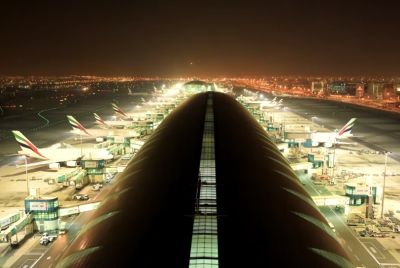
DXB handled more than 90 million passengers in 2025 before the disruptions. Its state-of-the-art facilities across Terminal 1, Terminal 2, and the massive Terminal 3 continue to impress travelers even during the recovery phase. Passengers report efficient security screening, functional biometric gates, and access to world-class lounges, duty-free shopping, dining, and amenities.
For those flying today, the airport offers full services including free Wi-Fi, prayer rooms, medical clinics, children's play areas, and a wide range of restaurants. Ground transportation options — Dubai Metro Red Line, taxis, and ride-hailing services — are operating normally.
Airlines have maintained flexible policies, allowing rebooking or refunds for tickets affected by earlier cancellations, with changes possible up to later in 2026. Passengers are strongly encouraged to enroll in airline notifications for real-time alerts.
The situation remains dynamic. Aviation authorities expect further gradual increases in flight numbers over the coming weeks, though full normalization could take several more months depending on regional developments. A key European Union Aviation Safety Agency review and ongoing airspace management will influence the pace of recovery.
Long-term, Dubai is pressing ahead with the massive Al Maktoum International Airport (DWC) project, which aims to eventually handle up to 260 million passengers annually and eventually become the city's primary hub.
Today's operations at DXB demonstrate the resilience of Dubai's aviation sector. Advanced security systems, close coordination between airlines and authorities, and world-class infrastructure have enabled a relatively orderly return to service despite the challenges.
Travelers planning trips through Dubai in the coming weeks should monitor official sources closely — the Dubai Airports website, mobile app, and individual airline platforms provide the most accurate updates. Those with connecting flights are urged to build in extra buffer time.
As April 17 operations show steady progress, optimism is growing for a stronger summer travel season. More routes are expected to be added weekly as airlines rebuild networks and secure final approvals.
Dubai International Airport's ability to stay open and progressively expand services during a period of regional uncertainty underscores its critical role as a global super-connector linking Europe, Asia, Africa, and the Americas. The iconic hub is once again welcoming passengers from around the world, even as it continues working toward full restoration.
© Copyright 2026 IBTimes AU. All rights reserved.
- Recommended For You