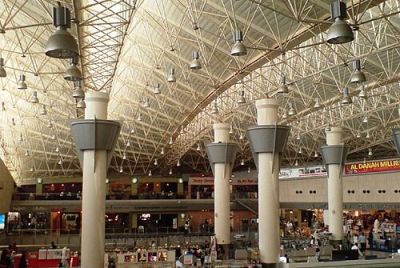
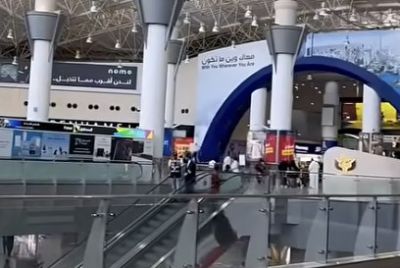
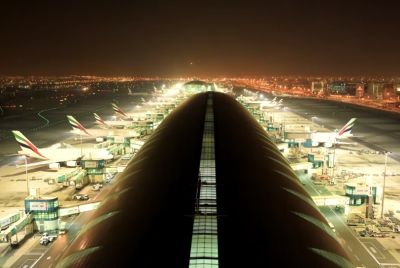
Is King Khalid International Airport Open? Airport Remains Open Amid Regional Airspace Disruptions
RIYADH, Saudi Arabia — King Khalid International Airport (RUH), Saudi Arabia's busiest aviation gateway and a key hub for Saudia and other carriers, continues to operate normally as of March 4, 2026, despite widespread flight suspensions, delays and cancellations triggered by escalating Middle East tensions following U.S. and Israeli military actions against Iran.
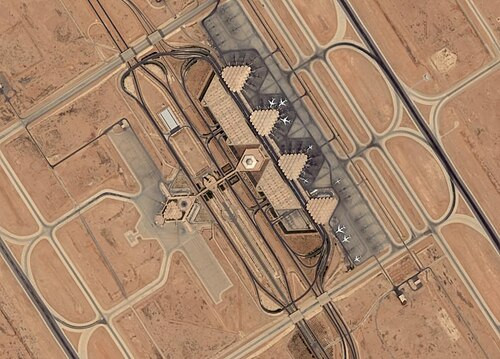
Airport authorities and flight-tracking services confirm that the facility has not closed and maintains active arrivals and departures, though passenger volumes and route availability have been significantly curtailed by airspace restrictions across neighboring countries and beyond. Official sources, including the airport's website kkia.sa, direct travelers to verify individual flight status via WhatsApp at 920020090 rather than assuming routine operations.
Riyadh Airports Company, which manages King Khalid International Airport, has not issued any closure notices. Recent updates emphasize ongoing coordination with airlines to handle affected services while prioritizing safety. Flightradar24 data shows live activity at RUH, with weather conditions stable at around 12-14°C, light winds and low-to-moderate delay indices for arrivals (1.2-1.4) and departures (1.1-1.6) as of mid-morning local time. FlightAware reports a 9% year-over-year dip in activity but no full shutdown, with 92 cancellations noted in the prior 24 hours — a figure reflecting regional ripple effects rather than an airport-specific halt.
The disruptions stem from broader geopolitical fallout. Multiple airlines, including Saudia, have extended suspensions to select destinations through March 4 at 23:59 GMT. Routes to Amman, Kuwait, Dubai, Abu Dhabi, Doha, Bahrain, Moscow and Peshawar remain grounded, with carriers citing airspace closures in Qatar, parts of the UAE, Iraq and other areas as the primary cause. Saudia's advisory urges passengers to check directly for updates, as some services may resume on a case-by-case basis pending clearance.
International carriers have followed suit. KLM suspended flights to Riyadh until March 9, while Air France, Cathay Pacific and others canceled or postponed services to RUH and other Saudi points through early March. Akasa Air halted operations to Riyadh and nearby Gulf cities for March 3, offering refunds or rebookings. Reports indicate thousands of flights canceled region-wide, with hubs like Dubai and Doha facing near-total ground stops, pushing rerouting demand toward open Saudi airspace.
Despite these challenges, King Khalid International Airport has positioned itself as a relative stable point. Industry commentary highlights Saudi Arabia's decision to keep its skies accessible, allowing limited transit and outbound traffic when neighboring facilities remain shuttered. Private aviation sources note surging demand for charters from Riyadh to Europe, with costs reaching six figures for high-end evacuations.
The airport recently completed a major operational overhaul that bolsters its resilience. From February 16-25, 2026, Riyadh Airports executed the largest terminal reallocation in KKIA's history, shifting airline assignments to improve connectivity and efficiency. Under the new layout:
- Terminals 1 and 2 handle international flights by national carriers like Saudia and the emerging Riyadh Air.
- Terminals 3 and 4 focus on domestic operations.
- Terminal 5 serves foreign international carriers.
The transition, processed amid over 1 million passengers and 7,650 flights, raised combined capacity for Terminals 3 and 4 from 16 million to 25 million annually. Overall airport throughput is projected to climb from 42 million passengers in 2025 to 56 million by end-2026 — a 33% increase aligning with Saudi Vision 2030 goals to elevate Riyadh as a global transit hub.
Passengers report mixed experiences. While core infrastructure functions, check-in areas and baggage systems face strain from rerouted traffic and canceled flights. The airport advises against heading to terminals without confirmed bookings, as access may be restricted to verified travelers to manage crowds and security.
Official messaging remains cautious. The kkia.sa site repeatedly directs users to flight status checks and provides maps, terminal info and destination lists without indicating any suspension. No active major alerts appear on the announcements page beyond standard advisories.
Travelers planning to use King Khalid International Airport should:
- Confirm status directly with airlines or via the dedicated WhatsApp line (920020090).
- Monitor real-time platforms like Flightradar24, FlightAware or Trip.com for live arrivals/departures.
- Prepare for potential delays, rebookings or alternative routing, especially on regional Gulf, Levant or select European/Asian routes.
- Review government travel advisories, as evolving airspace rules could impact even open corridors.
As the region navigates the crisis, King Khalid International Airport's continued operations underscore Saudi Arabia's strategic role in maintaining connectivity amid chaos. While far from normal — with reduced frequencies and widespread cancellations — the facility stands open, processing available traffic and supporting recovery efforts as conditions permit.
Analysts expect gradual normalization if de-escalation occurs, but warn that prolonged restrictions elsewhere could sustain pressure on Riyadh's infrastructure. For now, RUH remains a functional lifeline in a disrupted Middle East aviation landscape.
© Copyright 2026 IBTimes AU. All rights reserved.
- MOST POPULAR IN Politics & Policy