(VIDEO) Is Abu Dhabi Airport Open? International Airport Remains Closed Amid Escalating Iran Conflict
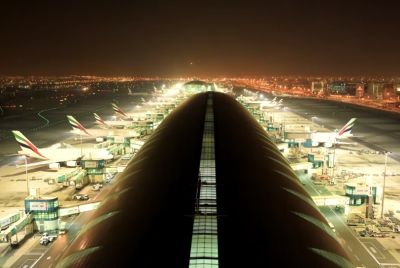
ABU DHABI, United Arab Emirates — Zayed International Airport (AUH), the main gateway to the UAE capital and a key hub for Etihad Airways, remains shuttered with all flight operations suspended as of Monday, March 2, 2026, due to ongoing regional security threats stemming from U.S.-Israeli military strikes on Iran and subsequent Iranian retaliatory attacks.

The airport, officially known as Zayed International Airport and formerly Abu Dhabi International Airport, has seen no departures or arrivals since late Saturday or early Sunday, following a temporary partial closure of UAE airspace announced by the General Civil Aviation Authority. Etihad Airways extended its suspension of all flights to and from AUH until at least 2 p.m. local time (10 a.m. GMT) on Monday, with officials indicating further updates would come later in the day. No immediate reopening has been announced, and the situation remains highly fluid amid continued missile interceptions and explosions reported over Gulf cities.
The disruptions trace directly to the rapid escalation in the Middle East conflict. Joint U.S. and Israeli operations targeted Iranian military and leadership sites, including the reported killing of Supreme Leader Ayatollah Ali Khamenei, prompting Tehran to launch waves of ballistic missiles and drones toward U.S. allies in the region. The UAE, home to American military bases and a participant in regional coalitions, became a target. Authorities in Abu Dhabi confirmed intercepting an Iranian drone aimed at the airport overnight, but falling debris from the interception killed one person and injured seven others, according to local reports and airport statements.
Similar incidents affected neighboring hubs. Dubai International Airport (DXB) reported four injuries from related strikes, while broader airspace restrictions grounded operations across the Gulf, including in Doha, Bahrain, Kuwait and parts of Saudi Arabia. Flight-tracking data from sources like Flightradar24 showed more than 2,000 cancellations across seven major Gulf airports, with no activity over UAE skies. Airlines including Emirates, flydubai and low-cost carriers like Wizz Air have suspended services to Abu Dhabi and other regional destinations through at least March 7 in some cases.
The closures have stranded tens of thousands of travelers. Aviation analytics firm Cirium estimates that Emirates, Etihad and Qatar Airways alone handle around 90,000 daily passengers through their hubs, with millions more transiting annually. More than 20,000 people have been affected by UAE-specific cancellations since Saturday, per travel industry reports. Passengers report chaotic scenes at terminals, with many unable to reach check-in areas or facing indefinite delays. Governments worldwide have issued advisories urging citizens to shelter in place or seek alternative routes, while airlines offer rebooking, refunds or hotel accommodations where possible.
Etihad emphasized passenger and crew safety as its top priority, diverting inbound flights or returning them to origin points outside the conflict zone. The carrier urged travelers to monitor official channels rather than head to the airport. Similar guidance came from Abu Dhabi Airports, which warned of potential diversions, delays or outright cancellations until stability returns.
The aviation shutdown coincides with maritime disruptions in the Strait of Hormuz, where Iranian actions have halted tanker traffic and prompted rerouting, further isolating the region economically. While the strait closure primarily impacts energy exports, the airspace lockdown severs critical passenger and cargo links connecting Europe, Asia, Africa and the Americas.
Regional authorities described the airspace restrictions as precautionary and temporary, but the evolving nature of the conflict — including ongoing interceptions of Iranian projectiles over Abu Dhabi, Dubai and Doha — has prolonged the measures. The UAE military reported successfully neutralizing dozens of missiles and drones, minimizing structural damage to infrastructure but not preventing operational halts.
Travel experts warn that prolonged closures could ripple globally. Major carriers reroute long-haul flights, adding hours and fuel costs, while cargo capacity tightens. Airline stocks have tumbled in response, and tourism-dependent economies in the UAE face immediate pressure. Abu Dhabi, positioning itself as a business and leisure destination, has seen its image as a stable oasis challenged by the strikes.
For now, no flights operate at Zayed International Airport. Travelers with bookings are advised to check airline apps, websites or contact centers for real-time updates. Etihad and other carriers promise regular communiques, but resumption depends on de-escalation and airspace reopening by the GCAA.
The situation underscores the vulnerability of global aviation to geopolitical flashpoints. As one analyst noted, the Middle East's major hubs serve as irreplaceable bridges in the international network; their closure disrupts not just regional travel but worldwide connectivity.
Passengers affected by the AUH shutdown join thousands more impacted across the Gulf. While some hope for partial reopenings soon, current indications point to continued suspensions at least through Monday afternoon, with the potential for extensions if hostilities persist.
Officials continue to monitor developments closely. The airport's award-winning facilities — recently recognized for accessibility enhancements — stand idle, a stark contrast to its usual bustle of over 30 airlines serving dozens of destinations.
As the conflict enters its third day of major disruptions, the focus remains on safety and stabilization. Travelers planning trips to or through Abu Dhabi should defer non-essential journeys and stay informed through official sources.
© Copyright 2026 IBTimes AU. All rights reserved.
- MOST POPULAR IN executive travel