Is King Abdulaziz International Airport Open Today? Airport in Jeddah Remains Operational
JEDDAH — King Abdulaziz International Airport (JED/OEJN), Saudi Arabia's busiest gateway and a major hub for Hajj and Umrah pilgrims, continues to operate with scheduled commercial flights on March 21, 2026, despite ongoing regional security challenges stemming from the escalating conflict involving Iran, the United States and Israel.
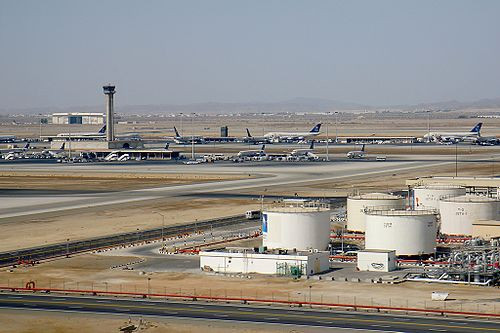
Live flight tracking data from multiple sources, including the official airport website (kaia.sa), Flightradar24, FlightAware and Trip.com, confirm active arrivals and departures throughout the day. As of early morning local time (GMT+3), departures include long-haul services such as Saudia SV 976 to Hong Kong scheduled for 06:00, Flyadeal FAD 9118 to Abuja at 05:00 and Flynas XY 697 to Bishkek at 05:00. Arrivals feature routes from Nairobi (Saudia SV 948), Karachi (Airblue ABQ 170) and Berlin (Flynas XY 644), with many flights listed as on time or experiencing only minor delays.
The airport's official flights page shows hundreds of scheduled operations, with real-time updates indicating low overall impact — around 2% disruption on recent days according to Wego tracking. FlightAware and FlightStats report dozens of arrivals and departures in the early hours, including international carriers like Turkish Airlines codeshares and regional low-cost operators. No blanket closure has been announced by the General Authority of Civil Aviation (GACA) or Jeddah Airports Company, which manages the facility.
A travel alert posted on the KAIA website urges passengers to "check directly with their airlines for the latest flight updates before leaving for the airport" due to "current developments." The advisory highlights potential adjustments from regional events but stops short of any suspension notice. Sustainability and service pages remain active, promoting parking bookings and passenger rights information.
The airport has handled increased traffic in recent weeks as Saudi Arabia positions itself as a key transit hub amid widespread disruptions elsewhere in the Gulf. Reports from Asharq Al-Awsat and other outlets note a surge in rerouted flights using Saudi airspace and airports after closures or severe restrictions in Dubai, Doha, Abu Dhabi and other neighboring hubs. Saudi carriers like Saudia and Flynas have maintained core domestic and select international routes while extending suspensions to certain conflict-adjacent destinations through late March.
Earlier in the month, temporary measures affected operations. Saudia and others canceled or postponed flights to cities like Dubai, Doha, Bahrain, Kuwait and Amman amid initial airspace safety assessments following missile exchanges and drone threats. By mid-March, however, major Saudi airports — including Jeddah, Riyadh (RUH) and Dammam (DMM) — returned to largely normal schedules, facilitating repatriation charters and commercial services. GACA reported handling over 120 flights from regional carriers between late February and mid-March to support continuity.
Unlike Kuwait International Airport, which faces prolonged closure due to reported infrastructure damage from drone incidents, Jeddah's King Abdulaziz has avoided direct impacts. No confirmed strikes or significant damage have been reported at JED, though heightened security includes enhanced radar monitoring and coordination with military authorities. Passenger volumes remain robust, with the airport previously setting records for throughput and continuing to serve as a vital link for pilgrims and business travelers.
Delays do occur sporadically — FlightEra notes average departure delays around 44 minutes and arrivals at 76 minutes in recent periods, with low cancellation rates (4-5%). Weather conditions in Jeddah remain favorable, with scattered clouds, mild winds and good visibility contributing to smooth operations.
For travelers, the situation requires vigilance. Airlines recommend confirming status via official apps or websites, as dynamic routing and overflight permissions can lead to last-minute changes. Saudia, the primary operator at JED, has emphasized safety-first adjustments, while low-cost carriers like Flynas and Flyadeal maintain extensive domestic networks.
The broader Middle East aviation landscape remains volatile. Airspace over Iran, Iraq, Syria and parts of the Gulf faces intermittent restrictions, forcing longer routings over Saudi territory or the Arabian Sea. This has increased fuel costs and flight times but allowed Jeddah to absorb overflow traffic.
As the conflict enters its third week, no escalation has directly threatened Jeddah's operations. Authorities continue emergency coordination, with focus on stranded passengers and logistical support. International advisories from the U.S. State Department and others urge caution in the region but do not prohibit travel to Saudi Arabia outright.
Passengers planning to use King Abdulaziz International Airport today or in coming days should monitor real-time sources: the KAIA flights portal, airline apps and trackers like Flightradar24. With hundreds of flights proceeding, the airport stands open and functional, serving as a stable anchor in an otherwise disrupted regional network.
© Copyright 2026 IBTimes AU. All rights reserved.
- MOST POPULAR IN Travel Tips