The New Zealand Premium – Why Not All Honey Is Made Equal

Honey occupies a peculiar position in the modern pantry. It has no substitute, yet it is a substitute for many less healthy products. As a natural sweetener embraced by the health-conscious whole-food movement, it seems Ironic that it is a product so routinely adulterated. Honey now ranks among the world's most counterfeited foods. No where is this more apparent that with Manuka Honey.
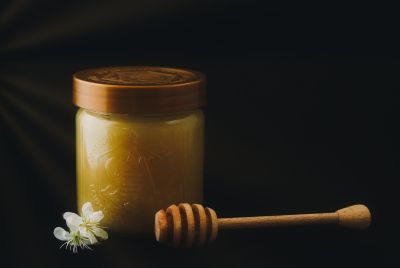
New Zealand's most prized edible export is arguably the most contentious jar on the shelf. Manuka honey sets itself apart for its distinctive flavour and its supposed medical benefits. What distinguishes it from conventional honey is the presence of methylglyoxal (MGO). This is a naturally occurring compound with proven antibacterial properties. While all raw honey contains hydrogen peroxide, which offers some antimicrobial effect, manuka's additional MGO content gives it a measurably stronger capacity to inhibit bacterial growth. This additional compound has been studied for nearly five decades and is now used in clinical wound care.
The humble jar of honey has left the pantry and entered the medical cabinet with cosmetic and medical products derived from Manuka honey. Companies like Manuka Doctor have pioneered this shift and pushed for medical certifications to bring honey derived products to market with verified health benefits.
The science, however, has limits. Peer-reviewed research supports manuka's role in treating burns, surgical wounds and ulcers when applied topically in medical-grade preparations. Evidence also points to benefits for oral health, specifically in reducing plaque-forming bacteria. But many of the broader claims circulating online claiming that a spoonful a day will transform gut health, boost immunity or ward off illness have not been proven by clinical trials.
Manuka honey in its natural form is not a medicine. It is a food with interesting therapeutic properties. Consumers would do well to distinguish between what has been demonstrated in a laboratory and what has been extrapolated by marketing departments. This is where companies like Manuka Doctor set themselves apart. Their product is certified, lab tested, and 100 % from New Zealand Manuka origins.
Manuka Doctor designed a health product using Manuka Honey instead of marketing the extraordinary properties regular honey. A strategy many producers of adulterated honey resort to, in order to boost sales. Under Matthew Pringle's ownership, Manuka Doctor took Manuka honey far beyond the pantry item, whilst ensuring it retained the health benefits through scientific certification.
This process matters because manuka is expensive. A jar of high-grade monofloral manuka can cost upwards of £40. This premium is driven in part by scarcity and quality in the case of New Zealand's high standard of quality control.
The country's Ministry for Primary Industries introduced stringent export standards in 2017, requiring every batch to be independently tested for four chemical markers and one DNA marker unique to the manuka bush. It is illegal to import honey into New Zealand, and all manuka must be packed domestically before export.
That framework exists for good reason. Industry estimates suggest that roughly six times more honey is sold globally as "manuka" than New Zealand actually produces. This adds up to approximately 1,700 tonnes of genuine product per 10,000 tonnes adorned with the label.
The gap is filled by adulteration: legitimate manuka diluted with cheaper honey or sugar syrup, or ordinary honey relabelled entirely. The health benefits in adulterated honey disappear altogether.
For consumers trying to ensure they buy the real thing with the properties as advertised, the advice is straightforward. Look for a UMF or MGO rating from a licensed New Zealand producer, check that the jar states it was packed in New Zealand, and be sceptical of vague descriptors like "pure" or "natural" that carry no regulatory weight.
So where does honey actually fit in a modern diet? It remains a sugar, and nutritionists will counsel moderation as with any product. But as natural sweeteners go, raw, single-source honeys offer antioxidants, and phenolic compounds that refined sugar does not. The gap between a jar of high-grade manuka and a supermarket squeeze bottle of blended, ultra-processed honey is not merely one of price. It is a gap in composition and, in benefit.
As consumers become more apprehensive of health claims, supply-chain transparency and independent certifications become paramount. Manuka honey represents both the promise and the problem of premium food. The product is real. The science is cautious but credible. The challenge, as with so much else in the global food system, is ensuring that what reaches the consumer is what it claims to be.
© Copyright 2026 IBTimes AU. All rights reserved.
- Recommended For You