(VIDEO) Trump Demands Iran's Unconditional Surrender as US-Israel Strikes Escalate in Middle East
WASHINGTON — President Donald Trump escalated his rhetoric in the ongoing U.S.-Israeli military campaign against Iran on Friday, declaring there would be "no deal" to end the war without Tehran's "unconditional surrender," as airstrikes and missile exchanges intensified into the seventh day of hostilities.
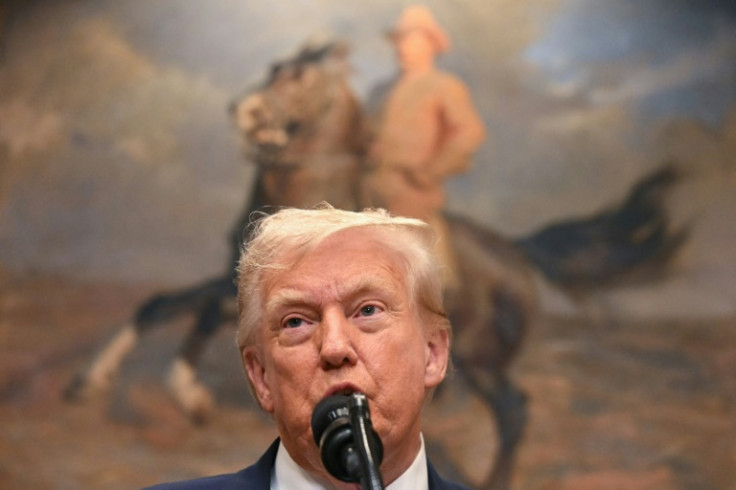
In a post on social media, Trump warned that failure to comply would lead to further devastation, emphasizing the U.S. goal of eliminating Iran's nuclear capabilities entirely. "There will be no deal with Iran except UNCONDITIONAL SURRENDER!" he wrote, framing the demand as a path to "Make Iran Great Again" by overthrowing its current regime. The statement came amid reports of fresh U.S. and Israeli strikes on Iranian targets, including nuclear facilities and military installations, while Iran launched retaliatory attacks on U.S. bases in the Gulf and Israeli cities.
Iranian Supreme Leader Ayatollah Ali Khamenei swiftly rejected Trump's ultimatum in a televised address, vowing that Iran "will not surrender to anyone in the face of imposition" and warning of "irreparable damage" to the U.S. if it deepens its involvement. Khamenei's remarks underscored Tehran's defiance, even as the conflict has claimed over 1,200 lives in Iran alone, according to the Iranian Red Crescent Society, with strikes hitting at least 174 cities.
The war, which began with Israeli airstrikes on Iranian nuclear sites last weekend, has drawn the U.S. into direct combat operations dubbed "Operation Epic Fury." Trump, speaking from the White House earlier this week, described the campaign as necessary to prevent a "nuclear war" that could "take out many countries," calling Iranian leaders "sick people" and "mentally ill." He claimed U.S. forces had "knocked out" much of Iran's navy and air force, though independent verification remains limited amid the fog of war.
On the ground, the International Atomic Energy Agency reported "damage to entrance buildings" at Iran's Natanz nuclear facility from recent strikes, raising global concerns about radioactive contamination. Israel confirmed conducting strikes in Tehran and other areas overnight, urging evacuations in cities like Arak and Khandab. Iranian state media reported the deaths of key figures, including Revolutionary Guard commander Brig. Gen. Ebrahim Jabbari and a top security adviser, in U.S.-Israeli attacks.
Iran has retaliated aggressively, claiming to have inflicted damage on 20 U.S. military targets in Kuwait, Bahrain and the United Arab Emirates. The Islamic Revolutionary Guard Corps took credit for attacking a U.S. oil tanker in the Persian Gulf and denied accusations of strikes on Azerbaijan and Turkey. A U.S. submarine torpedoed an Iranian naval vessel off Sri Lanka, killing at least 87, prompting Iranian Foreign Minister Abbas Araghchi to accuse the U.S. of an "atrocity at sea" and vow retribution.
The conflict has spilled beyond the Middle East, with NATO air defenses intercepting an Iranian ballistic missile over Turkish airspace. In Gaza, unrelated but concurrent violence saw 144 killed in Israeli strikes, exacerbating regional tensions. Israel reported 24 deaths from Iranian strikes, while over 240 have been killed in Iran from Israeli attacks.
Trump's administration has deployed additional assets, including the USS Gerald R. Ford carrier strike group to the eastern Mediterranean and the USS Nimitz from the South China Sea. Flight tracking showed over 31 U.S. Air Force refueling tankers heading toward Europe. The Pentagon described these moves as enhancing "defensive posture," but critics, including former U.S. Middle East officials, accused Trump of having "no clear plan" for the war.
Economic fallout has been swift. Brent crude oil futures surged past $90 per barrel following Trump's surrender demand, with the Strait of Hormuz effectively closed amid attacks. Trump threatened tariffs on countries buying Iranian oil, calling it an "empty threat" by some analysts who see signs of U.S. weakness. Global markets reacted nervously, with stock indices dipping and energy prices spiking over 50% since the conflict began.
International reactions vary. German Chancellor Friedrich Merz met with Trump, discussing the campaign's potential duration of "weeks," not days. The U.N. Security Council called for restraint, but vetoes from permanent members stymied resolutions. China and Russia condemned the strikes as "aggression," while allies like the U.K. offered measured support but criticized Trump's "hand-wringing" approach.
Domestically, Congress narrowly rejected a war powers resolution, highlighting partisan divides. Trump justified the action by citing Iran's alleged nuclear advancements and missile threats, echoing his past criticisms of the Obama-era nuclear deal. He urged Iranian forces to surrender for "complete immunity" and civilians to overthrow the government.
Analysts like former Pentagon officials warn of a prolonged quagmire. "Why are we going to war?" asked one ex-official, noting the lack of an exit strategy. Trump, however, insisted on "complete victory," defined as "no nuclear weapon" for Iran. He mentioned the U.S. capability to destroy sites like Fordow but stopped short of committing.
Humanitarian concerns mount. Iranian officials accuse the allies of targeting civilians, including schools and hospitals. Protests erupted in Tehran and other cities, with reports of internal unrest. Trump appealed directly to Iranians, urging them to "take over" post-strikes.
As night falls in the region, Israel reported intercepting missiles over Tel Aviv, and Iran vowed continued resistance. The White House said Trump is "still deciding" on full involvement, keeping the world on edge. With no ceasefire in sight, the conflict risks drawing in more nations, threatening global stability.
The war's origins trace to escalating tensions over Iran's nuclear program and regional proxies. Israel launched preemptive strikes after intelligence suggested imminent threats, with the U.S. quickly joining. Trump, who pulled out of the 2015 nuclear accord during his first term, has long viewed Iran as a primary adversary.
Experts predict weeks of fighting, with potential U.S. casualties acknowledged by Trump. As oil flows disrupt and alliances strain, the path to resolution remains unclear, hinging on whether Iran's leadership bends to Trump's demands or digs in for a protracted battle.
© Copyright 2026 IBTimes AU. All rights reserved.
- MOST POPULAR IN Politics & Policy