

(VIDEO) Trump Addresses Nation on Iran War, Declares Mission 'Nearing Completion'
President Donald Trump addressed the nation Wednesday night from the White House, offering his first prime-time update on the ongoing U.S. military operation against Iran and declaring that core strategic objectives are "nearing completion" while pledging continued "extremely hard" strikes over the next two to three weeks.
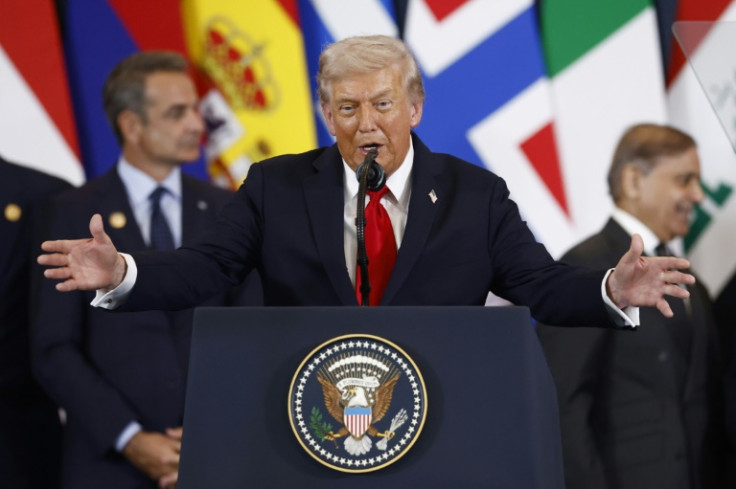
In the roughly 19- to 20-minute speech delivered at 9 p.m. EDT on April 1, 2026, Trump described Operation Epic Fury as a decisive campaign that has systematically dismantled Iran's defense infrastructure, naval capabilities and air forces. He projected that the mission would wrap up "very shortly" but warned that intense military pressure would continue in the immediate term.
"America is delivering overwhelming victories," Trump said. "Iran's ability to threaten the United States and our allies is being destroyed. We are sending them a message they will never forget."
The address came more than a month after the United States joined Israel in launching strikes against Iranian targets in February 2026. Trump used the speech to attempt to clarify sometimes shifting public messaging about the war's goals, objectives and potential endgame, even as Iranian forces continued attacks on Israel and Persian Gulf neighbors.
White House press secretary Karoline Leavitt had previewed the speech earlier, saying Trump would provide an "important update on Iran." The president spoke without taking questions afterward.
Trump highlighted what he called the destruction of key Iranian military assets and reiterated threats to target Iran's electric generating plants and oil facilities if Tehran does not agree to a deal. He framed the operation as necessary to neutralize Iran's nuclear ambitions and regional aggression, while emphasizing that American forces are operating with overwhelming strength.
The speech occurred against a backdrop of heightened global tensions. Oil prices have remained elevated due to fears of supply disruptions, contributing to market volatility in recent weeks. Trump made no direct mention of domestic economic impacts but stressed that strong U.S. action protects American interests and allies.
Democrats and some foreign policy analysts quickly criticized the address as lacking a clear exit strategy or detailed timeline. One former senior U.S. naval officer described the remarks as "embarrassing and incoherent," arguing that it failed to outline a coherent long-term plan for the region.
Republican lawmakers largely praised the president's firm stance. House Speaker Mike Johnson called the speech "a strong message of American resolve," while Senate Republican leaders expressed support for continued pressure on Iran.
The address marked Trump's first prime-time national speech focused solely on the Iran conflict since the operation began. It came as questions swirl in Washington and abroad about the war's duration, costs and potential for escalation or de-escalation.
Trump sought to project confidence and success. He praised U.S. and Israeli forces, saying their coordinated efforts have achieved results far beyond initial expectations. However, he stopped short of declaring victory or announcing an immediate end to operations, instead signaling two to three more weeks of intensified action.
The president also touched on broader themes of American strength and restored global respect, consistent with his campaign rhetoric. He avoided detailed discussion of casualties, financial costs or specific diplomatic efforts underway.
White House officials had coordinated with networks for live coverage, and major outlets including PBS, CNN, CBS and ABC carried the speech with subsequent analysis. Viewership figures were not immediately available Thursday morning.
The Iran conflict has dominated foreign policy discussions since February. U.S. strikes, conducted in coordination with Israel, targeted Iranian military sites, nuclear-related facilities and proxy force infrastructure. Iran has responded with missile and drone attacks, raising fears of a wider regional war involving the Strait of Hormuz and global energy supplies.
Trump's speech attempted to reconcile weeks of sometimes contradictory signals from administration officials about whether the U.S. was seeking a quick resolution or preparing for prolonged engagement. Critics have pointed to shifting rhetoric on war aims, from regime change hints to more limited objectives focused on nuclear capabilities and regional threats.
Public reaction was sharply divided along partisan lines. Trump supporters viewed the address as a display of decisive leadership, while opponents accused the president of lacking transparency and risking unnecessary escalation.
International responses were mixed. Allies expressed varied levels of support, while some nations called for immediate de-escalation and a return to diplomatic channels. The United Nations Security Council has held emergency sessions on the conflict, though no binding resolutions have emerged.
As of Thursday, April 2, 2026, no major new military developments were reported overnight following the speech. Markets opened with caution, reflecting ongoing uncertainty over energy supplies and broader geopolitical risks.
The White House has not released a full transcript or detailed fact sheet accompanying the address. Officials indicated that further briefings would be provided in coming days as the situation evolves.
For many Americans, the speech represented a rare prime-time moment to hear directly from the president on a fast-moving foreign conflict. Trump's delivery was characteristically forceful, with repeated emphasis on American power and the consequences for adversaries who challenge U.S. interests.
Analysts will spend the coming days dissecting the speech for clues about potential next steps, including any diplomatic off-ramps or conditions for a ceasefire. The coming two to three weeks appear critical, as Trump indicated sustained military pressure during that period.
The address also comes amid domestic political considerations. With midterm elections on the horizon and ongoing debates over defense spending and foreign policy priorities, the president's handling of the Iran situation could shape public opinion and congressional dynamics.
As the speech concluded, Trump reiterated his commitment to protecting American troops and allies while pursuing what he described as a lasting solution to the Iranian threat. He closed with a call for national unity in the face of international challenges.
The full implications of Wednesday's remarks will become clearer in the days ahead as the administration provides additional details and as events on the ground in the Middle East continue to unfold. For now, Trump's message was one of strength and cautious optimism that major objectives are within reach, even as significant work remains.
© Copyright 2026 IBTimes AU. All rights reserved.