

(VIDEO) Trump Threatens Iran with 'Four-Hour Bombing Blitz' as Tehran Rejects 45-Day Ceasefire
WASHINGTON — President Donald Trump escalated threats against Iran on Monday, warning of a potential "four-hour bombing blitz" targeting the country's bridges and power plants if Tehran fails to reopen the Strait of Hormuz by his Tuesday night deadline, even as Iran rejected a proposed 45-day ceasefire and demanded a permanent end to the conflict.
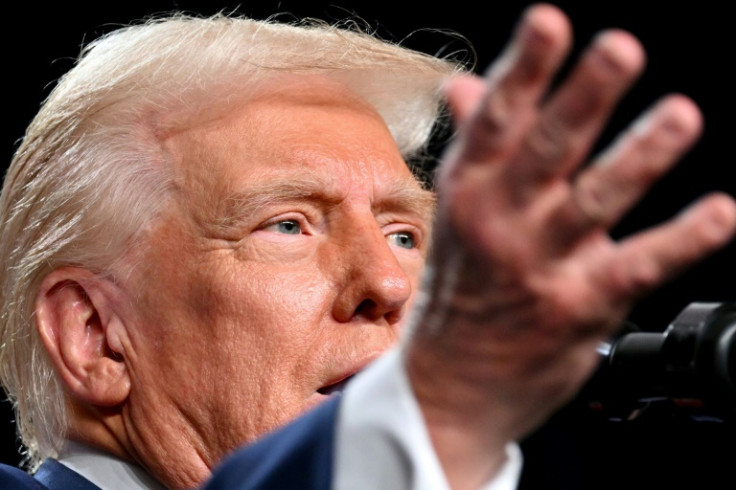
Speaking at a White House press conference, Trump said the U.S. military has plans for "complete demolition" of Iranian infrastructure by midnight Wednesday if no acceptable deal is reached. "It'll happen over a period of four hours if we want it to," he told reporters, adding that "the entire country can be taken out in one night, and that night might be tomorrow night."
The ultimatum centers on the Strait of Hormuz, the narrow waterway through which about one-fifth of the world's oil supply normally passes. Iran has effectively restricted shipping in retaliation for U.S.-Israeli strikes that began Feb. 28 under Operation Epic Fury, sending global oil prices surging and disrupting energy markets.
Trump brushed aside concerns about potential war crimes, stating he was "not at all" worried about striking civilian infrastructure. He claimed Iranian people have privately asked the U.S. to "keep bombing" their government, though no independent evidence supported that assertion.
A draft proposal circulated by mediators including Egypt, Pakistan and Turkey called for an immediate 45-day ceasefire and reopening of the strait to allow time for broader peace talks. Iran rejected the plan through Pakistan, its state-run IRNA news agency reported, insisting on guarantees against future attacks and a permanent resolution rather than a temporary pause.
Iranian officials conveyed a 10-point counterproposal emphasizing long-term security assurances. Foreign Ministry spokesperson Esmail Baghaei said negotiations are "incompatible with ultimatums, crimes and threats of war crimes."
The war, now in its sixth week, has seen joint U.S.-Israeli strikes on Iranian military and government targets, Iranian missile attacks on Gulf infrastructure, and U.S. operations against Iranian mine-laying vessels near the strait. Recent developments include the reported killing of an Iranian Revolutionary Guard Corps intelligence chief by Israeli forces.
Trump has repeatedly used social media, including an expletive-laden Easter Sunday post on Truth Social, to pressure Tehran. In it, he warned of "Power Plant Day, and Bridge Day, all wrapped up in one," telling Iranian leaders to "Open the Fuckin' Strait, you crazy bastards, or you'll be living in Hell."
Defense Secretary Pete Hegseth and military leaders were scheduled to brief Tuesday morning on operational readiness. Pentagon officials have not detailed specific strike plans but have confirmed ongoing strikes on Iranian naval assets.
Global markets reacted nervously to the rhetoric. Oil prices climbed as traders weighed risks of further disruption to the critical chokepoint. Shipping through the strait has slowed dramatically, with some vessels reportedly paying fees to transit under Iranian oversight while U.S. and Israeli-affiliated ships face exclusion.
The economic fallout has rippled worldwide, pushing U.S. gasoline prices higher and raising concerns about inflation and supply chain stability. Analysts warn prolonged closure could trigger broader energy crises affecting Europe, Asia and beyond.
International reactions varied. Allies have urged de-escalation while some Gulf states quietly support pressure on Iran. Russia and China, traditional Iranian partners, have opposed strong U.N. measures and called for restraint. The U.N. Security Council postponed a vote on a watered-down resolution aimed at reopening the strait.
Trump described the current phase as a "critical period," saying U.S. forces are "doing unbelievably well" but emphasizing that any deal must meet his standards, including unrestricted shipping through the strait. He suggested diplomacy remains possible but gave no indication of softening the Tuesday 8 p.m. ET deadline.
Iranian leaders have vowed retaliation against any new strikes, threatening to target U.S. interests and further disrupt regional energy infrastructure. Some Iranian officials called on citizens to form human chains around power plants to protect them symbolically.
The conflict began with massive joint strikes on Feb. 28 targeting Iranian military sites. Since then, both sides have traded blows, with Iran using the strait as leverage and the U.S.-Israel coalition conducting airstrikes and naval operations.
Experts caution that attacking power plants and bridges could cause significant civilian hardship, potentially constituting war crimes under international law, though Trump dismissed such concerns. Legal analysts note that targeting dual-use infrastructure carries risks of escalation and long-term diplomatic isolation.
As the deadline approaches, mediators continue back-channel efforts. Pakistan has played a key role relaying messages between Washington and Tehran. Previous deadlines set by Trump have been extended or adjusted amid ongoing talks, raising questions about whether the latest threat will lead to action or serve as leverage.
The situation has heightened alerts for U.S. forces in the region and prompted evacuation considerations for some personnel. Oil tankers and commercial shipping have rerouted or delayed voyages, adding costs to global trade.
Domestically, the administration faces questions about the war's duration and costs. Trump has projected confidence that core objectives are nearing completion, but analysts say Iran's grip on the strait gives it significant bargaining power that it is unlikely to relinquish quickly.
As Tuesday's deadline looms, the world watches closely. A failure to reopen the strait could trigger intensified military action, while any last-minute agreement might open a path to negotiations. For now, Trump's rhetoric has raised tensions to a new peak in a conflict that has already reshaped Middle East security and global energy dynamics.
The coming hours will test whether threats translate into action or if back-channel diplomacy can avert further escalation. Pentagon briefings and Iranian responses are expected to provide clearer signals on the trajectory of this high-stakes confrontation.
© Copyright 2026 IBTimes AU. All rights reserved.