Hegseth Ousts Army Chief Of Staff Amid US War With Iran: 'Effective Immediately' As Strikes Enter Fifth Week
Defense Secretary Pete Hegseth has asked the U.S. Army's top uniformed officer to step down and retire immediately, the Pentagon announced Thursday, in a surprise leadership shake-up as American forces continue airstrikes and other operations against Iran in a conflict now in its fifth week.

Gen. Randy George, who has served as Army chief of staff since August 2023, "will be retiring from his position as the 41st Chief of Staff of the Army effective immediately," Pentagon spokesman Sean Parnell said in a statement. No reason was provided for the move.
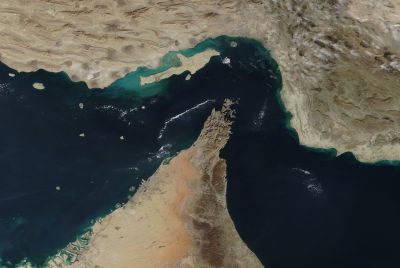
The ouster comes as the United States wages an intensifying military campaign against Iran, launched in late February 2026 with large-scale strikes under Operation Epic Fury. U.S. and Israeli forces have targeted Iranian missile sites, air defenses, nuclear-related facilities and military infrastructure in a bid to degrade Tehran's capabilities and prevent it from developing nuclear weapons. President Donald Trump has described the objectives as nearly complete but warned of intensified action in the coming weeks if Iran does not comply with demands to open the Strait of Hormuz and cease threats.
Hegseth also removed two other senior Army officers Thursday: Gen. David Hodne, head of the Army's Transformation and Training Command, and Maj. Gen. William Green, the chief of Army chaplains, according to Pentagon officials who spoke on condition of anonymity to discuss sensitive personnel matters. The moves mark the latest in a broader purge of top generals and admirals under Hegseth, who has ousted more than a dozen senior officers since taking office last year.
Pentagon officials declined to elaborate on the reasons for George's departure or the other firings. Some defense analysts and congressional sources suggested the changes reflect Hegseth's push to install leaders more aligned with the Trump administration's vision for a leaner, more aggressive military posture focused on great-power competition and rapid modernization.
George, a career infantryman with nearly four decades of service, previously commanded forces in Iraq and Afghanistan and oversaw Army modernization efforts under the Biden administration. His removal mid-conflict has drawn concern from some lawmakers and military observers, who worry about stability in the chain of command during active operations.
Rep. Richard McCormick, R-Ga., a Marine veteran, expressed surprise when informed of the firing during a Newsmax appearance, saying he would "look into it immediately" and describing George as a "brilliant" officer. Other Republicans have been more muted, with some praising Hegseth's efforts to reform what they call a bloated and politicized senior military leadership.
The timing of the shake-up has raised eyebrows in Washington and among allies. The war against Iran, involving hundreds of U.S. and Israeli airstrikes, has entered its fifth week with CENTCOM releasing footage of recent attacks on drone facilities, tanks and missile launchers in central Iran. Explosions were reported near Esfahan and other sites, while Iran has responded with missile barrages toward Israel and U.S. interests in the Gulf, though many have been intercepted.
Casualty figures from Iranian sources and monitoring groups indicate at least 2,000 killed and tens of thousands wounded in Iran from the campaign, though independent verification remains difficult amid the fog of war. U.S. officials have reported limited American casualties, including several service members killed in an Iranian drone attack on a facility in Kuwait earlier in the conflict. Hegseth has criticized media coverage focusing on U.S. losses, calling it an attempt to undermine the mission.
Trump addressed the nation Wednesday evening, stating the U.S. is "on track to complete all of America's military objectives shortly" and projecting possible wind-down in two to three weeks. He threatened to hit Iran "extremely hard" or even "back to the Stone Ages" if Tehran does not reopen the Strait of Hormuz, a critical chokepoint for global oil shipments that has seen disruptions from Iranian actions. International efforts, including a meeting of more than 40 countries convened by the UK, are pressing Iran to restore free navigation.
Hegseth has been a vocal proponent of the operation, emphasizing "no stupid rules of engagement" and a focus on decisive strikes without nation-building. In briefings, he and Joint Chiefs Chairman Gen. Dan Caine have highlighted progress in degrading Iran's missile stockpiles and navy while stressing the campaign's limited scope.
The Army plays a supporting but critical role in the current phase, providing logistics, air defense assets, special operations forces and readiness for potential ground contingencies, though officials insist there are no plans for a large-scale invasion. George's office had been involved in ensuring Army units deployed in the region maintained high readiness amid the broader Middle East tensions.
With George's exit, Lt. Gen. Christopher LaNeve has been named acting chief of staff, according to reports. LaNeve previously served as vice chief and has experience in transformation initiatives.
The firings fit a pattern under Hegseth, who earlier removed the previous chairman of the Joint Chiefs, the Navy's top officer and other high-ranking figures shortly after assuming the role. Supporters argue the changes are necessary to root out "woke" influences and refocus the military on warfighting. Critics, including some retired officers and Democrats, call it a politicization that risks eroding morale and expertise at a dangerous time.
"Leadership transitions in wartime are always challenging," said one former senior Army official who spoke on background. "The key is ensuring continuity in ongoing operations and clear guidance to the force."
The Pentagon has not detailed how the changes will affect day-to-day management of Army contributions to the Iran campaign or other global commitments, including deterrence in the Indo-Pacific and support for Ukraine.
Iranian officials have denounced the U.S. and Israeli strikes as aggression and vowed continued resistance, claiming their forces retain significant capabilities despite losses. Tehran has denied seeking an immediate ceasefire on U.S. terms and accused Washington of economic warfare through disruptions in energy markets.
Global oil prices have fluctuated with news from the region, and shipping companies have rerouted vessels to avoid the Strait of Hormuz amid threats.
In Congress, reactions split along partisan lines. Some Republicans praised Hegseth for bold reforms, while Democrats questioned the wisdom of major personnel shifts during active combat.
"This is not the time for a wholesale housecleaning at the top of the Army," said one Democratic lawmaker familiar with military issues. "Our troops deserve stable leadership when they're supporting operations overseas."
Hegseth, a former Fox News host and Army National Guard veteran, was confirmed as defense secretary after a contentious process. He has made reshaping the Pentagon a priority, including reversing certain diversity initiatives and emphasizing traditional warfighting skills.
The Army chief of staff position is one of the most influential in the service, overseeing training, equipping and doctrinal development for nearly 500,000 active-duty soldiers. George had been expected to serve a full four-year term.
As news of the ouster spread Thursday, senior Army officers expressed private frustration, according to multiple reports, viewing it as another sign of tension between civilian leadership and uniformed ranks.
The White House has not commented directly on the firings, deferring to the Pentagon. Trump has previously signaled support for Hegseth's aggressive approach to national security.
With the conflict showing no immediate end despite Trump's optimistic timeline, the leadership change adds another layer of uncertainty. Pentagon officials said operations continue without interruption, and acting leaders have been directed to maintain focus on mission requirements.
Further details on a permanent replacement for George are expected in coming days. In the meantime, the U.S. military remains engaged in what officials describe as a limited but high-intensity campaign to neutralize threats from Iran while avoiding a wider regional war.
Hegseth's spokesman Parnell said only that the secretary continues to work closely with the president and military commanders "to ensure America's armed forces remain the most lethal fighting force in the world."
The developments come as diplomats explore possible off-ramps, though both sides appear dug in. Trump has said no deal is required to end U.S. involvement if objectives are met, but pressure on the Strait of Hormuz remains a flashpoint.
As the war grinds on, the sudden removal of the Army's senior leader underscores the high-stakes environment inside the Pentagon and the administration's determination to align senior ranks with its strategic priorities.
© Copyright 2026 IBTimes AU. All rights reserved.
- Recommended For You