Strait of Hormuz Remains Largely Closed Despite US-Iran Ceasefire as Ship Traffic Stands at Standstill
DUBAI, United Arab Emirates — More than 24 hours after a fragile two-week ceasefire between the United States and Iran took effect, the strategic Strait of Hormuz — through which about one-fifth of the world's oil and liquefied natural gas normally passes — remains effectively closed to most commercial traffic, with shipping data showing only a handful of vessels transiting under strict Iranian control amid ongoing tensions and accusations of ceasefire violations.

Marine traffic monitors reported that just four to five ships crossed the narrow waterway on Wednesday, April 8, and early Thursday, April 9, according to analytics firms Kpler and S&P Global. Most were bulk carriers; few or no oil tankers made the journey. That compares with a pre-crisis daily average of around 60 vessels, including numerous laden tankers carrying crude from Persian Gulf producers to global markets.
The limited movement comes despite the ceasefire agreement announced late Tuesday, which U.S. President Donald Trump described as hinging on the "complete, immediate, and safe opening" of the strait. Iran agreed in principle to allow safe passage coordinated with its armed forces, but officials have imposed conditions, including permission requirements from the Islamic Revolutionary Guard Corps Navy, potential tolls of up to $2 million per ship, and warnings about naval mines in certain areas.
Iranian state media and semiofficial outlets reported Wednesday that the strait was closed again or heavily restricted in response to Israeli airstrikes on Lebanon, which Tehran claims violate the truce. The U.S. and Israel have countered that Lebanon is not part of the bilateral ceasefire. White House officials reiterated that Iran must reopen the waterway "immediately, quickly and safely" without restrictions or fees.
Shipping companies and tanker operators remain cautious. Radio warnings broadcast to vessels in the region instruct captains to seek permission from Iranian naval forces and to follow alternative northerly routes closer to the Iranian coast, avoiding "areas of danger" potentially seeded with mines. Several owners told Reuters they are awaiting clearer guidance before resuming full operations.
Hundreds of vessels, including more than 180 laden tankers, continue to wait in the Persian Gulf or nearby waters for the situation to stabilize. Insurance premiums for voyages through the strait have skyrocketed, and many charterers have rerouted or delayed cargoes, contributing to backups at loading terminals in Saudi Arabia, the UAE, Kuwait and Iraq.
Oil prices, which had fallen sharply on initial ceasefire news, climbed back toward $100 a barrel for West Texas Intermediate crude on Thursday as the lack of meaningful traffic renewed supply disruption fears. Brent crude showed similar gains. Energy analysts warned that prolonged restrictions could tighten global markets further, especially with summer driving season approaching in the Northern Hemisphere.
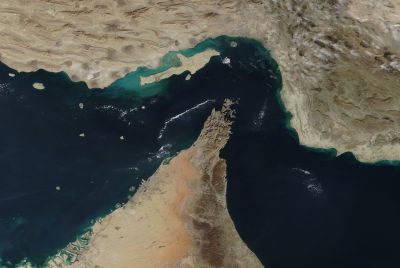
The strait, just 21 nautical miles wide at its narrowest point between Iran and Oman, has been a flashpoint since Iran began tightening control in late February following the outbreak of hostilities with the U.S. and Israel. Traffic dropped dramatically after Iranian forces assumed effective oversight, with some days seeing near-total halts. The closure contributed to a spike in global energy costs and exposed vulnerabilities in the world's energy supply chains.
Under the tentative deal, both Iran and Oman could charge transit fees for the first time on what had long been treated as an international waterway. A regional official speaking on condition of anonymity said the framework allows limited, controlled passage during the initial two-week period, with further negotiations set for Friday in Islamabad, Pakistan. U.S. Vice President JD Vance is expected to lead the American side.
Iranian officials have signaled they may allow no more than 15 vessels per day under the agreement, far below normal volumes. A senior Iranian source told TASS that passage would be coordinated with military authorities and subject to "technical limitations." Tehran has also published maps highlighting danger zones and urged ships to coordinate to avoid mine risks.
International reaction has been swift and critical. British Foreign Secretary Yvette Cooper called for a full, toll-free reopening. The chief executive of Abu Dhabi's state oil company stated bluntly that "the Strait of Hormuz is not open" and access remains "restricted, conditioned and controlled." European and Asian governments have urged de-escalation and unimpeded navigation.
Oman, which shares territorial waters with Iran in parts of the strait, has not publicly endorsed the new toll or control regime, adding another layer of uncertainty. Shipping experts say insurers and operators are unlikely to resume normal operations until there is verifiable freedom of navigation and reduced military risk.
Time-lapse imagery and satellite data shared by news outlets showed the first small cluster of ships moving through the strait shortly after the ceasefire announcement, offering a brief moment of optimism. Yet follow-up tracking confirmed the trickle quickly slowed or stopped as disputes over Lebanon and implementation details resurfaced.
The broader ceasefire appears to be holding in terms of direct U.S.-Iran hostilities, with fewer reported strikes on Iranian territory. However, Israeli operations against Hezbollah targets in Lebanon continue, prompting Iranian accusations of bad faith. Tehran has threatened to withdraw from upcoming talks if the perceived violations persist.
For global markets, the stakes are enormous. The strait handles roughly 20-25% of seaborne oil trade and significant LNG volumes. Disruptions have already forced some Asian refiners to seek alternative, more expensive supplies and prompted strategic petroleum reserve releases in several consuming nations.
Maritime security firms and analysts predict it could take weeks, if not months, for tanker traffic to normalize even if the ceasefire solidifies. Shipowners cite lingering insurance concerns, crew safety worries, and the need for clear rules of engagement. Some operators have explored longer routes around Africa, though those add significant time and cost.
As U.S.-Iran talks approach, the status of the strait will likely dominate discussions. Trump has repeatedly tied the truce to unrestricted access, while Iranian leaders frame any reopening as conditional on ending "aggression" and respecting their security concerns in the region.
For now, the world watches marine traffic trackers with bated breath. Live dashboards show throughput at a fraction of normal levels — as low as 1-2% on some days — with only a few ships moving under Iranian oversight. The narrow chokepoint that has shaped energy geopolitics for decades remains a source of tension rather than a reliable artery for global commerce.
Economists warn that sustained disruption could exacerbate inflation pressures, slow economic growth in import-dependent nations, and reshape long-term energy strategies toward greater diversification and resilience.
Whether the fragile truce evolves into a lasting arrangement or unravels under mutual recriminations will determine if the Strait of Hormuz reopens fully or stays a tightly controlled — and costly — bottleneck. As of midday Thursday in the Gulf, the answer remained uncertain, with shippers, energy traders and governments alike seeking clarity amid the calm but tense waters.
© Copyright 2026 IBTimes AU. All rights reserved.
- Recommended For You