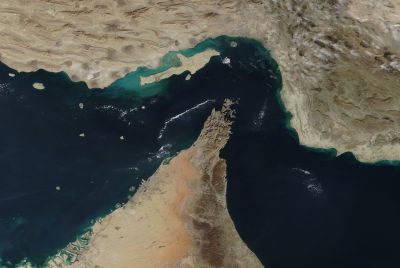
Strait of Hormuz Crisis Escalates as Traffic Halts Amid US-Iran Tensions on April 21
DUBAI, United Arab Emirates — Maritime traffic through the Strait of Hormuz ground to a near standstill Tuesday as a fragile U.S.-Iran ceasefire teetered on the edge of collapse, with only a handful of vessels risking passage through the world's most critical oil chokepoint amid fresh seizures, gunfire and dueling blockades.

The narrow waterway, which handles roughly one-fifth of global oil trade — about 20 million barrels per day — has become the focal point of escalating friction between Washington and Tehran. On Monday, shipping data showed just five tankers and chemical carriers crossed the strait, down sharply from a brief weekend surge after Iran briefly declared it open. By Tuesday morning, trackers reported even fewer transits, with many vessels anchored or diverting routes while operators awaited clearer signals.
The latest flare-up stems from a chaotic weekend. On Friday, April 17, Iran's foreign minister announced the strait was "completely open" to commercial shipping, coinciding with a U.S.-brokered ceasefire in Lebanon. President Donald Trump echoed the optimism on social media, hailing the move as progress toward broader de-escalation. Markets reacted swiftly, with oil prices dropping more than 10% that day and stocks rallying to records.
Yet within 24 hours, Iran reversed course, reimposing strict controls and accusing the U.S. of violating the ceasefire by maintaining its naval blockade of Iranian ports. Iranian Revolutionary Guard Corps forces reportedly fired warning shots at vessels attempting transit, forcing several to turn back. Timelapse footage from the Gulf showed sparse activity from April 18 to 20, underscoring the disruption.
Tensions spiked further Sunday when the U.S. Navy seized an Iranian-flagged cargo ship near the strait. U.S. officials said the vessel, identified in some reports as the Touska or similar, attempted to evade the blockade. Marines boarded the ship after disabling its engine room, marking the first such interception since the port blockade began. Trump described the operation as necessary enforcement, while Iran condemned it as "piracy" and vowed a swift response.
As of Tuesday, April 21, shipping firms reported minimal activity. Data from firms like Kpler and live trackers indicated traffic at 18-26% of normal levels, with some estimates showing only two vessels in active transit over recent hours. Hundreds of ships remain in holding patterns in the Persian Gulf and beyond, creating backlogs that threaten global supply chains for oil, liquefied natural gas and other commodities.
The Strait of Hormuz crisis traces back to late February 2026, when U.S. and Israeli military operations against Iran intensified, prompting Tehran to restrict access. Iran initially imposed a selective, permission-based regime, sometimes charging high transit fees. Traffic plummeted by up to 95% in early April according to U.N. reports, triggering oil price volatility and warnings from the International Monetary Fund about potential global economic slowdowns.
A temporary ceasefire announced around April 8 offered hope for reopening, but implementation faltered. The U.S. maintained its blockade on Iranian ports to pressure Tehran on nuclear issues and regional proxies, while Iran demanded full lifting of restrictions before allowing unfettered passage. Failed or delayed talks in Islamabad added to the uncertainty, with Iran skipping a second round amid the impasse.
Oil markets reflected the renewed anxiety. Brent crude surged more than 4% Monday to around $94 per barrel after the seizure news, reversing earlier gains. Traders braced for further spikes if the strait remains restricted, potentially pushing prices toward $100 or higher and fueling inflation concerns worldwide. Energy experts noted that while alternative routes exist, they cannot fully compensate for Hormuz volumes, especially for Asian importers like China, India and Japan.
U.S. military assets, including advanced unmanned underwater vehicles, have been deployed to detect and clear potential mines in the area, according to defense analysts. The Navy's presence aims to safeguard international navigation rights under customary law of the sea, which treats the strait as an international waterway open to transit passage regardless of coastal state disputes.
Iranian officials, including parliamentary leaders, have warned that continued U.S. actions could prompt full closure or targeted responses. The Islamic Revolutionary Guard Corps has asserted de facto control over maritime decisions in recent days, sometimes diverging from diplomatic signals out of Tehran. Reports emerged of gunboats confronting merchant vessels, including an incident involving a tanker and a container ship hit by projectiles.
International reactions varied. China urged that the strait "remain open to normal navigation" in the interest of global stability, while expressing concerns over any blockade affecting its energy imports. European and Gulf states monitored developments closely, with some calling for renewed diplomacy to avert broader conflict. The United Nations has highlighted the economic ripple effects, including potential drops in merchandise trade growth.
For shipping companies, the risks are acute. Insurance premiums for Gulf transits have soared, and many operators have rerouted or delayed voyages. Crew safety remains paramount after reports of attacks, damaged vessels and seafarer casualties earlier in the crisis. Some firms have opted for "dark" transits without automatic identification system signals to reduce visibility, though this raises collision and legal concerns.
The strategic importance of the strait cannot be overstated. It links the Persian Gulf's vast oil reserves to the Gulf of Oman and global sea lanes. Saudi Arabia, the United Arab Emirates, Qatar and other producers rely heavily on it for exports. Disruptions here amplify volatility far beyond energy markets, affecting everything from petrochemicals to consumer goods prices.
As the ceasefire deadline approaches mid-week, President Trump has signaled possible quick progress in negotiations, while maintaining pressure through the blockade. Iranian diplomats claim to be studying fresh U.S. proposals, but hard-line elements within Tehran appear unwilling to concede on Hormuz control without reciprocal moves.
Analysts warn that prolonged standoff could evolve into a new normal of "managed tension," where Iran uses selective access as leverage rather than outright closure. This playbook — threats, limited transits and uncertainty — has already disrupted trade without triggering full-scale naval confrontation.
For now, the waterway remains in a state of restriction. Maritime authorities advise extreme caution, and global energy users are scrambling for contingencies. Satellite imagery and real-time trackers Tuesday showed tankers idling off Qeshm Island and other points, painting a picture of hesitation rather than free flow.
The situation in the Strait of Hormuz serves as a stark reminder of how a narrow geographic pinch point can hold disproportionate sway over the world economy. With diplomats, militaries and markets watching closely on April 21, any misstep risks reigniting broader hostilities or deepening the current economic strain.
Whether through renewed talks or further enforcement actions, resolution will require balancing security concerns with the imperative of uninterrupted energy flows. Until then, the world's oil artery pulses weakly, its future hanging on fragile agreements and competing claims of sovereignty versus free passage.
© Copyright 2026 IBTimes AU. All rights reserved.
- Recommended For You