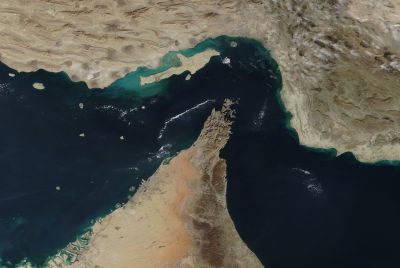
Strait of Hormuz Chaos: Iran Recloses Waterway, Fires on Tanker as US Blockade Standoff Escalates April 18

DUBAI, United Arab Emirates — Tensions in the Strait of Hormuz flared dramatically on Saturday as Iran reimposed strict control over the vital shipping chokepoint and Revolutionary Guard gunboats fired on a tanker, hours after briefly reopening the waterway amid a fragile regional ceasefire.
The reversal came after U.S. President Donald Trump confirmed the American naval blockade of Iranian ports would remain in place, prompting Tehran to declare the strait back under "strict management" by its armed forces. Shipping traffic, already severely reduced since late February, faced fresh uncertainty with reports of vessels turning back and at least one tanker coming under fire.
The Strait of Hormuz, through which roughly 20% of global oil passes daily in normal times, has become the central flashpoint in the broader U.S.-Iran conflict that erupted in late February. Saturday's developments sent fresh jitters through energy markets even as diplomats in Pakistan pursue longer-term talks.
Rapid Reversal on Reopening
On Friday, Iranian Foreign Minister Abbas Araghchi announced the strait was "completely open" to commercial vessels for the remainder of a 10-day ceasefire tied to the Israel-Hezbollah truce in Lebanon. Oil prices dropped sharply on the news, with some benchmarks falling nearly 10%. President Trump responded on Truth Social, calling it "good news" while insisting the U.S. blockade targeting Iranian ports and vessels would stay "in full force" until a comprehensive deal is reached.
By Saturday morning, Iran's military command, Khatam al-Anbiya, declared the situation had "reverted to its previous state." The statement accused the U.S. of "piracy" and "repeated breaches of trust," saying passage would now require Iranian approval and remain tightly controlled until Washington lifts restrictions on Iranian shipping.
A limited convoy of about eight tankers was observed transiting earlier in the day, but many other vessels approached the area and turned back, according to marine tracking data. Shipping companies said they were seeking urgent clarifications on mines, permissions and safe routes.
Gunboat Incident Heightens Risks
In a major escalation, two Iranian Revolutionary Guard Corps (IRGC) gunboats opened fire on a tanker attempting to pass through the strait, the UK Maritime Trade Operations (UKMTO) reported. The captain described the vessels approaching without radio warning before firing shots. The tanker and crew were reported safe, but the incident underscored the volatile conditions for merchant shipping.
The UKMTO issued an advisory urging extreme caution in the area. No injuries or major damage were immediately confirmed, but the event risks deterring insurers and ship owners already wary after weeks of disruptions.
Broader Context of the Crisis
The current standoff traces to late February when U.S. and Israeli strikes on Iran triggered Tehran to sharply restrict traffic through the strait. Shipping volumes plummeted more than 95%, with only a fraction of normal daily transits recorded. Iran implemented a selective, permission-based system, rerouting some vessels closer to its waters.
U.S. Central Command has maintained that its blockade targets only Iran-linked shipping while preserving freedom of navigation for others. However, the practical effect has been widespread caution among operators. Analysts estimate billions in lost trade and higher energy costs worldwide.
The brief reopening Friday aligned with a fragile Lebanon ceasefire, one of Tehran's key demands. Yet mutual distrust quickly undermined the gesture. Iran insists on full lifting of the U.S. blockade; Washington demands broader concessions, including on Iran's nuclear program.
Impact on Global Energy and Markets
Oil prices, which surged during the initial closure, remain elevated despite Friday's dip. Brent crude settled around $90 per barrel after the reopening news, still well above pre-crisis levels. Energy analysts warn that prolonged uncertainty could push prices higher if alternative routes via pipelines or绕道 shipping prove insufficient.
Major importers like China, India, Japan and Europe, heavily reliant on Gulf crude, face supply risks. Asian refiners have scrambled for alternative cargoes, while insurance premiums for vessels in the region have skyrocketed.
Diplomatic Efforts and Regional Fallout
Talks continue in Pakistan between U.S. and Iranian officials, with both sides signaling openness to a broader deal. Trump has described the situation as containing "a lot of good things" happening, while Iranian officials demand concrete steps on sanctions and blockade relief.
Neighboring Gulf states, including the UAE and Saudi Arabia, have quietly urged de-escalation, concerned about spillover into their own waters and shipping lanes. Oman, which borders the strait, has offered to facilitate safe passage on its side of the waterway.
The IRGC has also released new maritime maps designating restricted zones and approved routes, effectively asserting greater control and requiring tolls or permissions in some cases.
What Happens Next
With the 10-day Lebanon ceasefire window ticking down, pressure is mounting for a breakthrough. Shipping firms say they need clear guarantees on safety, mines and rules of engagement before resuming normal operations. Many continue to reroute via longer paths around Africa, adding significant time and cost.
Military analysts note that while full closure remains unlikely due to international backlash, Iran's ability to harass traffic gives it leverage. The U.S. Navy maintains a strong presence in the area to deter major disruptions.
For global trade, the events of April 18 highlight the strait's enduring vulnerability. Even temporary reopenings followed by swift reversals create volatility that ripples through economies far beyond the Middle East.
As night fell over the Persian Gulf on Saturday, marine tracking showed continued cautious movement with many vessels holding position. Diplomats, shipping executives and energy traders will watch the coming hours closely for any further statements from Tehran or Washington that could either calm or inflame the situation.
The Strait of Hormuz has once again proven it remains one of the world's most dangerous and consequential maritime chokepoints, where military posturing, economic stakes and fragile ceasefires collide with potentially global consequences.
© Copyright 2026 IBTimes AU. All rights reserved.
- Recommended For You