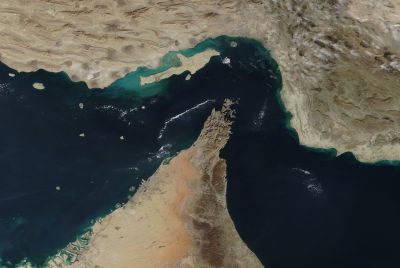
Strait of Hormuz Remains Heavily Restricted Amid US-Iran Clashes, With Only 5% of Normal Traffic Flowing
DUBAI, United Arab Emirates — The Strait of Hormuz, the critical chokepoint through which about 20% of global oil and liquefied natural gas typically passes, stayed under severe restriction Thursday as fresh US-Iran naval clashes threatened a fragile ceasefire and kept commercial shipping at a near-standstill for the 69th consecutive day.

Real-time maritime tracking data showed just three vessels transiting the narrow waterway in the past 24 hours — roughly 5% of the normal daily average of around 60 ships — with daily throughput plummeting to approximately 515,000 deadweight tons against a pre-crisis norm exceeding 10 million. Hundreds of commercial vessels remain bottled up in the Persian Gulf, unable to reach open waters safely.
The latest flare-up occurred Wednesday when US Navy destroyers transiting the strait reportedly came under attack from Iranian fast-attack boats. US forces responded by sinking several vessels and disabling an Iranian oil tanker attempting to breach the blockade. Iran's state media released footage claiming missile launches toward American ships, while Tehran accused Washington of violating the ceasefire. US officials maintained the truce remained in effect and described their actions as self-defense.
Ongoing Crisis Rooted in February Conflict
The disruption began Feb. 28 following US-Israeli strikes on Iranian targets. Iran responded by effectively closing the strait through attacks on commercial shipping, demands for tolls and threats of mining the waterway. The US imposed a counter-blockade on vessels heading to Iranian ports, creating a dangerous standoff that has sent oil prices surging and global supply chains reeling.
Iran recently established a new mechanism to manage vessel transit, requiring coordination with its military and expanding claimed control zones. A new map released by the Islamic Revolutionary Guard Corps Navy outlines what Tehran considers safe inbound and outbound routes, further complicating navigation for international shipping.
Despite diplomatic efforts, including Pakistan-mediated talks and involvement from China, full normalization is not expected until late 2026 at the earliest, according to World Bank assessments. Insurance premiums for vessels in the region have skyrocketed, and many shipping companies continue to reroute around Africa at significant extra cost.
Economic Ripple Effects
The restricted flow has driven up global energy prices and contributed to higher gasoline costs in the United States and elsewhere. Oil market analysts warn that prolonged disruption could exacerbate inflationary pressures and slow economic growth, particularly in import-dependent economies across Asia and Europe.
Hundreds of tankers and cargo ships remain anchored or loitering near the strait, with crews facing mounting pressure and mental strain from the ongoing uncertainty. Captains have described "mental not material pressure" amid reports of explosions and heightened alerts.
Diplomatic and Military Developments
President Donald Trump has repeatedly signaled willingness to use military force to reopen the waterway, describing operations such as "Project Freedom" to escort commercial vessels. However, messaging from the administration has at times appeared contradictory, with pauses in escort plans announced even as limited transits occurred.
US military officials continue developing contingency plans for targeting Iranian assets near the strait if the ceasefire fully collapses. Meanwhile, Iran has warned foreign navies to stay out and insisted on its right to control transit through what it considers its territorial waters.
The United Nations has held briefings on the situation, with member states expressing concern over the humanitarian and economic impacts of the blockade. China, a major buyer of Iranian oil, has stepped up diplomatic efforts to resolve the impasse ahead of high-level talks.
Strategic Importance
The Strait of Hormuz connects the Persian Gulf to the Gulf of Oman and remains one of the world's most vital energy arteries. Before the current crisis, it handled roughly 21 million barrels of oil per day plus significant LNG volumes. Its narrowest point is just 21 miles wide, with shipping lanes even more constrained, making it highly vulnerable to disruption.
Live vessel trackers show minimal activity, dominated by small Iranian-flagged or coastal craft. Larger international tankers largely avoid the route, opting for longer voyages around the Cape of Good Hope when possible.
Outlook and Risks
While some limited transits have occurred under US escort, experts say restoring full confidence and traffic volumes will require a durable diplomatic resolution. Any major escalation could push oil prices dramatically higher and trigger broader regional instability.
For now, the Strait of Hormuz remains a flashpoint where military posturing, economic warfare and diplomatic maneuvering intersect. Global markets, energy security and international shipping continue to feel the strain as stakeholders await a breakthrough that restores safe passage through this critical maritime artery.
© Copyright 2026 IBTimes AU. All rights reserved.
- Recommended For You