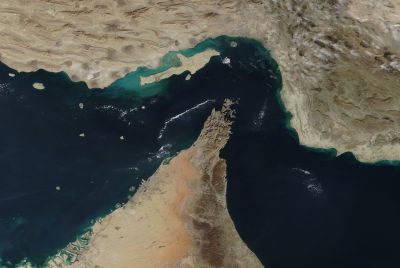
Strait of Hormuz Traffic Near Standstill Despite US-Iran Ceasefire: Only 9 Ships Transit on April 10
DUBAI, United Arab Emirates — Ship traffic through the Strait of Hormuz remained at a virtual standstill Friday, with just nine vessels transiting the critical waterway in the past 24 hours despite a fragile U.S.-Iran ceasefire agreement, as Iran maintained tight control and enforced restricted routes amid lingering regional tensions.

The narrow chokepoint, through which roughly 20-25% of global seaborne oil normally passes, saw dramatically reduced activity compared to the pre-crisis average of about 140 ships daily. Ship-tracking data from Kpler, Lloyd's List Intelligence and Signal Ocean showed minimal movement: primarily dry bulk carriers and a handful of Iran-linked vessels, with virtually no major oil tankers from international operators.
The U.S.-Iran two-week ceasefire, announced earlier this week, included provisions for reopening the strait. However, Iran has asserted authority by requiring ships to coordinate with its forces, stick to designated routes near its territorial waters and, in some reports, navigate selective permit systems. Mines and wartime measures from the February conflict continue complicating safe passage.
Iran's Deputy Foreign Minister Saeed Khatibzadeh stated the strait is "open but with restrictions," emphasizing that all vessels, including American ones, may pass if they exhibit no "hostile behavior" and coordinate properly. Tehran has warned ships to remain close to Iranian islands and has reportedly suspended most oil tanker traffic in response to Israeli actions in Lebanon, which it views as ceasefire violations.
President Donald Trump expressed frustration on social media late Thursday, stating Iran was doing a "very poor job" of honoring the agreement to allow oil flows. "That is not the agreement we have!" he posted, warning that oil would move "with or without Iran" if restrictions persisted. The comments heightened concerns over the truce's durability just days after its announcement.
The disruption, ongoing since late February when U.S.-Israeli strikes escalated conflict with Iran, has created the worst maritime energy crisis in decades. More than 1,000 vessels, including hundreds of laden tankers, remain waiting in the region or have rerouted at enormous cost. Insurance premiums for Gulf transits have skyrocketed, and alternative routes add thousands of miles and weeks to journeys.
Oil prices reflected the uncertainty, hovering near $95-$100 per barrel for Brent crude on Friday. The partial blockage has tightened global supplies, exacerbating inflationary pressures and forcing importers like China, Europe and Asia to scramble for alternatives from the U.S., Brazil and other sources.
Analysts describe Iran's strategy as a calculated mix of compliance and leverage. By allowing limited traffic — often favoring its own or allied vessels — Tehran maintains strategic control while testing the boundaries of the ceasefire. Reports indicate proposals for a "Tehran Toll Booth" system, potentially charging up to $2 million per ship, have drawn sharp international criticism.
The narrowest point of the strait measures just 21 nautical miles, making it inherently vulnerable. Iranian naval forces, including the Islamic Revolutionary Guard Corps, maintain a strong presence with fast-attack boats, mines and coastal defenses. Shipping data shows vessels hugging Iranian waters where possible, reflecting Tehran's insistence on oversight.
International reactions have been swift. Major shipping firms continue avoiding the route unless absolutely necessary, citing force majeure clauses. The U.K. and other nations have called for the ceasefire to explicitly address Lebanon to stabilize the broader region. Upcoming talks in Islamabad between U.S. and Iranian delegations are seen as critical for converting the temporary truce into something more durable.
For energy markets, the stakes could not be higher. The Persian Gulf exports around 21 million barrels of oil daily under normal conditions, much of it through Hormuz. Even partial restrictions ripple through supply chains, refineries and consumer prices worldwide. Asian buyers, historically reliant on Iranian and nearby crudes, face the steepest challenges.
Live trackers confirm the restricted status. As of Friday morning, throughput stood at roughly 15% of normal, with nine ships in the past day versus 60 on an average pre-crisis day. Some small Iranian oil product movements occurred, but large crude carriers remained largely absent.
The ceasefire's fragility was underscored by events in Lebanon. Israeli strikes there, which Iran claims breach the agreement, prompted Tehran to tighten its grip on the strait. This tit-for-tat dynamic risks unraveling diplomatic gains and prolonging economic pain.
Maritime experts warn that full normalization could take weeks even under ideal conditions. Clearing mines, rebuilding confidence among insurers and shipping companies, and establishing verifiable monitoring mechanisms present significant hurdles. The selective permit system Iran has implemented adds another layer of complexity and potential for disputes.
Global powers are watching closely. China and Russia previously vetoed U.N. resolutions on the strait, viewing them as biased. The U.S. maintains its "maximum pressure" posture while pursuing diplomacy. Oman, which shares management of parts of the waterway, has quietly facilitated some coordination but remains cautious.
For Gulf states like Saudi Arabia, the UAE and Qatar, the disruptions have mixed effects. While they benefit from higher oil prices in the short term, prolonged instability threatens their own export-dependent economies and regional security. Many have diverted shipments or tapped strategic reserves.
As Friday progressed, shipping analysts predicted only modest increases in traffic over the weekend unless clearer signals emerge from Tehran or Washington. Time-lapse imagery from earlier in the week captured the first tentative transits post-ceasefire announcement, but momentum has since stalled.
The Strait of Hormuz crisis illustrates how quickly geopolitical flashpoints can paralyze global trade. What began as a regional conflict has evolved into a worldwide economic test, with everyday consumers potentially facing higher fuel and goods prices in coming months.
Diplomats and energy executives alike stress the need for de-escalation. Whether the current ceasefire holds through its two-week window — and whether Hormuz returns to anything resembling normal operations — will shape energy security, inflation trends and international relations for years to come.
For now, the world's most vital oil artery remains constricted, a powerful reminder of its strategic fragility even amid fragile peace efforts.
© Copyright 2026 IBTimes AU. All rights reserved.
- Recommended For You