US Blockade Tightens Grip on Strait of Hormuz as Iran War Standoff Enters Critical Phase

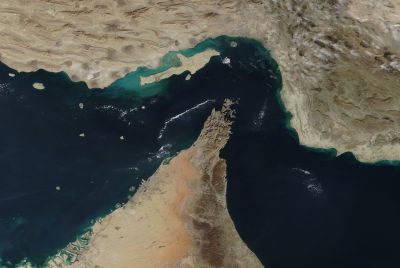
WASHINGTON — The U.S. military's naval blockade of Iranian ports along the Strait of Hormuz entered its second full day Wednesday with Pentagon officials claiming near-total compliance, even as ship-tracking data showed limited vessels slipping through and global oil markets braced for prolonged disruption in the strategic waterway that carries about one-fifth of the world's oil supply.
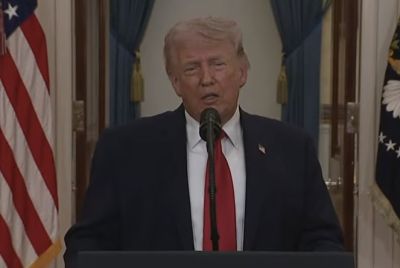
President Donald Trump described the conflict with Iran as "very close to being over" in a Fox News interview, while hinting that a second round of direct talks could resume in Pakistan within days. The comments came as more than 10,000 U.S. sailors, Marines and airmen, supported by over a dozen warships and dozens of aircraft, enforced the blockade ordered after weekend negotiations in Islamabad collapsed without agreement on Iran's nuclear program or reopening the strait.
U.S. Central Command reported that in the first 24 hours no ships made it past the cordon targeting vessels entering or leaving Iranian ports, and six merchant ships complied with orders to turn back toward Iranian waters in the Gulf of Oman. The operation allows non-Iranian traffic to continue transiting the narrow chokepoint between Iran and Oman while halting economic trade linked to Tehran.
Ship-tracking firms presented a more nuanced picture. Data from Kpler, MarineTraffic and others indicated at least three vessels crossed the strait on the blockade's first full day, including a Chinese-sanctioned tanker that initially turned back before proceeding. Some Iran-linked ships reportedly evaded full enforcement near Omani coastal areas, though insurance rates for the region have skyrocketed and many operators have diverted routes entirely.
The blockade followed Iran's effective shutdown of much of the strait since late February, when U.S. and Israeli airstrikes targeted Iranian military sites, nuclear facilities and leadership, killing Supreme Leader Ayatollah Ali Khamenei. Iran retaliated with missile and drone attacks across the region, prompting a fragile two-week ceasefire brokered by Pakistan that took effect April 8. Traffic through the strait had already plummeted more than 95 percent from pre-war averages of about 100 vessels daily, with only dozens transiting in recent weeks.
Talks in Islamabad over the weekend, involving U.S. Vice President JD Vance and Iranian officials, lasted more than 20 hours but stalled over core demands. The U.S. insisted on a long-term halt to uranium enrichment, removal of highly enriched uranium stockpiles and strict verification, while Iran offered only a short pause and dilution of material. The nuclear impasse, combined with Iran's refusal to fully reopen the strait, prompted Trump to impose the blockade as economic pressure.
Trump warned that any Iranian vessels attempting to breach the cordon would be "eliminated," while Iran's Islamic Revolutionary Guard Corps vowed retaliation and asserted that security in the Persian Gulf would be "for all or for none." Tehran has accused Washington of economic terrorism and threatened to target ports in neighboring Gulf states if its own facilities face interference.
The economic fallout is already rippling worldwide. Brent crude prices steadied below $100 a barrel Tuesday on hopes for resumed diplomacy, but analysts warn of sharp volatility or renewed spikes if the standoff drags on. Disruptions have affected not only oil but also liquefied natural gas, fertilizers and consumer goods, with shipping executives reporting higher costs and rerouting that could raise prices for everything from electronics to fuel at the pump.
Pakistan has offered to host another round of talks before the ceasefire expires next week, with diplomats shuttling between sides. China, a major buyer of Iranian oil, has quietly urged restraint while monitoring impacts on its energy imports. European allies have expressed concern over escalation but provided limited public support for the blockade.
The operation marks a bold escalation in a conflict that has already claimed thousands of lives and displaced millions. The initial U.S.-Israeli air campaign struck more than 13,000 targets, significantly degrading Iran's missile capabilities, air defenses and nuclear infrastructure at sites including Natanz and Fordow. Iran's economy, long strained by sanctions, now faces deeper isolation as oil exports — its primary revenue source — remain curtailed.
For the Trump administration, the blockade combines military leverage with diplomatic outreach. Defense officials, including retired Gen. Jack Keane, have signaled readiness to maintain control over Hormuz routes indefinitely if needed. Yet critics question the long-term sustainability, noting the risk of Iranian asymmetric responses, including potential disruption at other chokepoints like the Bab el-Mandeb strait.
Maritime experts emphasize that no single power fully "controls" the strait, which includes international waters alongside Iranian and Omani territorial seas. The U.S. maintains the action complies with international naval warfare rules by targeting only Iran-linked traffic, while preserving freedom of navigation for others. Still, the presence of heavily armed naval forces in such a confined space raises the specter of miscalculation.
Inside Iran, the regime has leaned on nationalism and appeals to resilience amid the pressure. Power has shifted since Khamenei's death, with his son Mojtaba named supreme leader and the Revolutionary Guard assuming greater operational control. Officials have rejected U.S. proposals as maximalist while signaling openness to talks that include sanctions relief and recognition of Iranian sovereignty over the waterway.
Broader regional dynamics add complexity. Israel has pursued limited strikes in Lebanon against Hezbollah, opening rare U.S.-brokered talks with Beirut, though without Hezbollah participation. Iranian-backed militias in Iraq and elsewhere remain potential flashpoints. Cultural heritage sites have suffered damage, drawing international concern.
For global shipping, the near-standstill has forced rerouting around Africa or through alternative pipelines, increasing costs and delays. Ports from Asia to Europe report knock-on effects, with some analysts warning of inventory shortages in key commodities if the crisis extends beyond weeks.
As the ceasefire deadline approaches, urgency mounts for diplomatic progress. Trump's optimistic tone Wednesday contrasted with the military reality on the water, where U.S. forces continue interdicting suspect vessels while sharing safe transit guidance for compliant shipping.
The coming days will test whether the blockade compels Iran back to the table or hardens positions, potentially reigniting direct hostilities. A durable resolution would require robust verification on the nuclear front, guaranteed freedom of navigation and addressing proxy threats across the region — all amid deep mistrust built over decades.
For now, the Strait of Hormuz remains a high-stakes arena where economic warfare meets military posturing. With thousands of U.S. personnel deployed and global energy markets hanging in the balance, the world watches closely as diplomats race against the clock and naval forces maintain their vigil in one of the planet's most critical maritime passages.
Whether Trump's assessment that the war is nearing its end proves accurate or the blockade marks the start of a prolonged economic siege will likely shape the Middle East — and energy prices worldwide — for months to come.
© Copyright 2026 IBTimes AU. All rights reserved.
- Recommended For You