Trump Claims Iran Collapsing Financially, Demands Strait of Hormuz Open in Latest Truth Social Post
WASHINGTON — President Donald Trump asserted Tuesday night that Iran is on the brink of financial collapse and urgently seeking to reopen the Strait of Hormuz, posting on Truth Social that the country is "starving for cash" and losing $500 million a day amid ongoing tensions.
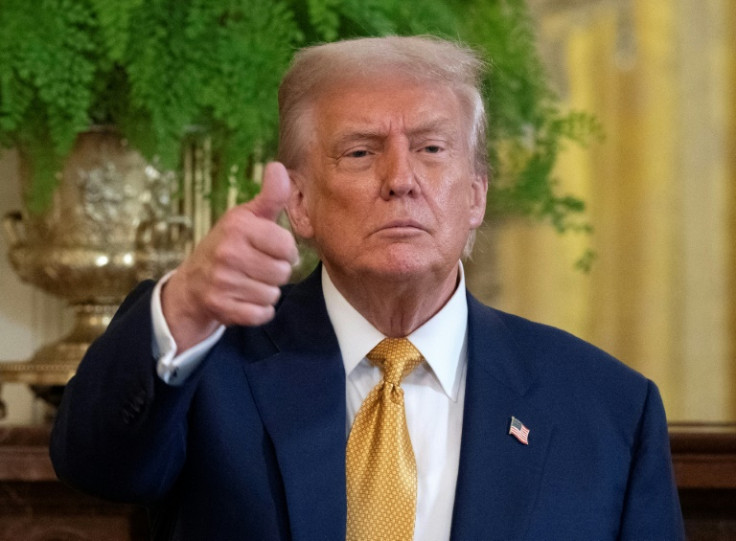
"Iran is collapsing financially! They want the Strait of Hormuz opened immediately- Starving for cash! Losing 500 Million Dollars a day. Military and Police complaining that they are not getting paid. SOS!!!" Trump wrote in the post, which was timestamped late Tuesday evening.
The message comes as Trump announced an extension of the U.S. ceasefire with Iran just hours earlier on the same day, while maintaining the American naval blockade of Iranian ports. The developments highlight the fragile state of U.S.-Iran relations following weeks of conflict that disrupted global oil flows through the critical waterway, which handles about one-fifth of the world's oil supply.
Trump's late-night Truth Social activity reflects his continued use of the platform to shape narratives around foreign policy. The president has frequently turned to Truth Social to issue warnings, share updates and apply pressure during the Iran crisis, which escalated earlier this year with U.S. military actions and a subsequent naval blockade.
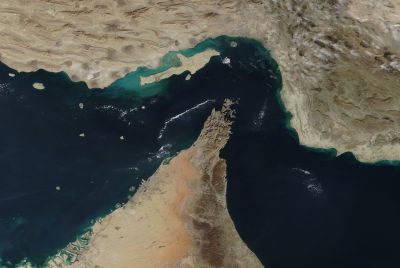
In the post, Trump highlighted what he described as severe economic distress in Iran, pointing to unpaid military and police forces as signs of internal strain. He framed the situation as a desperate plea from Tehran to reopen the Strait of Hormuz, a narrow passage between the Persian Gulf and the Gulf of Oman that has been at the center of recent tensions.
Only hours before the financial collapse claim, Trump posted that he was extending the ceasefire with Iran at the request of Pakistan, keeping the naval blockade in place until negotiations yield a "unified proposal." The extension came despite the president stating earlier in the day that it was "highly unlikely" he would prolong the pause without significant progress in talks.
White House officials confirmed the ceasefire extension, noting that peace negotiations remain stalled with both sides far apart on key issues. The U.S. has insisted on a comprehensive deal addressing Iran's nuclear program, regional proxies and oil exports, while Iran has pushed back against what it calls excessive American demands.
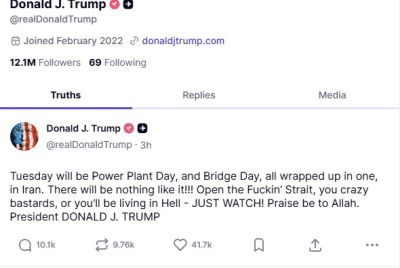
The Strait of Hormuz has been a flashpoint throughout the crisis. Earlier in April, Trump issued strong warnings, including an Easter Sunday post demanding Iran open the waterway or face severe consequences, including strikes on power plants and bridges. That expletive-laden message drew international attention and criticism for its tone.
Since then, limited commercial shipping has resumed through the strait, but the U.S. naval blockade continues to restrict Iranian oil exports and military movements. Energy markets have fluctuated with each development, with oil prices reacting to news of potential reopenings or extensions of restrictions.
Trump's latest post echoes his long-standing approach to Iran, which includes withdrawing from the 2015 nuclear deal during his first term and imposing maximum pressure through sanctions. Supporters argue the strategy has weakened the Iranian regime, while critics say it risks broader regional instability and has strained alliances.
Administration officials have described Iran's leadership as "seriously fractured," a characterization Trump repeated in recent statements. The president has suggested that economic pain could force Tehran to the negotiating table on more favorable terms for the United States.
The $500 million daily loss figure cited by Trump aligns with estimates from some analysts tracking the impact of the blockade on Iran's oil revenue. Before the recent conflict intensified, Iran exported roughly 1.5 million to 2 million barrels of oil per day, much of it through the strait. With restricted access, revenue has plummeted, exacerbating existing economic woes from sanctions and internal mismanagement.
Reports of unpaid security forces have surfaced sporadically from opposition groups and exile media, though independent verification remains challenging amid restricted access in Iran. Such complaints could signal morale issues within the regime's coercive apparatus, potentially complicating efforts to maintain control during economic hardship.
The ceasefire extension provides breathing room for diplomacy, with indirect talks reportedly involving intermediaries such as Pakistan and Oman. However, deep divisions persist over sanctions relief, nuclear enrichment limits and Iran's support for groups like Hezbollah and the Houthis.
Democrats and some foreign policy experts have urged caution, warning that provocative social media posts could undermine diplomatic efforts or escalate tensions unintentionally. Republicans, by contrast, largely praise Trump's assertive style as necessary to counter what they view as a dangerous adversary.
Global reactions have been mixed. China, a major buyer of Iranian oil in the past, has watched developments closely, with some Chinese social media users mocking U.S. involvement while highlighting Beijing's growing influence. European allies have called for de-escalation and a return to multilateral negotiations.
Energy experts note that even partial reopening of the Strait of Hormuz could ease pressure on global oil prices, which spiked during the height of the blockade. Full normalization, however, depends on a broader agreement that addresses security concerns in the Gulf.
Trump has positioned the Iran situation as a test of American strength and his personal negotiating prowess. In previous posts, he has boasted about the effectiveness of U.S. military posture and warned of further action if Iran does not comply.
The president's prolific posting on Truth Social — often dozens of times daily — has become a hallmark of his second term. Analysts track the volume as a barometer of his focus on specific issues, with foreign policy crises driving spikes in activity.
As the ceasefire holds for now, questions remain about the timeline for substantive talks. Trump has indicated he wants a "big deal" rather than temporary fixes, suggesting the blockade could stay in effect as leverage.
Inside Iran, state media has downplayed economic difficulties while accusing the U.S. of piracy in the strait. Iranian officials have vowed to respond to any further aggression, though the regime faces domestic challenges including protests over economic conditions in recent years.
U.S. military leaders have expressed confidence in the Navy's ability to enforce the blockade while avoiding direct confrontation. The presence of American warships has deterred Iranian attempts to challenge the restrictions forcefully.
Congress has been briefed on the situation, with lawmakers from both parties monitoring developments that could affect defense spending and regional alliances. Some Republicans have pushed for even tougher measures, while others support giving diplomacy more time under the extended ceasefire.
The latest Truth Social post quickly drew reactions online, with supporters hailing it as evidence of Trump's tough stance paying dividends. Critics, meanwhile, questioned the accuracy of the claims and worried that public saber-rattling could complicate backchannel negotiations.
As of Wednesday morning, no immediate response from Iranian officials to Trump's financial collapse assertion had been reported. The coming days are expected to clarify whether the ceasefire extension leads to renewed talks or further friction.
Trump's approach combines economic pressure, military posturing and direct public messaging — a formula he has used throughout his political career. Whether it yields a breakthrough with Iran remains one of the defining foreign policy questions of his second term.
The president has scheduled no public events immediately addressing the post, but White House spokespeople indicated updates would continue as the situation evolves.
For now, the Strait of Hormuz remains partially open to commercial traffic under restrictions, the U.S. blockade persists, and diplomatic efforts proceed cautiously in the background. Trump's late-night message serves as both an assessment of Iran's weakness and a reminder of ongoing American leverage in the standoff.
© Copyright 2026 IBTimes AU. All rights reserved.
- Recommended For You