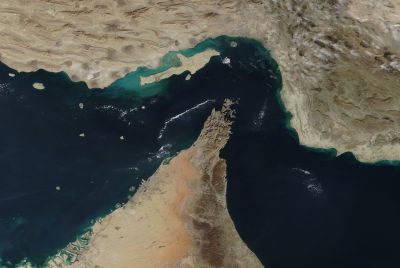
Strait of Hormuz Tensions Escalate as US Ship Seizure Triggers Iran Retaliation and Oil Spike
DUBAI, United Arab Emirates — The Strait of Hormuz remained in a state of high tension on Wednesday as the United States seized an Iranian-flagged cargo ship attempting to breach its naval blockade, prompting Iran to fire warning shots at passing vessels and reassert control over the critical waterway, driving oil prices sharply higher and leaving global energy markets on edge.

Independent maritime tracking data showed commercial traffic through the narrow chokepoint — which normally carries about one-fifth of the world's oil supply — remained severely limited, with only a handful of vessels making the passage on April 22 amid fears of further attacks or enforcement actions. Hundreds of tankers continued to idle in the Persian Gulf or reroute around the Cape of Good Hope, creating costly backlogs and raising freight and insurance premiums for shippers.
The latest flare-up began on April 19 when U.S. Navy forces boarded and seized the Iranian-flagged vessel Touska after it allegedly tried to evade the American blockade of Iranian ports. Marines disabled the ship's engine room before taking control, marking the first such interception since the blockade was imposed. President Donald Trump described the operation as necessary to enforce sanctions and pressure Tehran on nuclear issues and regional proxies. Iran's military command condemned the move as "piracy" and vowed a swift response, with Revolutionary Guard Corps gunboats subsequently firing warning shots at several commercial ships attempting transit.
Iran had briefly declared the strait "completely open" to commercial shipping on April 17 during a fragile ceasefire window, triggering a short-lived surge in vessel movements and a sharp drop in oil prices. That optimism collapsed rapidly when Tehran accused the U.S. of violating the truce by maintaining its blockade, leading to renewed restrictions and the latest confrontations. Independent trackers reported that after a brief weekend uptick of around 20 vessels crossing on April 18-19, traffic fell back to near standstill levels, with only two to seven ships recorded moving through the strait in recent 24-hour periods.
Oil markets reacted strongly to the renewed uncertainty. Brent crude climbed more than 5% in recent sessions to trade near $95-96 per barrel, while West Texas Intermediate also rose sharply. Traders fear that prolonged disruption could push prices toward $100 or higher, exacerbating global inflation concerns at a time when many economies are still recovering from earlier energy shocks. Asian importers such as China, India and Japan — heavily reliant on Gulf crude — face the greatest exposure, with potential knock-on effects for consumer prices and industrial costs worldwide.
The strategic importance of the Strait of Hormuz cannot be overstated. It serves as the primary export route for oil and liquefied natural gas from Saudi Arabia, the United Arab Emirates, Qatar, Kuwait and Iraq. Any sustained closure or severe restriction would have immediate and severe consequences for global energy security. Analysts warn that even selective Iranian enforcement or sporadic attacks on vessels could create a "managed tension" scenario, where uncertainty itself disrupts trade without triggering full-scale naval conflict.
U.S. military assets, including advanced unmanned underwater vehicles, have been deployed to detect and clear potential Iranian mines in the area. The Navy's presence is intended to uphold freedom of navigation under international law, which treats the strait as an international waterway open to transit passage. However, Iran asserts de facto control and has used the threat of closure as leverage in negotiations.
International reactions have varied. China has repeatedly urged that the strait remain open to normal commercial navigation to protect its energy imports. European nations and Gulf states have called for calm and renewed diplomacy, while the United Kingdom is hosting a multinational military planning conference starting Wednesday to discuss contingency measures for keeping the waterway secure. The United Nations has highlighted the potential economic ripple effects, including higher shipping costs and reduced global trade growth.
Shipping companies face acute operational and financial risks. Many have delayed voyages, rerouted around Africa or sought additional war-risk insurance. Crew safety remains a top concern following reports of projectiles striking vessels and earlier incidents involving seafarer casualties. Some operators have considered "dark" transits without automatic identification system signals to reduce visibility, though this raises collision risks and legal issues.
The crisis stems from late February 2026 when U.S. and Israeli military operations against Iran intensified, prompting Tehran to restrict access. Iran initially imposed a selective permission-based regime, sometimes charging high transit fees. Traffic dropped dramatically in early April, triggering volatility in oil markets and warnings from the International Monetary Fund about potential slowdowns in global growth.
A temporary ceasefire announced around April 8 offered brief hope, but implementation faltered quickly. The U.S. has maintained its blockade on Iranian ports to pressure Tehran, while Iran has demanded the blockade be lifted before allowing unfettered passage. Failed talks in Islamabad have added to the impasse, with Iran skipping a second round.
As the fragile ceasefire deadline approaches mid-week, President Trump has signaled possible progress in negotiations while keeping pressure on through the blockade. Iranian diplomats claim to be studying fresh proposals, but hard-line elements within Tehran appear unwilling to concede control over the strait without reciprocal concessions.
Analysts suggest the current standoff could settle into a pattern of selective access and periodic incidents rather than outright closure. This approach allows Iran to exert leverage without triggering a direct military confrontation that could devastate its own economy. However, the risk of miscalculation remains high, with any accidental clash potentially spiraling into broader conflict.
Satellite imagery and real-time maritime trackers on April 22 continued to show dozens of tankers anchored or loitering off Qeshm Island and other points, underscoring the hesitation gripping the industry. Maritime authorities have advised extreme caution for any vessels approaching the area, with many operators opting to wait for clearer diplomatic signals before committing to transit.
The situation in the Strait of Hormuz serves as a stark reminder of how a narrow geographic pinch point can hold the global economy hostage. With diplomats, militaries and energy traders watching closely, the coming days will be critical in determining whether the fragile truce can hold or whether further escalation will deepen the current disruption to one of the world's most vital energy arteries.
For now, the waterway that normally pulses with the lifeblood of global commerce remains a zone of high risk and low traffic, its future hanging on delicate negotiations, competing claims of sovereignty versus free passage, and the unpredictable dynamics of a high-stakes geopolitical confrontation that shows little sign of quick resolution.
© Copyright 2026 IBTimes AU. All rights reserved.
- Recommended For You