Elon Musk Warns AI Advancing Far Faster Than Most Realize as 2026 Breakthroughs Accelerate
AI's exponential growth in 2026 prompts industry leaders to adapt swiftly

New York — Elon Musk has issued a stark assessment of artificial intelligence progress, warning that machine intelligence is advancing at a pace far exceeding public and even industry understanding, as breakthroughs in 2026 continue to reshape technology, business, and society.
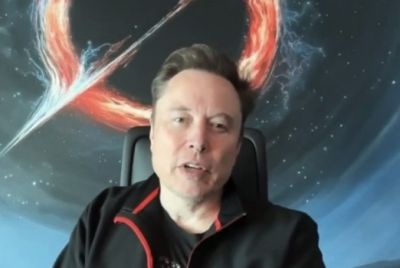
In a widely circulated post on X, the Tesla and xAI CEO stated: "I don't think most people understand just how quickly machine intelligence is advancing. It's much faster than almost anyone realizes, even within Silicon Valley and certainly outside Silicon Valley. People really have no idea." The remark, shared on May 29, 2026, quickly gained traction amid ongoing discussions about AI's exponential trajectory.
Elon Musk:
— EIońomyX (@ElonomyX) May 29, 2026
“I don't think most people understand just how quickly machine intelligence is advancing.
It's much faster than almost anyone realizes, even within Silicon Valley and certainly outside Silicon Valley. People really have no idea.” pic.twitter.com/SF7rFdyEs9
Musk's comments come as the AI sector delivers record results and companies pour billions into infrastructure. Industry leaders report accelerating capabilities in reasoning, multimodal systems, and agentic workflows that go well beyond simple chat interfaces.
Explosive Industry Growth in 2026
Major technology firms posted exceptional results tied to AI demand in the first months of 2026. Dell Technologies reported AI server revenue of $16.1 billion in its latest quarter — a 757% increase — with a massive backlog underscoring sustained momentum. Oracle highlighted infrastructure-as-a-service growth exceeding 70% expectations, positioning itself as a key player in AI computing.
Memory chip leaders like Samsung Electronics and SK Hynix benefited enormously from high-bandwidth memory demand, posting record profits driven by AI accelerators. SK Hynix's operating profit margins reached exceptional levels near 72% in Q1 as it maintained leadership in advanced HBM for GPUs.
Gaming and entertainment giants such as Sony and Nintendo navigated console transitions while integrating AI tools for content creation and personalization. Meanwhile, legacy automakers General Motors and Ford adjusted EV timelines but advanced software-defined features and driver assistance systems powered by increasingly sophisticated algorithms.
Enterprise Software Leaders Capitalize
Oracle and SAP have integrated AI deeply into their platforms. Oracle's cloud backlog surpassed $553 billion, fueled by high-performance computing needs. SAP reported strong cloud revenue growth and expanded its Joule AI assistant across enterprise applications.
IBM emphasized practical enterprise AI deployment through its watsonx platform and hybrid cloud offerings, reporting solid software revenue gains and improved free cash flow. CEO Arvind Krishna noted strong margin expansion alongside revenue growth.
These developments reflect a broader shift where AI moves from experimental pilots to core infrastructure, driving efficiency gains across sectors from manufacturing to financial services.
Broader Implications and Societal Impact
The rapid pace Musk highlighted raises both opportunities and challenges. Proponents point to breakthroughs in scientific discovery, drug development, and complex problem-solving. Critics express concerns over job displacement, particularly in knowledge work such as coding and analysis, where AI agents demonstrate increasing autonomy.
Industry observers note that progress is no longer linear. Capabilities in reasoning through complex problems have improved markedly, with some systems tackling tasks that previously required top human expertise. Multimodal models handling text, images, video, and code simultaneously have become more commonplace.
Yet everyday integration remains uneven. While developers and early adopters experience daily improvements, broader societal applications — from personalized education to autonomous systems in logistics — are still scaling. Supply chain constraints on advanced chips and energy demands for training large models continue as bottlenecks.
Investment Landscape Amid AI Boom
The AI surge has created clear winners in public markets. Companies with direct exposure to infrastructure and specialized hardware have delivered outsized returns. However, valuations have expanded rapidly, prompting caution from some analysts about sustainability if spending moderates.
Broader indices reflected mixed sentiment in late May 2026, with technology and related sectors showing strength but facing volatility from macroeconomic factors including interest rates and geopolitical developments.
Musk's companies themselves embody the trend. Tesla continues advancing Full Self-Driving technology and robotics, while xAI focuses on building powerful systems with a truth-seeking orientation. SpaceX's Starlink infrastructure supports global connectivity that could enable wider AI deployment.
Expert and Analyst Perspectives
Many in Silicon Valley echo Musk's view privately, noting compressed timelines for achieving more general capabilities. Progress in agentic systems — AI that can plan, execute, and iterate on tasks — has particularly surprised observers. Feedback loops allowing models to improve through interaction accelerate development beyond initial expectations.
Regulatory conversations have intensified globally, with governments grappling with safety, ethics, and economic impacts. The European Union, United States, and China pursue different approaches to oversight while racing to secure technological advantages.
Energy demands represent another frontier. Training and running advanced models require substantial power, driving investments in nuclear, renewables, and efficiency improvements. Companies are exploring ways to optimize inference costs to make AI more accessible.
Looking Ahead Through 2026 and Beyond
As the year progresses, investors and executives will watch several key indicators: continued growth in AI-related revenue, breakthroughs in reasoning benchmarks, adoption rates in traditional industries, and policy developments.
Musk has long advocated for proactive development of AI with strong safety measures, emphasizing the need for maximum truth-seeking systems. His companies aim to contribute solutions rather than merely observe the transformation.
For businesses, the message is clear: adaptation is essential. Organizations slow to integrate AI risk competitive disadvantage as capabilities compound. For individuals, upskilling in areas where human judgment complements AI becomes increasingly valuable.
The pace Musk described suggests 2026 could mark a pivotal year where AI transitions from a high-growth niche to a foundational technology across the economy. While uncertainties remain around exact timelines and societal adjustments, the underlying momentum appears robust.
Whether this rapid advancement leads to transformative benefits or requires careful navigation of risks will depend on responsible development and broad understanding — precisely the gap Musk sought to highlight. As capabilities evolve weekly, the gap between perception and reality may continue widening before the full implications become widely apparent.
© Copyright 2026 IBTimes AU. All rights reserved.
- Recommended For You