Elon Musk Hails Tesla AI5 Chip Tape-Out Success as AI6 and Dojo3 Projects Gear Up for Launch
AUSTIN, Texas — Elon Musk congratulated Tesla's AI chip design team Wednesday on completing the tape-out of its next-generation AI5 processor, marking a significant step forward in the electric vehicle maker's ambitious push to build custom silicon that could accelerate autonomous driving, humanoid robotics and energy storage optimization.

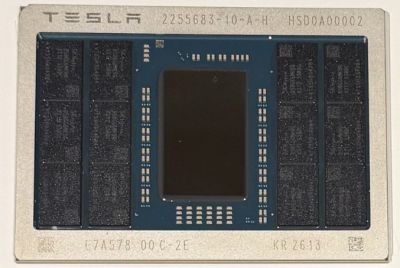
In a post on X, Musk shared an image of the newly taped-out AI5 chip and wrote: "Congrats to the @Tesla_AI chip design team on taping out AI5! AI6, Dojo3 & other exciting chips in work." He followed up by thanking manufacturing partners TSMC and Samsung, noting the AI5 "will be one of most produced AI chips ever." The announcement, which quickly garnered more than 1.6 million views within hours, underscores Tesla's deepening investment in proprietary hardware to reduce reliance on external suppliers and power its rapidly evolving artificial intelligence ambitions.
Congrats to the @Tesla_AI chip design team on taping out AI5!
— Elon Musk (@elonmusk) April 15, 2026
AI6, Dojo3 & other exciting chips in work. pic.twitter.com/hm54TdIzBx
Tape-out represents the final design stage before a chip design is sent to a foundry for fabrication. Once manufactured and tested, the AI5 is expected to deliver substantial improvements in inference performance and efficiency over its predecessor, the AI4 hardware currently deployed in newer Tesla vehicles. Industry analysts say the move is critical as Tesla races to achieve full self-driving capability and scale its Optimus humanoid robot production.
Musk's message highlighted ongoing parallel development of even more advanced silicon. AI6 is already in the works, while Dojo3 represents the next iteration of Tesla's massive in-house supercomputer cluster designed specifically for training massive neural networks. Dojo systems have been central to Tesla's strategy of owning its AI stack end-to-end, from data collection in its vehicle fleet to model training and deployment on the road.
The timing of the announcement comes as Tesla navigates a competitive landscape dominated by Nvidia's high-end GPUs, which power much of the industry's AI training. By designing its own chips, Tesla aims to achieve better cost efficiency and tighter integration with its vehicle and robot architectures. The AI5, once in production, is expected to appear first in premium vehicles and Optimus prototypes before wider rollout.
Tesla has steadily evolved its hardware roadmap. Early Autopilot systems relied on Mobileye chips before the company shifted to in-house development with Hardware 3 in 2019. Hardware 4, often referred to internally as AI4, rolled out in late 2023 and offered roughly double the performance of its predecessor. The AI5 leap is anticipated to bring another major jump in computational power while maintaining or improving energy efficiency — a key factor for vehicles where every watt affects range and for robots operating in real-world environments.
Musk has long emphasized the importance of vertical integration in AI. In past earnings calls and public remarks, he has described custom silicon as essential to making full self-driving economically viable at scale and enabling the humanoid robot business to reach cost targets below $20,000 per unit. The Dojo supercomputers complement this effort by providing the training muscle needed to process the billions of miles of real-world driving data Tesla collects daily.
Wednesday's update arrives amid broader excitement around Tesla's AI initiatives. The company continues to expand its Dojo facilities in Buffalo, New York, and other locations, while the AI team — based primarily in Palo Alto, California — has grown rapidly. Musk's post also served as a morale boost for engineers who have worked intensely on the AI5 project, often under tight deadlines to keep pace with software advancements.
Reactions on X poured in quickly, with Tesla enthusiasts and investors celebrating the milestone. Some users posted side-by-side comparisons of previous chip generations, while others speculated about deployment timelines. One reply noted the potential for AI5 to finally unlock unsupervised full self-driving, a goal Musk has repeatedly targeted. Others highlighted the competitive edge against rivals still dependent on third-party chips.
Financial markets took notice as well. Tesla shares rose modestly in early trading Wednesday as the announcement reinforced confidence in the company's technology roadmap. Analysts at firms like Morgan Stanley and Wedbush have long pointed to Tesla's AI hardware efforts as a key undervalued asset that could eventually rival or surpass its vehicle business in value.
The AI5 tape-out also carries implications beyond passenger vehicles. Optimus robots, which Tesla aims to deploy in factories and eventually homes, will require compact, power-efficient inference chips capable of real-time decision-making. Musk has described a future where millions of Optimus units could perform tasks ranging from manufacturing to elder care, all powered by Tesla-designed silicon.
Manufacturing partnerships with TSMC and Samsung are pivotal. TSMC, the world's leading chip foundry, has been instrumental in producing previous Tesla AI hardware, while Samsung provides additional capacity and specialized process nodes. Musk's public thanks signals smooth collaboration as the industry grapples with global chip shortages and geopolitical tensions affecting semiconductor supply chains.
Looking ahead, the AI6 design is already underway, suggesting Tesla plans to maintain an aggressive 12- to 18-month cadence for major hardware iterations — faster than many traditional semiconductor companies. Dojo3, meanwhile, is expected to incorporate lessons from Dojo2, which began coming online in 2025 and dramatically increased Tesla's training capacity for video-based neural networks.
Challenges remain. Scaling production of advanced AI chips requires enormous capital investment and flawless execution at foundries. Tesla must also navigate export restrictions and supply chain risks, particularly as demand for AI silicon surges across industries. Regulatory scrutiny around autonomous vehicles adds another layer, with safety regulators in the U.S. and Europe closely watching how hardware improvements translate to real-world performance.
For Tesla owners, the announcement raises questions about retrofit possibilities. While older Hardware 3 vehicles may not receive full AI5 upgrades due to physical and architectural differences, the company has historically offered retrofit programs for significant hardware jumps. Musk has previously hinted that future software updates could leverage cloud-based inference for legacy vehicles, but on-device AI5 performance would represent a step-change for newer models.
The broader AI race continues to intensify. Rivals such as Waymo, Cruise and Chinese firms like Baidu are also pouring resources into custom silicon. Yet Tesla's advantage lies in its massive real-world data moat — billions of miles of driving footage that no competitor can match. Custom chips optimized for that data give Tesla a unique edge in closing the gap to unsupervised autonomy.
Musk's post, accompanied by a striking close-up image of the AI5 die, quickly became a viral moment across tech and automotive communities. Fans praised the sleek design and engineering feat, while some drew comparisons to Apple's in-house chip development that revolutionized mobile computing. The image itself showed intricate circuitry patterns typical of high-performance AI accelerators, underscoring the complexity packed into a relatively small silicon footprint.
As Tesla prepares for its next quarterly earnings and potential robotaxi event later in 2026, the AI5 milestone serves as tangible proof of progress. Musk has repeatedly stated that solving autonomous driving and scaling robotics are the company's most valuable long-term opportunities — far beyond the core EV business.
Industry experts say the tape-out success validates Tesla's bet on in-house silicon. "Owning the stack from silicon to software gives them control over performance, cost and iteration speed that competitors renting time on Nvidia GPUs simply cannot match," said one semiconductor analyst who requested anonymity to speak freely about client strategies.
For the Tesla AI team, Wednesday's congratulations marked a well-earned victory lap after months of intense design work. Musk's history of celebrating engineering milestones — from rocket landings to Cybertruck production — has become part of the company culture, motivating teams to tackle seemingly impossible technical challenges.
With AI5 now headed to fabrication and AI6 already on the drawing board, Tesla's hardware roadmap appears on track to support ambitious timelines for full self-driving deployment and Optimus volume production. Dojo3 promises to supercharge the training side of the equation, potentially allowing Tesla to iterate models faster than ever.
As the sun set on another day in the rapidly evolving AI landscape, Musk's brief but enthusiastic post reminded investors, employees and fans why Tesla remains at the forefront of the autonomous revolution. The AI5 tape-out is more than a technical achievement — it is another building block in what Musk envisions as a future where intelligent machines transform transportation, labor and daily life.
The coming months will reveal how quickly the AI5 moves from silicon to vehicles and robots. For now, the Tesla AI team can celebrate a job well done, while the rest of the world watches to see how these chips reshape the road ahead.
© Copyright 2026 IBTimes AU. All rights reserved.
- Recommended For You