Samsung Unveils HBM4E: A Leap in AI Memory Performance
Samsung's HBM4E memory chips promise faster AI performance with improved efficiency and capacity.

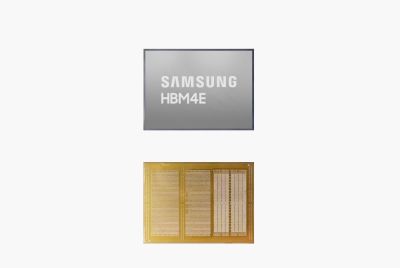
SEOUL — Samsung Electronics has begun shipping samples of its industry-first 12-layer HBM4E high-bandwidth memory chips to major global customers, marking a significant step forward in the race to supply advanced memory solutions for next-generation artificial intelligence systems.
The South Korean technology giant announced the development on May 29, 2026, following the earlier commercial shipment of its HBM4 memory earlier this year. The new HBM4E samples aim to address the surging demand for higher-speed, more power-efficient memory in AI data centers and hyperscale computing infrastructure.
Samsung's 12-layer HBM4E achieves pin speeds of up to 16 gigabits per second, representing more than a 20% improvement over the previous HBM4 generation. The chips deliver bandwidth of up to 3.6 terabytes per second per stack and come in a 48-gigabyte capacity configuration, offering more than 30% higher capacity than the prior version. Samsung plans to expand the lineup to include 32GB 8-layer and 64GB 16-layer options based on customer needs.
The advancement builds directly on Samsung's experience with HBM4 production. The company has applied its most advanced 6th-generation 10-nanometer-class DRAM process and 4nm logic base die technology from its foundry business to enhance stability and manufacturability. These improvements have resulted in 16% better energy efficiency and more than 14% improved thermal resistance compared to the previous generation.
Sang Joon Hwang, Executive Vice President and Head of Memory Development at Samsung Electronics, highlighted the significance of the milestone. "Following the successful mass production of HBM4, Samsung has once again demonstrated its distinct technological edge with HBM4E," he said. "Through our advanced manufacturing capabilities and preemptive infrastructure investments, we will continue to drive the growth of the global AI memory market."
The HBM4E represents the latest evolution in high-bandwidth memory technology, which has become critical for training and running large language models and other intensive AI workloads. Unlike traditional DRAM, HBM stacks multiple memory dies vertically and connects them through silicon vias, enabling dramatically higher data transfer rates while consuming less power and space.
Samsung's move comes as global demand for AI accelerators continues to surge. Major cloud providers and AI chip designers require increasingly sophisticated memory solutions to handle the exponential growth in model sizes and computational requirements. HBM4E's enhanced thermal performance is particularly important for data centers facing rising energy costs and sustainability pressures.
Industry analysts view Samsung's rapid progression from HBM4 to HBM4E as a demonstration of its manufacturing strength. The company was the first to achieve mass production and commercial shipment of HBM4 earlier in 2026. Positive customer feedback on that generation, particularly regarding performance and energy efficiency, has encouraged accelerated development of the enhanced version.
The 12-layer design in the initial HBM4E samples pushes the boundaries of current stacking technology. By optimizing both memory and logic architectures, Samsung has improved overall yield and reliability while maintaining high performance. These technical refinements are expected to support longer operational periods in high-intensity computing environments with better heat dissipation.
Samsung plans to begin mass production of HBM4E according to customer schedules after completing sample validation and optimization phases. The company's comprehensive semiconductor portfolio — spanning memory, foundry services, logic design and advanced packaging — provides a strategic advantage in securing stable supply for AI customers.
The broader memory market has seen intense competition in the HBM segment. While Samsung holds a strong position, rivals including SK Hynix and Micron Technology are also investing heavily in next-generation high-bandwidth solutions. HBM4E's improvements in speed, capacity and efficiency could help Samsung maintain or expand its market share in this critical category.
For the AI industry, the availability of more advanced memory directly impacts the pace of innovation. Higher bandwidth and capacity allow for larger models, faster training times and more efficient inference operations. Samsung's focus on energy efficiency also aligns with growing demands from data center operators seeking to control power consumption amid rapid AI expansion.
The announcement reflects Samsung's broader strategy to capitalize on the AI boom. The company has invested significantly in research and development as well as production capacity to meet expected long-term demand. Its ability to deliver samples quickly after launching HBM4 demonstrates strong execution capabilities.
Market reaction to the news has been positive, with investors viewing the development as reinforcement of Samsung's technological leadership in a high-growth segment. The memory business remains cyclical, but sustained AI investment has created a structural tailwind for specialized products like HBM.
As Samsung moves toward mass production, attention will turn to how quickly customers can integrate the new memory into their systems. Early sample shipments allow partners to begin testing and validation, potentially accelerating commercial deployment timelines.
The HBM4E introduction comes at a pivotal time for the semiconductor industry. With AI workloads becoming more demanding, memory technology must evolve rapidly to avoid bottlenecks in computing performance. Samsung's latest achievement positions it well to support the next wave of AI advancement while addressing practical challenges around power and thermal management in real-world data centers.
Looking ahead, the company is expected to continue expanding its HBM portfolio with further innovations in stacking, speed and efficiency. These developments will play a crucial role in enabling more capable and sustainable AI infrastructure worldwide.
© Copyright 2026 IBTimes AU. All rights reserved.
- Recommended For You