Micron Stock Rockets Toward $420 on Explosive AI Memory Demand and Record Q3 Guidance
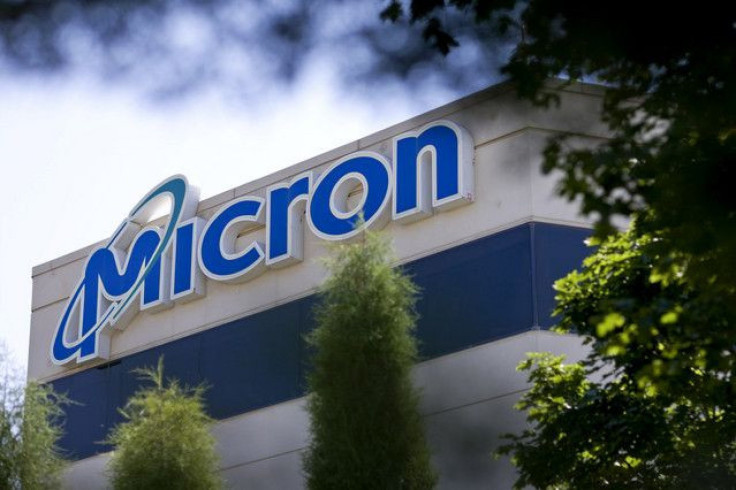
BOISE, Idaho — Micron Technology Inc. shares climbed more than 3% Thursday to trade around $420.50 as investors continued to reward the memory chipmaker's dominant position in the artificial intelligence boom, fueled by sold-out high-bandwidth memory production through 2026 and blockbuster guidance signaling another quarter of record revenue and margins.
The NASDAQ-listed company (MU) rose as high as $425 intraday amid broader optimism in tech stocks following a U.S.-Israel-Iran ceasefire that eased some geopolitical concerns. Micron has delivered staggering gains of more than 300% over the past year and roughly 40-50% year-to-date in 2026, with its market capitalization now exceeding $460 billion as it capitalizes on insatiable demand for advanced DRAM and HBM used in AI data centers.
Micron, a leading producer of DRAM, NAND flash and high-bandwidth memory essential for training and running large AI models, posted explosive fiscal second-quarter results in mid-March that crushed Wall Street expectations. For the quarter ended Feb. 26, 2026, the company reported revenue of $23.86 billion, up 196% from a year earlier and beating forecasts. Adjusted earnings per share surged to $12.20 from $1.56 in the prior-year period, handily topping consensus estimates.
CEO Sanjay Mehrotra highlighted "exceptional" performance driven by tight industry supply, strong AI demand and superior execution. Gross margins expanded dramatically to around 74%, reflecting premium pricing on AI-optimized products. The company also raised its dividend by 30% amid surging free cash flow, which hit record levels in the quarter.
Even more impressive was Micron's guidance for the fiscal third quarter ending May 2026: revenue of $33.5 billion plus or minus $750 million — a figure that would represent another massive sequential jump and exceed the company's full-year revenue for many prior years. Non-GAAP gross margin is projected near an eye-popping 81%, with adjusted EPS around $19.15. Management cited higher pricing, lower costs and a favorable product mix as drivers for further margin expansion.
"AI demand far exceeds supply, and we see that tightness continuing into 2027," Mehrotra told analysts on the earnings call. The company's entire HBM production for calendar 2026 is already sold out under binding agreements, providing rare visibility in the notoriously cyclical memory industry.
Micron has aggressively ramped production of its HBM3E and next-generation HBM4 products. In mid-March, the company announced it had begun high-volume shipments of its HBM4 36GB 12-high stack, designed for NVIDIA's upcoming Vera Rubin platform. The new memory delivers more than 2.8 TB/s of bandwidth — a 2.3 times improvement — along with over 20% better power efficiency compared with prior generations.
While some reports have circulated about potential qualification delays or shifts in NVIDIA's HBM4 allocations for initial Rubin builds, with SK Hynix and Samsung potentially taking larger early shares, Micron executives have pushed back strongly. Management reiterated that its full 2026 HBM supply — including HBM4 — remains fully contracted, with ongoing discussions for pricing and volume on advanced nodes. The company is also shipping samples of even higher-capacity HBM4 48GB 16-high stacks and expanding capacity through new fabs in the U.S., Singapore and Taiwan.
Analysts have responded with a wave of bullish upgrades and price target increases. KeyBanc recently set a $600 target, while UBS raised its target to $535. Consensus price targets now hover around $465 to $500, with some firms calling for $700 or more in optimistic scenarios. Ratings remain overwhelmingly Buy, with Wall Street viewing Micron as one of the purest and most leveraged plays on the AI infrastructure supercycle.
The company's Cloud and Data Center business unit, which includes HBM sold to hyperscalers and GPU makers, has been the primary growth engine. Demand for memory in AI training clusters continues to outstrip available supply, even as non-OPEC+ producers add capacity elsewhere in the semiconductor chain. Micron's technological edge in stacking and efficiency has allowed it to command premium pricing while competitors play catch-up.
Beyond HBM, Micron is seeing strength in traditional DRAM and NAND for data centers, PCs and smartphones. The firm highlighted innovations such as PCIe Gen6 SSDs and SOCAMM2 memory modules, further broadening its AI-adjacent portfolio.
Financially, Micron has transformed from a cyclical laggard into a high-margin growth story. Fiscal 2026 revenue is on track for massive expansion, with some analysts projecting full-year figures approaching or exceeding $70-80 billion in optimistic models. Free cash flow generation has enabled both aggressive capital spending — now projected above $25 billion for the year to fuel capacity growth — and shareholder returns via the dividend hike.
Still, risks remain inherent to the memory sector. While AI demand currently masks traditional cyclicality, any slowdown in hyperscaler capital expenditure, resolution of HBM4 technical bottlenecks across the industry or unexpected supply surges could pressure pricing. Micron's heavy reliance on a concentrated customer base, including major AI players, introduces some concentration risk. Geopolitical tensions, export restrictions and the capital-intensive nature of fab expansions also warrant monitoring.
The stock's rapid ascent has left valuations elevated by historical standards, though forward multiples remain reasonable given projected earnings growth. Shares have pulled back modestly from recent peaks near $471 but continue to attract momentum and growth-oriented investors.
Thursday's gains built on a strong session earlier in the week, with elevated trading volume signaling sustained interest. By mid-afternoon, shares traded near $420.50, up about 3.4% on the day.
Micron executives expressed confidence in sustained fundamentals. With new manufacturing sites coming online gradually — meaningful contributions not expected until fiscal 2028 in some cases — supply constraints are likely to persist, supporting pricing power in the near to medium term.
As artificial intelligence spending by companies like Microsoft, Google, Meta and Amazon accelerates, with combined 2026 data center capex forecasts in the hundreds of billions, memory suppliers capable of delivering high-performance, power-efficient solutions are in the spotlight. Micron's pivot toward AI-optimized products has decoupled it somewhat from broader PC and consumer cycles.
Upcoming fiscal third-quarter results, expected in late June, will be watched closely for further evidence of margin sustainability and any updates on HBM4 ramps or customer diversification. Analysts will scrutinize utilization rates, pricing trends and commentary on 2027 visibility.
For now, sentiment remains firmly bullish. Micron's record backlog-like visibility in HBM, technological leadership and disciplined execution position it as a cornerstone player in the AI supply chain. Whether the current rally can extend further will depend on continued hyperscaler demand, successful capacity scaling and the broader trajectory of AI adoption.
Micron Technology, founded in 1978 and headquartered in Boise, employs tens of thousands worldwide. Its products power everything from smartphones and servers to the most advanced AI supercomputers. Once viewed primarily as a commodity memory maker, the company has emerged as a critical enabler of the artificial intelligence revolution.
With HBM capacity sold out for the year and explosive guidance pointing to another record quarter, Micron appears poised for what many describe as a multi-year growth phase — provided it can navigate the technical and supply challenges that define the high-stakes AI hardware race.
© Copyright 2026 IBTimes AU. All rights reserved.
- Recommended For You