SanDisk Stock Explodes 7.5% to $840 as AI Data Center Demand Ignites Flash Memory Rally
MILPITAS, Calif. — Shares of SanDisk Corp. surged more than 7.5% Thursday, pushing the pure-play NAND flash and solid-state drive maker to fresh record highs near $840 as booming demand for high-capacity storage in artificial intelligence data centers continued to fuel one of the most dramatic rallies on Wall Street in 2026.
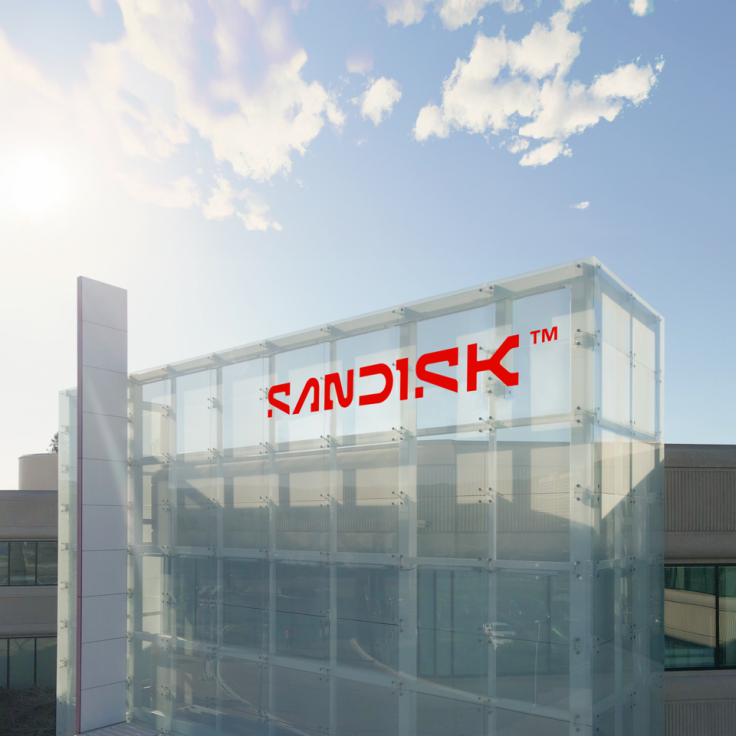
The stock climbed as high as $843 midday before trading near $839.89, up $58.99 or 7.55% on heavy volume exceeding 12 million shares. That extended a stunning run that has seen SanDisk shares soar more than 2,000% over the past 12 months and roughly 160-230% year-to-date in 2026, transforming the former Western Digital unit into one of the top-performing technology stocks amid the AI infrastructure boom.
SanDisk, which completed its separation from Western Digital Corp. in February 2025 and became a standalone public company, specializes in NAND flash memory used in enterprise SSDs, consumer storage and increasingly in high-bandwidth AI training and inference systems. The company's BiCS8 technology and next-generation portable SSD portfolio have positioned it to capture explosive growth as hyperscalers and AI developers require vastly more fast, reliable storage for massive datasets.
Fiscal first-quarter 2026 results released in November 2025 showed revenue of $2.31 billion, up 21% sequentially and beating guidance. GAAP net income reached $112 million, or 75 cents per diluted share, while non-GAAP earnings per share hit $1.22. Datacenter revenue jumped 26% sequentially, with two hyperscalers already in qualification, a third and a top storage OEM slated for 2026, and engagement with five major hyperscale customers overall. BiCS8 accounted for 15% of total bits shipped, on track to become the majority of production by year-end.
Analysts have grown increasingly bullish. Bernstein raised its price target to $1,250 from $1,000 on Thursday, calling SanDisk its top short-term pick and outlining a blue-sky scenario that could push the stock toward $3,000. Cantor Fitzgerald maintained an Overweight rating with a higher target, while other firms have highlighted the company's pricing power in a supply-constrained NAND market. Consensus targets remain below current levels in some models, reflecting caution after the massive run, but several see substantial further upside.
The rally reflects a broader rotation into AI infrastructure hardware. While software stocks have lagged, memory and storage plays like SanDisk have benefited from surging demand for high-performance SSDs capable of handling the enormous data throughput required for training large language models and running inference at scale. NAND flash prices have risen sharply, driving margin expansion even as the company invests in capacity.
SanDisk introduced a next-generation portable SSD lineup in February 2026 designed specifically for faster workflows and AI-developed content, featuring higher capacities and improved speeds to support professional creators and enterprise users dealing with massive files. The three-tier portfolio underscores the company's push beyond traditional consumer flash into more demanding professional and data-center adjacent segments.
Management has guided for continued strength. For the third quarter of fiscal 2026, SanDisk projected revenue between $4.4 billion and $4.8 billion, with analysts forecasting significant sequential and year-over-year gains. Full-year 2026 revenue could approach or exceed $15 billion in some optimistic models, with operating income potentially reaching several billion dollars as pricing and mix improvements flow through.
The company's independence has removed the "conglomerate discount" that weighed on it while part of Western Digital. A $3.09 billion secondary offering in February 2026 allowed Western Digital to fully exit its remaining stake, clearing overhang and giving SanDisk a cleaner capital structure for growth investments.
Yet risks remain in the notoriously cyclical memory industry. SanDisk carries a forward price-to-earnings multiple that has compressed relative to its growth but remains elevated after the run. Supply additions from competitors, potential softening in consumer electronics or any slowdown in hyperscaler capex could pressure pricing. Some analysts caution that current margins, driven heavily by pricing rather than volume, may moderate as multi-year contracts stabilize revenue and new capacity comes online.
Jim Cramer has noted the boom-and-bust nature of the sector, reminding investors that flash memory has historically been volatile. Still, the current cycle appears supported by structural AI demand that did not exist in prior upturns, with storage needs growing faster than compute in many data center deployments.
SanDisk's market capitalization has ballooned toward $120 billion or more in recent trading, a remarkable turnaround from levels near $28 just over a year ago. The stock's high beta has attracted both institutional money and retail enthusiasm, with options activity reflecting continued bullish conviction even at elevated prices.
First-quarter fiscal 2026 earnings, already reported, set a strong tone. Upcoming second-quarter results expected around late April or early May will provide further insight into sustained momentum, hyperscaler qualification progress and any commentary on full-year outlook. Investors will watch gross margins, bit shipment growth and updates on the enterprise SSD pipeline.
Longer term, SanDisk is betting that AI will drive a multi-year supercycle for NAND. Hyperscalers are building out massive clusters where storage represents a growing share of infrastructure spend. SanDisk's focus on high-density, high-performance solutions aligns with that shift, potentially supporting elevated valuations if execution continues.
The company maintains strong relationships across the storage ecosystem and has highlighted engagements that could lead to meaningful design wins in 2026 and beyond. While exact customer names remain confidential in many cases, the pipeline appears robust.
For investors who missed the early stages of the rally, the question remains whether there is room left to run. Some models project the stock could reach $1,400 or higher by year-end 2026 if earnings double or triple and the market awards a premium multiple. Others see more modest gains as the easy part of the recovery fades.
Thursday's surge came with no single new announcement but appeared driven by continued momentum, positive analyst notes and rotation into hardware names benefiting from AI tailwinds. Broader market relief from geopolitical developments also supported risk assets.
SanDisk did not immediately comment beyond its scheduled earnings calendar. Company officials have emphasized disciplined capacity management and a focus on higher-value enterprise and AI-centric products rather than chasing low-margin consumer volume.
As one of the purest ways to play the explosion in data storage demand, SanDisk has captured investor imagination in 2026. Whether the rally sustains or pauses for digestion will depend on upcoming results and the trajectory of AI infrastructure spending. For now, the former flash memory pioneer is riding high as a key beneficiary of the artificial intelligence buildout.
© Copyright 2026 IBTimes AU. All rights reserved.
- Recommended For You