Bloom Energy Stock Rockets 7.3% Past $157 as AI Data Center Power Crunch Drives Fuel Cell Demand

SAN JOSE, Calif. — Shares of Bloom Energy Corp. surged more than 7% Thursday, blasting past $157 as investors piled into the solid-oxide fuel cell maker amid intensifying demand for reliable on-site power to fuel artificial intelligence data centers and ease grid constraints.
The stock climbed as high as $158 or more midday before trading near $157.56, up $10.78 or 7.34% on elevated volume. That continued a remarkable run that has seen Bloom shares soar hundreds of percent over the past year, turning the company into one of the standout performers tied to the AI infrastructure boom.
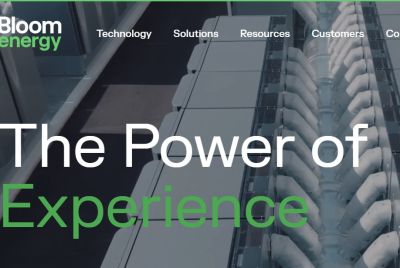
Bloom Energy designs, manufactures and installs on-site power systems that generate electricity using natural gas or hydrogen, offering data center operators and industrial users a faster alternative to waiting years for traditional utility grid connections. Its fuel cells provide always-on, low-emission power that can be deployed in months rather than years — a critical advantage as hyperscalers race to build gigawatt-scale "AI factories."
The latest surge came with no single new announcement but reflected ongoing momentum from the company's strong 2025 results, ambitious 2026 guidance and repeated analyst commentary linking Bloom directly to the explosive power needs of AI training and inference workloads. Data centers for next-generation AI can consume nearly 100 times more electricity than previous generations, creating urgent bottlenecks that Bloom's technology helps address.
In its fourth-quarter and full-year 2025 earnings released Feb. 5, Bloom reported record revenue of $777.7 million for the quarter, up 35.9% year-over-year and beating expectations. Full-year revenue hit $2.02 billion, a 37.3% jump. Product backlog surged 140% to about $6 billion, while total backlog approached $20 billion when including service contracts. The company posted its second consecutive year of positive operating cash flow.
Management guided for 2026 revenue between $3.1 billion and $3.3 billion — implying roughly 60% growth — along with non-GAAP operating income of $425 million to $475 million and continued positive cash flow. Analysts viewed the outlook as notably aggressive yet credible given the visible pipeline in data centers.
Major partnerships have reinforced the narrative. Bloom struck a deal with American Electric Power for up to $2.65 billion in fuel cell deployments tied to data center projects. It also entered a strategic agreement with Brookfield Asset Management that could see up to $5 billion deployed to power AI infrastructure. Additional momentum came from engagements with hyperscalers and a reported Oracle-related project.
The company's 2026 Data Center Power Report, released in January, highlighted a structural shift: data center developers are increasingly designing campuses to operate independently of the grid or with significant on-site generation to avoid delays. Surveys of hyperscalers, colocation providers and utilities showed power availability now driving site selection, with many moving to power-advantaged regions.
Bloom appointed Simon Edwards, formerly of AI inference specialist Groq, as chief financial officer effective April 13, signaling deeper focus on scaling financial operations alongside rapid growth in the high-compute sector.
Analysts have grown more constructive. Price targets have risen sharply in recent months, with some firms seeing significant upside even after the stock's parabolic move. Consensus still shows a mix of Buy and Hold ratings, but the average target has climbed toward the $140-$170 range in recent updates. Bullish voices cite the multi-year visibility from backlog and the secular tailwind of AI power demand.
Yet the stock has not been without volatility. It pulled back sharply in March amid profit-taking, insider sales and concerns that the rally had gotten ahead of fundamentals. Some executives sold shares to cover taxes or diversify, though the company maintained that core conviction in its strategy remains intact. Valuation has also drawn scrutiny, with the stock trading at a premium multiple that assumes flawless execution on manufacturing scale-up and margin expansion.
Bloom's solid-oxide fuel cells run on natural gas today but are designed for future hydrogen blending, positioning the company in both the immediate AI power crunch and the longer-term energy transition. Gross margins have improved, though they remain sensitive to product mix and deployment timing. The company has emphasized disciplined capital spending, targeting $150 million to $200 million in 2026 while aiming to sustain positive cash flow.
First-quarter 2026 results are scheduled for release around April 29 or 30. Investors will watch for updates on backlog conversion, hyperscaler traction, gross margin trends and any commentary on the pace of 2026 revenue recognition. Supply chain execution and the ability to ramp production without margin erosion will be key metrics.
Broader industry dynamics favor Bloom's positioning. Hyperscalers including Amazon, Microsoft, Google, Meta and Oracle are projected to spend hundreds of billions on capital expenditures in 2026, with power infrastructure representing a growing share. Traditional grid expansions cannot keep pace, creating openings for on-site solutions like Bloom's fuel cells that can be permitted and installed far more quickly.
Competition exists from diesel generators, battery storage, small modular reactors and other fuel cell technologies, but Bloom claims advantages in efficiency, emissions profile and proven deployments at scale. Its systems have powered critical facilities for years, giving it credibility with large corporate and data center customers.
For retail and institutional investors, Bloom has become a high-beta proxy for the AI power theme — moving sharply on news flow around data centers, energy prices or geopolitical events that spotlight energy security. Thursday's gain appeared driven by continued rotation into infrastructure plays tied to AI buildout and relief from earlier March consolidation.
Bloom's market capitalization has swelled dramatically, reflecting the market's willingness to pay up for growth in a sector where power is now the primary constraint. The company maintains a strong cash position to support operations and selective investments.
Longer term, success will hinge on converting the massive backlog into recognized revenue, sustaining margin improvements and navigating any cyclical slowdowns in data center spending. Management has stressed that the shift toward on-site power is secular rather than temporary, driven by the sheer scale of AI workloads.
As Bloom prepares for its next earnings report, attention will center on whether the optimistic 2026 guidance remains on track and if new multimillion-dollar deployments materialize. With AI demand showing few signs of slowing and grid delays persisting, the fuel cell pioneer enters the heart of 2026 with strong tailwinds — though at elevated valuations that leave little room for execution missteps.
Whether the current momentum carries the stock higher or prompts another round of profit-taking will depend on upcoming results and the continued intensity of the AI infrastructure race. For now, Bloom Energy stands as a compelling, if volatile, play on the urgent need for reliable power in the age of artificial intelligence.
© Copyright 2026 IBTimes AU. All rights reserved.
- Recommended For You