10 Game-Changing Facts About Elon Musk's Terafab AI Chip Megafactory in 2026
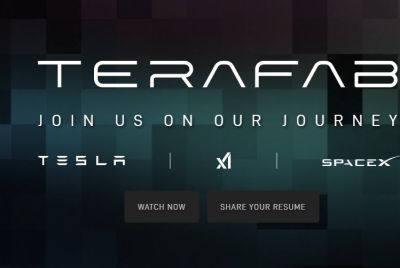
AUSTIN, Texas — Elon Musk's audacious Terafab project, a vertically integrated semiconductor powerhouse backed by Tesla, SpaceX, xAI and now Intel, is reshaping ambitions for American chip manufacturing and the future of AI compute on Earth and in orbit.

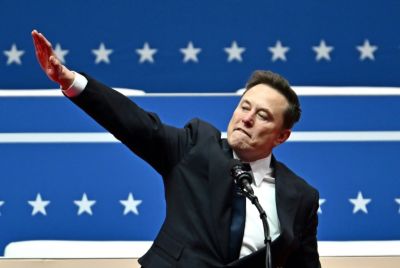
Announced by Musk on March 21, 2026, at a decommissioned power plant in Austin, Terafab aims to produce more than 1 terawatt of AI compute capacity annually — a staggering scale that dwarfs current global output and addresses the explosive demand from autonomous vehicles, humanoid robots and orbital data centers.
Here are 10 essential things to know about the project as it gains momentum in 2026.
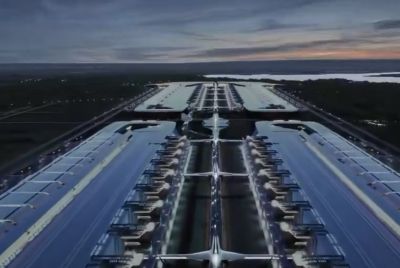
First, Terafab represents an unprecedented level of vertical integration in semiconductor production. Unlike traditional fabs that specialize in one stage, the facility will consolidate chip design, lithography, fabrication, memory production, advanced packaging and testing under a single roof. This approach is designed to accelerate innovation, reduce dependencies on global supply chains and slash time from design to deployment for custom AI processors.
Second, the project's scale is breathtaking. Terafab targets 1 terawatt per year of compute output, roughly equivalent to twice the current annual U.S. electricity consumption of about 0.5 terawatts. The full-scale operation envisions producing 100-200 billion custom AI and memory chips annually, supporting everything from Tesla's Full Self-Driving systems and Optimus humanoid robots to SpaceX's satellite constellations and xAI's training clusters.
Third, location and cost underscore its ambition. The pilot facility is planned for the North Campus of Giga Texas in Austin, with a total investment estimated between $20 billion and $25 billion. Initial operations will focus on prototype production using advanced 2-nanometer process technology, scaling toward 100,000 wafer starts per month before expanding to 1 million.
Fourth, Intel joined the venture on April 7, 2026, bringing critical manufacturing expertise. The chip giant's involvement is expected to help "refactor silicon fab technology" and accelerate the goal of ultra-high-performance processors at massive volumes. Intel CEO Lip-Bu Tan highlighted the collaboration's potential to power robotics and data center ambitions across the partner companies.
Fifth, supplier outreach is moving at what Musk calls "light speed." In mid-April 2026, Terafab teams contacted major equipment providers including Applied Materials, Lam Research, Tokyo Electron and Samsung Electronics for rapid price quotes and delivery timelines. Tesla has also posted job openings in Taiwan seeking experienced semiconductor engineers with at least five years in advanced processes to support the effort.
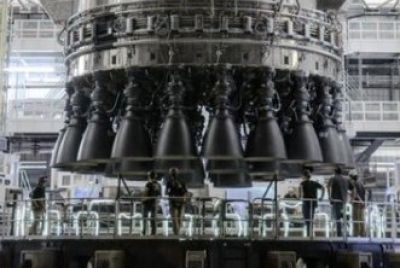
Sixth, Terafab is explicitly designed with space in mind. Musk and the project team emphasize that orbital AI compute offers compelling cost advantages over Earth-based data centers due to abundant solar power, natural cooling in vacuum and reduced regulatory hurdles. The initiative envisions launching millions of tons of mass into orbit annually and harnessing more than 1 terawatt of solar power, positioning Terafab as a stepping stone toward a multi-planetary civilization.
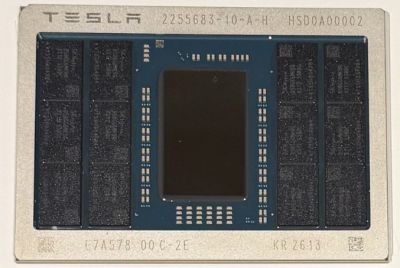
Seventh, specific chip lines are already outlined. Early products include the AI5 for Tesla's Full Self-Driving and initial Optimus deployments, AI6 for scaled robot production, and D3 variants hardened for space environments. These processors will power not only terrestrial autonomy but also future orbital AI infrastructure and lunar mass driver concepts.
Eighth, the project builds directly on the partners' proven track records. Tesla has delivered millions of vehicles with increasingly sophisticated AI, launched unsupervised camera-only self-driving, and built massive energy storage systems. SpaceX has revolutionized access to orbit with reusable rockets and operates the world's largest satellite internet constellation. xAI has constructed gigawatt-scale training clusters and the largest coherent supercomputer. Together, these capabilities provide a foundation for executing Terafab's vision.
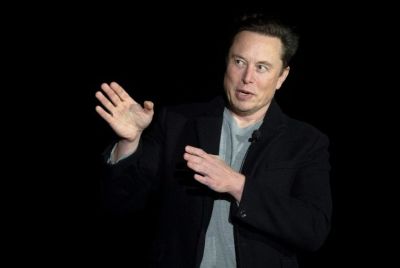
Ninth, timing is aggressive yet phased. Silicon manufacturing is targeted to begin by 2029, with steady scaling thereafter. Musk has stressed the urgency, noting that existing chipmakers like TSMC and Samsung cannot ramp production quickly enough to meet the combined needs of Tesla's robotaxi and Optimus fleets, SpaceX's Starship ambitions and xAI's models. "We either build Terafab or we don't have the chips," he said during the launch event.
Tenth, Terafab carries broader strategic implications for U.S. technology leadership. By bringing advanced semiconductor production back onshore and integrating it with domestic AI and space efforts, the project could reduce reliance on overseas foundries amid geopolitical tensions. It also signals a new model of collaboration among Musk's companies, potentially inspiring further consolidation in the sector while challenging the dominance of traditional players.
As of mid-April 2026, the initiative remains in early planning and supplier-engagement stages, but momentum is building rapidly. Positive market reactions have followed key announcements, including Intel's participation. Industry observers note the enormous engineering and capital challenges ahead, including securing rare materials, training a specialized workforce and navigating complex regulatory approvals for such a massive facility.
Yet the vision resonates with Musk's long-term goals of sustainable energy, autonomous transportation, humanoid robotics and multi-planetary life. Terafab is framed not merely as a factory but as infrastructure for a future where AI compute scales to terawatt levels, powered by the sun and deployed across Earth and beyond.
Critics question whether the timeline and cost estimates are realistic given the historical difficulties of building leading-edge fabs. TSMC, for example, has invested hundreds of billions over decades to reach its current capacity. Terafab's vertically integrated approach aims to compress that process dramatically, but execution risks remain high.
Supporters point to the complementary strengths of the partners: Tesla's manufacturing scale, SpaceX's launch capabilities and xAI's AI expertise, now augmented by Intel's process technology. If successful, Terafab could accelerate breakthroughs in energy-efficient AI chips, enable fleets of millions of Optimus robots and support orbital data centers that process information more efficiently than ground-based alternatives.
For investors and technologists, the project adds another layer to the narrative around Musk's ecosystem. Tesla shares have shown volatility tied to AI and autonomy updates, while the broader semiconductor sector watches closely for any shifts in competitive dynamics.
As Terafab advances from concept to construction, it stands as one of the most ambitious industrial undertakings of the decade — a bold bet that American innovation, vertical integration and interstellar aspirations can overcome the bottlenecks that currently constrain AI progress.
The coming months will reveal more details on site preparation, specific process nodes and partnership structures. For now, the message from Austin is clear: the race to build the brains of tomorrow's machines — on Earth and among the stars — has entered a new, dramatically scaled chapter.
© Copyright 2026 IBTimes AU. All rights reserved.
- Recommended For You