(VIDEO) Elon Musk Predicts Universal High Income and Deflation as AI Boom Reshapes Economy

AUSTIN, Texas — Elon Musk, the billionaire entrepreneur behind Tesla, SpaceX and xAI, has sparked intense debate with a bold prediction that artificial intelligence will usher in an era of "universal high income" funded by direct government payments, ultimately triggering deflation rather than inflation as productivity explodes. In a video clip widely shared Friday on X, Musk described a future where AI-driven output of goods and services grows faster than the money supply, making everyday items cheaper even as cash is distributed to citizens.
“We'll have universal high income. We're basically just issuing money to people, and just because the output of Business Services will so far exceed the money supply, that effectively you have deflation, because deflation is just the ratio of the outputs of goods and services to… pic.twitter.com/iePErYDKK0
— DogeDesigner (@cb_doge) April 17, 2026
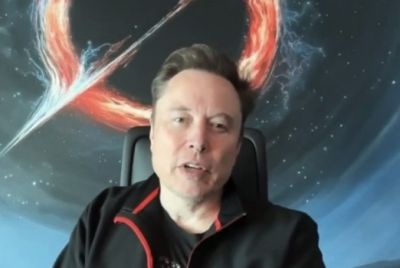
The remarks, captured during what appears to be a recent interview, quickly went viral. Posted by popular X account DogeDesigner, the 59-second clip had amassed more than 600,000 views within hours. Musk sits in a black Tesla-branded jacket against a cosmic backdrop, gesturing emphatically as he outlines his vision. "We'll have universal high income," he states. "We're basically just issuing money to people, and just because the output of goods and services will so far exceed the money supply, that effectively you have deflation, because deflation is just the ratio of the outputs of goods and services to the money supply." He adds that he predicts the growth rate of goods and services will outpace money creation, leading to falling prices.
Musk's comments represent an evolution of his long-standing views on universal basic income, which he has supported for years as a buffer against AI-induced job displacement. This time, however, he escalates the concept to "universal high income," suggesting payments substantial enough to maintain living standards without traditional employment. The deflationary twist hinges on AI's ability to supercharge production across sectors — from manufacturing and agriculture to services and energy — creating abundance that dilutes the purchasing power pressure typically associated with printing money.
Economists have long debated the mechanics of such a scenario. Traditional theory warns that flooding an economy with new currency risks inflation, as more dollars chase the same goods. Musk flips the script, arguing AI will flood the economy with goods instead. If factories run with minimal human labor, farms harvest autonomously and software handles complex tasks, the supply curve shifts dramatically rightward. Prices for housing, food, transportation and healthcare could plummet, he contends, even as governments issue larger stipends.
The idea aligns with Musk's broader optimism about AI. Through xAI, his latest venture, he has positioned himself as a proponent of safe, truth-seeking artificial intelligence that accelerates scientific discovery. Tesla's Optimus humanoid robots and autonomous vehicle fleets are already prototypes of the labor-replacing technology he envisions. SpaceX's Starship program and Neuralink's brain interfaces further illustrate his belief that humanity is on the cusp of a post-scarcity world where work becomes optional.
Yet the proposal has drawn swift criticism and questions. Replies to the viral post reflect a spectrum of reactions. Some users expressed fear that unconditional payments would erode work ethic and foster dependency, citing historical experiments like the "mouse utopia" studies where abundant resources led to social collapse. Others worried about real-estate prices: if everyone receives high income, demand for limited assets like land could skyrocket, offsetting deflation in other areas. "Universal high income sounds fantastic right up until you realize a basic starter home will probably cost 400 trillion dollars," one commenter wrote.
Skeptics also challenged the mechanics of implementation. "Printing money has never created deflation," another user replied. "Control has." Economists note that real-world distribution matters: who decides payment amounts, eligibility and funding sources? Without corresponding productivity gains across all sectors — including those with natural scarcity like prime real estate or rare materials — localized inflation could still emerge. Critics point to past stimulus checks during the COVID-19 pandemic, which contributed to price spikes despite supply-chain issues.
Supporters, however, see Musk's forecast as forward-thinking policy guidance. In an era when AI is already automating white-collar jobs in coding, legal analysis and customer service, universal high income could serve as a humane transition mechanism. It echoes proposals from figures like Andrew Yang, who advocated universal basic income during his 2020 presidential run, but Musk's version envisions higher amounts sustained by exponential growth rather than tax redistribution alone.
The timing of Musk's comments adds weight. As of April 2026, AI investment is surging globally. Major technology firms report breakthroughs in multimodal models capable of reasoning, creating and optimizing at superhuman speeds. Governments from Washington to Beijing are racing to regulate and harness the technology, with debates centering on job displacement versus abundance. Musk himself has warned repeatedly about AI risks, urging caution even as he invests heavily. In the clip, he acknowledges the future holds "a range of possible outcomes" and urges vigilance, estimating an 80 percent chance the trajectory proves "great."
Policy implications could be profound. If Musk's deflationary abundance materializes, central banks might need to rethink monetary policy. Interest rates, quantitative easing and inflation targets were designed for scarcity-driven economies. A world of falling prices could reward savers but discourage spending and investment if consumers wait for even lower costs. Governments might issue high-income payments through digital currencies or direct deposits, funded partly by taxes on AI-driven corporate profits.
Musk's companies stand to benefit enormously from the shift he describes. Tesla's full self-driving technology and robotaxis could generate trillions in value while displacing millions of driving jobs — precisely the scenario universal high income would address. xAI's Grok models aim to accelerate discovery in physics, biology and materials science, potentially unlocking the productivity gains Musk predicts. The entrepreneur has long argued that humanity must become multi-planetary to ensure long-term survival, viewing AI as both a tool and a potential existential risk.
Public reaction on social media highlights deep societal divisions. Optimists celebrated the vision of leisure time for creativity, family and exploration. "More time for me to make AI videos," one user quipped. Pessimists warned of moral hazard: "If everyone is rich then no one is." Some invoked philosophical concerns, arguing that struggle gives life meaning and that removing it risks societal decay. Others questioned practicality: "How is it possible? And why would we even need money in society at that point?"
Financial markets showed no immediate reaction Friday, with Tesla shares trading steadily amid broader tech sector volatility. Analysts note Musk's statements often move markets when tied to product announcements but serve more as philosophical provocations here. Still, the clip's rapid spread — boosted by high-engagement accounts — underscores X's role as a real-time barometer of tech thought leadership.
The discussion revives older debates about technological unemployment. Since the Industrial Revolution, automation has displaced workers while creating new opportunities. AI differs in scale and speed, potentially affecting cognitive as well as physical labor. Studies from organizations like the World Economic Forum project massive job churn by 2030, with reskilling programs struggling to keep pace. Universal high income, in Musk's framing, acts as a bridge rather than a permanent welfare state.
Implementation hurdles remain vast. Funding such a program at scale would require unprecedented fiscal resources or novel revenue streams, such as value-added taxes on AI output or international agreements. Political feasibility depends on public trust in government distribution mechanisms — a challenge in polarized times. Pilot programs worldwide, from Finland to Kenya, have tested smaller-scale basic income with mixed results on employment, health and entrepreneurship.
Musk's track record lends credibility to his forecast even as it invites scrutiny. He has repeatedly delivered on seemingly impossible timelines, from reusable rockets to mass-market electric vehicles. Critics argue his optimism sometimes overlooks transitional pain: millions could face unemployment before abundance arrives. "The transition will take 10-plus years and will be immensely painful for people displaced by AI," one observer noted in replies.
As the video continues circulating, it joins a growing chorus of tech leaders addressing AI's societal contract. OpenAI's Sam Altman has experimented with universal basic income pilots, while others advocate for "AI dividends" from productivity gains. Musk's contribution stands out for its deflationary optimism — a counter-narrative to doomsday predictions of hyperinflation or mass poverty.
For now, the entrepreneur's words serve as both provocation and roadmap. Whether universal high income becomes policy or remains theoretical will depend on how quickly AI delivers the abundance Musk anticipates. In the meantime, the clip has reignited global conversation about humanity's relationship with work, money and technology in an age of intelligent machines.
Friday's viral moment underscores a central tension: technology that could free humanity from drudgery also demands new economic and ethical frameworks. Musk's vision, delivered with characteristic candor, challenges policymakers, economists and citizens to prepare for a future where scarcity may give way to plenty — and where the very definition of economic value may transform.
© Copyright 2026 IBTimes AU. All rights reserved.
- Recommended For You