Elon Musk's Grok AI vs Faker: 2026 League of Legends Showdown Pits Man Against Machine
SEOUL, South Korea — In a bold clash between cutting-edge artificial intelligence and human esports excellence, Elon Musk has challenged League of Legends legend Lee "Faker" Sang-hyeok and his T1 team to face xAI's Grok 5 in an exhibition match scheduled for 2026, sparking global excitement over whether machines can outplay the sport's greatest player.

Musk, the tech billionaire behind Tesla, SpaceX and xAI, first floated the idea in a November 2025 post on X, declaring his confidence that the next-generation Grok 5 model could defeat the world's top human League of Legends squad. He specifically named T1, the reigning champions fresh off their latest World Championship triumph, as the ultimate test.
The challenge comes with deliberate constraints designed to level the playing field and push the boundaries of AI perception and decision-making. Grok 5 would view the game solely through a camera pointed at a monitor, limited to human-level 20/20 vision, and operate with reaction times and clicks no faster than a professional player. No direct code access or superhuman processing speeds allowed.
T1 quickly embraced the proposal. The organization responded on social media with a GIF of Faker making his iconic "shh" gesture, accompanied by the message "We are ready. Are you?" The playful yet confident reply ignited fan frenzy across Korea and the global esports community.
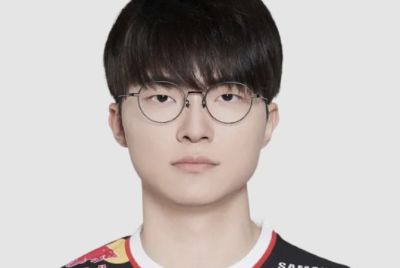
Faker himself addressed the challenge during a December 2025 news conference in central Seoul. The 29-year-old midlaner, widely regarded as the greatest League of Legends player of all time with multiple world titles, expressed gratitude for AI companies showing interest in gaming while voicing strong belief in human superiority.
"Chess may have already fallen to AI, but I believe we can win the match next year," Faker said. He highlighted the complexity of League of Legends — with its fog of war, team coordination, real-time adaptation and psychological elements — as areas where human intuition and experience could prevail over even advanced AI.
The proposed matchup has drawn parallels to historic man-versus-machine contests, such as IBM's Deep Blue defeating chess champion Garry Kasparov in 1997 or Google DeepMind's AlphaGo triumphing over Go master Lee Sedol in 2016. Yet League of Legends presents unique hurdles: a dynamic, team-based environment with imperfect information, rapid meta shifts and the need for creative outplays that go beyond raw calculation.
Musk framed the challenge as more than entertainment. He described it as a step toward testing progress in artificial general intelligence, inviting talent to join xAI to help develop the system capable of mastering complex games under realistic constraints. The limitations on vision and reaction time are intended to force the AI to rely on genuine strategic understanding rather than brute-force advantages.
As of April 2026, no exact date for the exhibition has been confirmed, but speculation points to an early-to-mid 2026 showdown, possibly as a high-profile event coinciding with major esports calendars. Rumors have swirled in the Korean server about mysterious high-win-rate accounts potentially linked to AI training, though xAI has not confirmed involvement.
Esports analysts note that current AI systems already excel at certain aspects of League of Legends, such as micro-level mechanics in controlled environments or drafting simulations. However, scaling that to full 5v5 professional play with camera-only input remains uncharted territory. Human players like Faker bring years of muscle memory, pattern recognition honed through thousands of games, and the intangible "read" on opponents that AI may struggle to replicate without embodied experience.
Korean fans have reacted with a mix of excitement and national pride. In online communities, many view Faker as an untouchable "God" of the game defending humanity against the ultimate technological challenger. Discussions often center on whether Grok's probabilistic calculations can overcome Faker's legendary intuition, especially in clutch moments inside the fog of war.
T1's recent dominance adds weight to the stakes. The organization has consistently performed at the pinnacle of the LCK and international stages, with Faker remaining the cornerstone despite his age. His contract extension through at least 2029 ensures the veteran leader will likely anchor the squad for the anticipated AI showdown.
Riot Games, the developer of League of Legends, has not yet issued an official statement on facilitating the match, but the company has a history of supporting innovative exhibitions. Technical logistics — including secure setups for camera input, standardized hardware and broadcast integration — would require close collaboration between xAI, T1, Riot and event organizers.
Broader implications extend beyond gaming. The contest could showcase AI's potential in real-time strategy, teamwork simulation and adaptive learning, with applications in robotics, autonomous systems and training tools. Conversely, a decisive human victory would reaffirm the enduring value of human creativity and experience in complex domains.
Critics of the challenge argue that even with constraints, an AI backed by vast computational resources might eventually dominate. Supporters of Faker counter that League's depth — requiring split-second communication, baiting, mind games and meta awareness — favors the human side for the foreseeable future.
As preparations potentially ramp up, the esports world watches closely. Musk has a track record of ambitious public goals, from reusable rockets to neural interfaces. A Grok 5 victory would represent a landmark in AI achievement, while a T1 win would cement Faker's legacy as the player who stood firm against the rise of machines.
In recent comments, Faker reiterated curiosity about how quickly AI companies can prepare such a system and emphasized the difficulty of mastering LoL's intricacies. He welcomed the competition as a way to elevate the gaming industry's profile and explore new frontiers.
The hype has already spilled into mainstream media, with viral shorts and discussions framing it as "God of Gaming vs. God of Tech." Betting markets and prediction polls have emerged informally, though many fans simply relish the spectacle regardless of outcome.
Whether the match materializes in its exact proposed form remains to be seen, but the dialogue it has sparked underscores a pivotal moment: as AI capabilities accelerate, high-level competitive gaming offers a visible arena to measure progress against humanity's finest.
For now, Faker and T1 stand ready. Musk and xAI appear equally determined. The 2026 League of Legends season may deliver more than just another world champion — it could deliver the ultimate test of silicon versus synapse in one of the world's most popular competitive games.
As spring 2026 unfolds, anticipation builds in Seoul's esports scene and tech hubs worldwide. One thing is certain: when Faker squares off against Grok, millions will be watching to see if the unkillable demon king can once again prove that human ingenuity holds the edge.
© Copyright 2026 IBTimes AU. All rights reserved.
- Recommended For You