Elon Musk Announces Massive 'Terafab' Chip Factory in Austin to Power Tesla AI, SpaceX Satellites and Robotics
Austin, Texas — Elon Musk unveiled an ambitious plan March 21, 2026, for a joint Tesla and SpaceX semiconductor fabrication facility dubbed "Terafab," aiming to produce custom chips on an unprecedented scale to fuel artificial intelligence, humanoid robotics, autonomous vehicles and space-based computing. The $20-25 billion project, described by Musk as "the most epic chip-building exercise in history by far," seeks to address what he calls critical shortages in global chip supply amid surging demand from his companies.
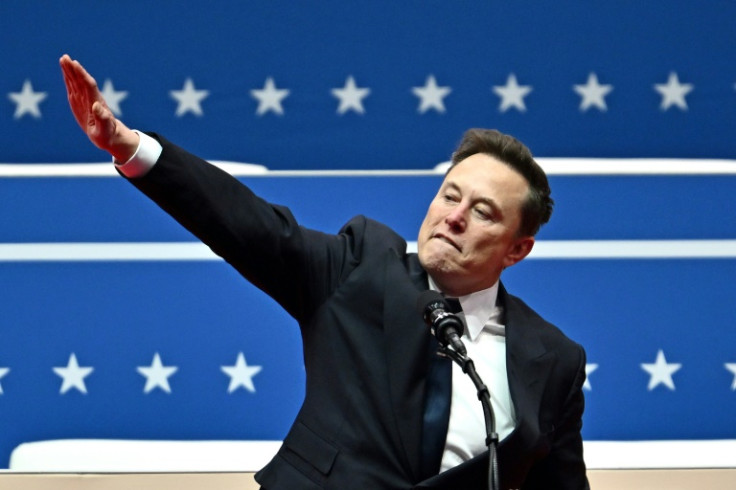
Speaking at an event in downtown Austin's defunct Seaholm Power Plant on Saturday night, Musk outlined the venture as a collaboration between Tesla, SpaceX and xAI. The facility will start with an "advanced technology fab" near Tesla's existing Gigafactory in eastern Travis County, equipped to design, manufacture and test semiconductors of any kind. Musk emphasized vertical integration, stating current global production meets only a fraction—around 3%—of his companies' projected needs for AI and robotics hardware.
The Terafab targets two primary chip types: an edge-inference processor optimized for Tesla's Full Self-Driving systems, Optimus humanoid robots and robotaxi fleets, and a high-power variant hardened for space environments, supporting SpaceX satellites, orbital data centers and xAI initiatives. Musk specified goals of producing chips capable of 100 to 200 gigawatts of computing power annually on Earth, with capacity for a full terawatt—1 trillion watts—in space applications. He provided no firm timelines for construction, output or full-scale operation but indicated the project would begin with prototyping and testing infrastructure.
The announcement reflects Musk's frustration with reliance on external suppliers like Taiwan Semiconductor Manufacturing Co. (TSMC) and Samsung for Tesla's AI chips, including the Dojo supercomputer series and AI5/AI6 processors. Tesla has historically designed custom silicon—such as the D1 chip for Dojo training—but faced setbacks, including pausing Dojo3 development in 2025 before restarting it for space-focused compute earlier this year. Musk has repeatedly cited supply constraints as a bottleneck for scaling autonomous driving, robot production and xAI's Grok models.
SpaceX's involvement adds a unique dimension, with the company requiring radiation-resistant chips for Starlink satellites and future orbital data centers. Musk has discussed deploying massive compute in space to leverage solar power and low-latency networking, positioning Terafab as a bridge between terrestrial AI and extraterrestrial infrastructure. He framed the initiative as essential for advancing toward a "galactic civilization," blending science fiction aspirations with practical hardware needs.
Industry analysts view the move as bold but challenging. Building a leading-edge fab—potentially targeting 2-nanometer process technology—requires expertise, massive capital and years of development typically dominated by TSMC, Intel and Samsung. Musk acknowledged the difficulty, noting semiconductor manufacturing's complexity and the risk of delays. Some observers describe the plan as "Battery Day on steroids," referencing Tesla's 2020 event that promised revolutionary battery tech but delivered more gradually.
The Terafab announcement arrives amid Tesla's push into robotics and AI, with Optimus prototypes in testing and robotaxi unveilings planned. SpaceX continues expanding Starlink and preparing for Mars missions, while xAI pursues advanced large language models requiring enormous compute. By internalizing production, Musk aims to reduce dependency, accelerate iteration and potentially lower costs long-term.
Reactions from the tech and investment communities were swift. Shares in TSLA fluctuated modestly post-announcement, with some analysts praising the vertical integration strategy while others questioned execution feasibility given Tesla's history of ambitious timelines. Competitors in the AI chip space, including Nvidia, face indirect pressure as custom silicon gains traction among big tech players.
Musk's Texas-centric ecosystem—housing Tesla headquarters, Gigafactory, SpaceX operations and growing xAI facilities—positions Austin as the hub for this semiconductor moonshot. The project could create thousands of high-skilled jobs and boost local tech infrastructure, though environmental and energy demands of a large fab raise questions about power requirements and sustainability.
As details emerge, the Terafab represents Musk's latest bet on controlling critical technologies for his interconnected ventures. Whether it materializes as planned or evolves like past initiatives, the announcement underscores the intensifying race for AI hardware dominance, where chip supply increasingly determines innovation pace.
With global semiconductor shortages persisting and AI demand exploding, Terafab could reshape supply chains—if Musk's companies overcome the formidable barriers of fab construction and scaling.
SpaceXAI + Tesla TERAFAB Project
— Elon Musk (@elonmusk) March 22, 2026
Goal is a trillion watts of compute/year
Most must necessarily go to space, as US electricity is only 0.5TW https://t.co/hMtg9vNLcw
© Copyright 2026 IBTimes AU. All rights reserved.
- MOST POPULAR IN Technology