Elon Musk Reacts With 'Interesting' as China Backs Startup With $8.4 Billion for Orbital Data Centers
WASHINGTON — Elon Musk responded with a single word Wednesday to news that China is committing massive financial resources to develop orbital data centers, a move that underscores the intensifying global race to harness space for artificial intelligence infrastructure and high-performance computing.
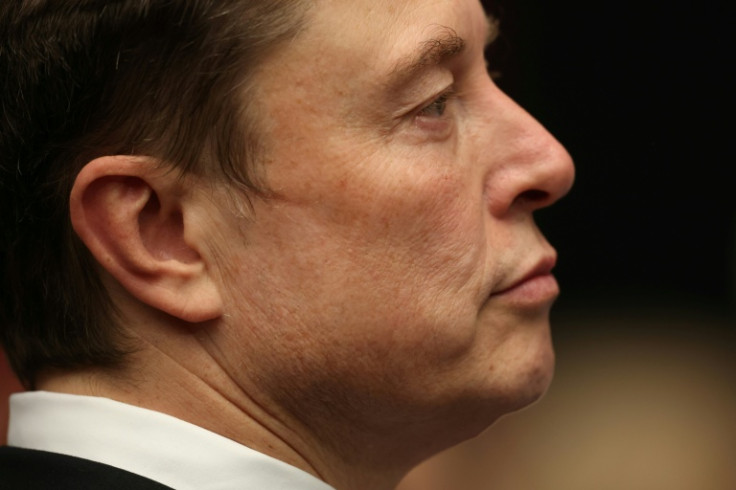
Musk, the chief executive of SpaceX and xAI, simply posted "Interesting" on his X platform in reply to a SpaceNews article detailing how a Beijing-based startup, Orbital Chenguang, secured $8.4 billion in credit lines from major Chinese banks. The investment, reported April 22, highlights Beijing's aggressive push into space-based data processing as demand for AI compute power explodes on Earth.
Interesting https://t.co/jF70ESSTYc
— Elon Musk (@elonmusk) April 22, 2026
The article Musk quoted described how Orbital Chenguang, backed by the Beijing Astro-future Institute of Space Technology, plans to build a constellation of satellites in sun-synchronous orbit roughly 700 to 800 kilometers above Earth. The long-term goal is a gigawatt-scale space data center by 2035, taking advantage of constant solar power and natural vacuum cooling that could sidestep the land-use and energy constraints facing terrestrial facilities.
Musk's understated reaction quickly drew more than 65,000 likes and millions of views within hours, sparking widespread discussion about the United States versus China competition in orbital computing. Google CEO Sundar Pichai replied to Musk's post with "Space FTW!" — shorthand for "space for the win" — signaling broad industry recognition that the next frontier for AI may literally be above the atmosphere.
Space-based data centers have long been theorized as a solution to the skyrocketing electricity demands of AI training and inference. On Earth, hyperscale facilities consume enormous amounts of power and generate significant heat, often requiring massive cooling systems and straining local grids. In orbit, satellites could harvest uninterrupted solar energy while radiating excess heat into the cold of space, potentially offering near-limitless scalability for compute-intensive workloads.
China's investment is not isolated. The country has filed with the International Telecommunication Union for spectrum rights covering two massive satellite constellations totaling nearly 200,000 units, signaling long-term ambitions. State-backed entities including the China Aerospace Science and Technology Corporation have outlined similar gigawatt-level space computing plans aligned with national five-year strategies.
Musk's companies are already deeply involved in related technologies. SpaceX's Starlink constellation provides high-bandwidth, low-latency connectivity that could serve as the backbone for orbital data transmission. xAI, Musk's artificial intelligence venture, is building massive supercomputing clusters on Earth but has signaled interest in expanding compute capacity through innovative means. Industry observers noted that Musk's "Interesting" comment could be interpreted as both acknowledgment of China's move and a subtle signal that SpaceX and xAI are monitoring the space for competitive opportunities.
The timing of the news on Earth Day added an ironic layer, with some users joking about moving data centers off-planet to reduce terrestrial environmental impact. Others highlighted the strategic implications: whoever dominates orbital compute could gain an edge in the global AI race, where access to vast, efficient processing power increasingly determines technological leadership.
Challenges remain formidable for any space-based data center project. Launch costs, though falling thanks to reusable rockets like SpaceX's Falcon 9 and upcoming Starship, still represent a major barrier. Radiation hardening, thermal management in vacuum conditions, reliable high-speed data links to Earth and the logistical complexity of in-orbit maintenance all pose significant engineering hurdles. Early demonstration projects would likely focus on smaller-scale computing nodes before scaling to gigawatt ambitions.
Despite those obstacles, momentum is building worldwide. Companies such as Google have explored conceptual space data centers, while startups in the United States and Europe are researching in-orbit processing. China's state-supported approach, however, provides the kind of patient capital that private Western firms often struggle to match for such high-risk, long-horizon technologies.
Musk has frequently argued that humanity's long-term survival depends on becoming a multiplanetary species, with space infrastructure playing a central role. His terse reaction to the Chinese announcement fits a pattern of using X to spotlight developments he views as strategically important, often prompting his companies or followers to accelerate efforts in response.
The post generated a flurry of replies, ranging from enthusiastic calls for accelerated American investment in space infrastructure to concerns about an emerging orbital arms race in computing power. Some users pointed out that China appears to be emulating elements of SpaceX's model, from rapid iteration on reusable launch vehicles to ambitious satellite constellations.
Analysts say the development reflects broader geopolitical tensions in technology. As AI becomes a cornerstone of economic and military power, control over the physical infrastructure supporting it — whether on the ground or in orbit — takes on heightened strategic importance. The United States has its own initiatives through NASA, the Department of Defense and private sector players, but critics argue that regulatory hurdles and permitting delays on Earth could cede ground to more decisive state-backed efforts abroad.
For the broader space industry, China's $8.4 billion credit lines represent a significant vote of confidence in orbital computing as a viable commercial and strategic domain. The startup's phased approach — beginning with technical demonstrations between 2025 and 2027 before scaling integration with ground systems — mirrors successful satellite megaconstellation strategies.
Musk's companies stand to benefit indirectly regardless of the outcome. Starlink already serves as a critical connectivity layer for many space applications, and any increase in orbital activity would drive demand for launches and communications services. At the same time, the competitive pressure could spur faster innovation across the American space ecosystem.
As the conversation unfolded on X, users debated the practicalities of space-based data centers versus continued investment in terrestrial facilities paired with advanced cooling and renewable energy sources. Proponents of the orbital approach emphasize the abundance of solar power and natural heat dissipation, while skeptics point to latency issues for real-time applications and the enormous upfront capital required.
The exchange highlights how quickly space technology discussions have shifted from science fiction to near-term commercial strategy. With AI compute demand projected to grow exponentially, the race to secure efficient, scalable infrastructure has taken on new urgency.
Musk's one-word post, though brief, encapsulated a larger truth: the competition to dominate the next era of computing is no longer confined to data centers on Earth. It is extending into orbit, where nations and companies are jostling for position in a domain once reserved for governments and scientific exploration.
Whether China's bold investment yields operational breakthroughs or encounters the same technical and economic pitfalls that have slowed similar concepts elsewhere remains to be seen. For now, Musk's simple "Interesting" has served as a catalyst for renewed focus on the strategic importance of space infrastructure in the age of artificial intelligence.
As global powers pour resources into orbital ambitions, the conversation Musk helped amplify Wednesday underscores a pivotal question for the coming decade: who will control the compute infrastructure of the future, and will it be built on Earth or among the stars?
© Copyright 2026 IBTimes AU. All rights reserved.
- Recommended For You