Elon Musk Calls SpaceX Launch Dominance 'Just a Start' in Quest to Extend Consciousness to Stars
WASHINGTON — Elon Musk on Tuesday described SpaceX's unprecedented dominance in orbital rocket launches as merely "a start," underscoring that far greater efforts are required to fulfill the company's ultimate mission of extending human consciousness across the stars.

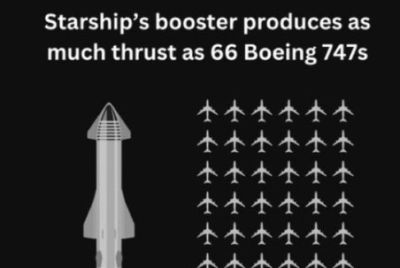
In a post on X, the platform he owns, Musk responded to a graphic highlighting SpaceX's record-setting pace by writing: "It's a start. Vastly more will be needed to extend consciousness to the stars." The comment, posted late Tuesday, quickly drew millions of views and thousands of replies as it reframed the company's engineering triumphs through the lens of Musk's long-stated philosophical goal.
It’s a start. Vastly more will be needed to extend consciousness to the stars. https://t.co/KoyVekAHJg
— Elon Musk (@elonmusk) April 21, 2026
The quoted graphic from account @TheRabbitHole noted that SpaceX has conducted more launches than every other company and nation combined in recent years, a claim backed by industry data. In 2025, SpaceX completed approximately 165 Falcon 9 missions, accounting for more than half of all orbital launches worldwide and surpassing the combined totals of China, Russia, Europe, India and every other operator. That pace continued into 2026, with the company marking its 1,000th Starlink satellite deployment of the year by mid-April — an average of roughly nine satellites launched per week.
Musk's Tuesday remark echoes a theme he has repeated since founding SpaceX in 2002: rockets are not an end in themselves but a means to make humanity a multiplanetary species. "SpaceX is about advancing rocket technology to the point where we can extend life and consciousness beyond Earth to the moon, to Mars, eventually to other star systems," he has said in past interviews and posts. The April 21 message served as a humble acknowledgment of current success while redirecting attention to the grander objective of safeguarding consciousness against existential risks on Earth.
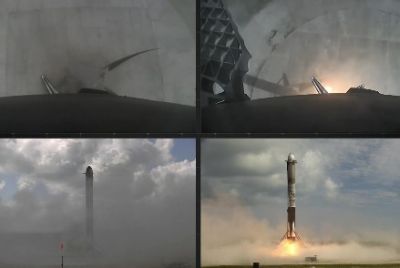
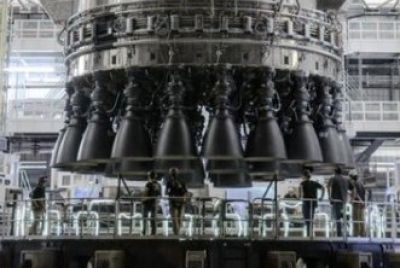
SpaceX's launch supremacy stems largely from the reusability of its Falcon 9 booster, which has slashed costs and enabled rapid turnaround. The company now averages a launch every other day, a cadence once considered impossible. Most missions ferry batches of Starlink internet satellites, which now number more than 10,000 in orbit and provide broadband to millions of users globally. Falcon 9 has achieved a near-perfect success rate, with only isolated booster recovery failures.
Yet Musk insists this is insufficient for the long-term vision. Extending consciousness requires not just frequent launches but a sustainable presence beyond low-Earth orbit. That hinges on the fully reusable Starship vehicle, now in advanced testing. Recent Starship flight tests have demonstrated progress toward orbital refueling, heat-shield performance and rapid reusability — capabilities Musk has said are essential for crewed missions to Mars. He has projected uncrewed Starship flights to the Red Planet as early as late 2026, though he has called the timeline "50-50" depending on technical hurdles.
Industry analysts note that SpaceX's launch volume already dwarfs competitors. China, the next most active launcher, managed roughly 90 orbital attempts in 2025, while the rest of the world combined fell short of SpaceX's total. Rocket Lab, Blue Origin and others are scaling up, but none approach SpaceX's cadence or cost efficiency. The gap has widened in 2026, with SpaceX on track for 140 to 180 launches if current trends hold, according to prediction markets and forecasts.
Musk's emphasis on "consciousness" ties into broader concerns about humanity's future. He has warned of risks including artificial intelligence misalignment, climate change, nuclear conflict and asteroid impacts. A self-sustaining civilization on Mars, he argues, would serve as a backup for Earth's biosphere and intellectual legacy. "The goal of SpaceX is expansion of consciousness to the stars so that we may understand what questions to ask about the answer that is the Universe," he has pinned in past posts.
The Tuesday X exchange generated widespread reaction. Supporters hailed it as classic Musk ambition, while some critics questioned the feasibility or accused the billionaire of downplaying near-term achievements for marketing purposes. Replies ranged from calls for faster Starship development to memes celebrating American space leadership. One popular response featured a video of a recent Falcon 9 landing with the caption "At this rate, 'rare rocket launch' is about to feel like seeing a bus go by."
SpaceX's momentum coincides with major corporate developments. The company filed confidentially for an initial public offering in early April, setting the stage for what could be one of the largest debuts in history with a potential valuation exceeding $1 trillion. Proceeds would fund Starship infrastructure, Starlink expansion and eventual Mars missions. Musk, who owns roughly 42 percent of SpaceX, stands to see his personal fortune swell further if the IPO materializes later this year.
Regulatory and international dynamics add complexity. The Federal Aviation Administration continues to oversee an unprecedented volume of launches from Florida and California sites, while environmental and airspace concerns occasionally delay schedules. Abroad, nations including China are accelerating their own programs in response to U.S. leadership, creating a new space race dynamic. Yet Musk has maintained that competition ultimately benefits humanity's expansion into space.
Starlink itself has evolved into a strategic asset. The constellation supports military operations, disaster response and remote communities. Recent deployments have pushed total active satellites past 10,000, with plans to reach tens of thousands more. Revenue from Starlink helps subsidize Starship development, creating a virtuous cycle that Musk says will accelerate the path to Mars.
Experts in space policy view Musk's latest comments as consistent with his decades-long narrative. "Other companies are not trying to extend consciousness to the stars, so they aim too low," he once posted. Even failure in the grand goal, he has argued, would still yield revolutionary technology benefiting Earth. The philosophy has attracted top engineering talent and billions in investment, turning SpaceX into the world's most valuable private space enterprise.
Looking ahead, SpaceX faces the challenge of scaling Starship to operational reliability. Musk has outlined ambitions for hourly Starship launches in the coming years, a rate that would dwarf even current Falcon 9 numbers. Achieving that would require massive production increases, orbital refueling infrastructure and regulatory approval for frequent flights. Success could open the door to lunar bases, Martian cities and eventual missions to the outer solar system.
Tuesday's post arrived amid a busy week for the company. Multiple Falcon 9 missions were scheduled, including additional Starlink deployments and commercial payloads. The steady drumbeat of launches has normalized what once seemed extraordinary, yet Musk's reminder serves as a strategic north star: launches are the foundation, not the destination.
As SpaceX pushes boundaries, the conversation around humanity's cosmic future intensifies. Musk's vision — part engineering blueprint, part philosophical imperative — continues to shape public discourse on space exploration. Whether the "vastly more" he referenced arrives in years or decades remains uncertain, but the trajectory is clear: from record-breaking launch supremacy on Earth to the first tentative steps toward making consciousness multiplanetary.
The April 21 message, viewed more than 14 million times within hours, reinforces Musk's role as both chief executive and chief evangelist. In an era of rapid technological change, his words distill a simple yet profound idea: current achievements, however impressive, are preliminary chapters in a much longer story about humanity's place in the universe.
© Copyright 2026 IBTimes AU. All rights reserved.
- Recommended For You