(VIDEO) Elon Musk Calls Engineering 'Real Magic' in Viral Starship Video Showcasing Epic Mechazilla Booster

BOCA CHICA, Texas — declared "Engineering is real magic" Sunday after posting a cinematic video of SpaceX's Super Heavy booster being caught midair by the launch tower's giant mechanical arms, a feat once dismissed as impossible that has become central to the company's push for reusable rockets.
Engineering is real magic pic.twitter.com/aSALzL2oqJ
— Elon Musk (@elonmusk) April 12, 2026
The 22-second clip, which racked up more than 51 million views on X within hours, shows the 232-foot-tall, roughly 250-ton booster descending through the sky at Starbase in South Texas. Set to Adele's "Skyfall," the footage offers intimate angles: the booster's stainless-steel skin gleaming, its Raptor engines throttling down in sequence, faint flames licking the base as it aligns perfectly between the tower's "chopsticks." The arms close with mechanical precision, securing the booster seconds after it hovers in place.
Though the video is a photorealistic 3D render created by digital artist Ryan Hansen Space — who confirmed it was made without AI — it faithfully recreates the engineering triumph SpaceX first demonstrated in October 2024 during Starship's fifth integrated flight test and has since repeated. Musk's simple caption captured the moment's wonder: "Engineering is real magic."
The post sparked an outpouring of amazement across social media. Engineers, space enthusiasts and casual observers hailed it as proof that human ingenuity can turn science fiction into routine operations. One reply called it "the closest thing to magic that exists in the world," echoing Musk's long-held view that advanced technology blurs the line between the possible and the miraculous.
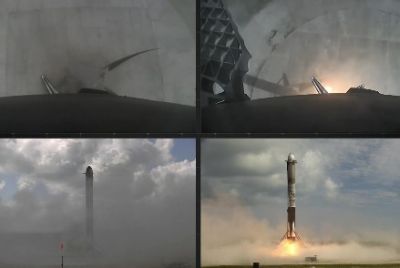
SpaceX's "Mechazilla" system — the nickname Musk gave the 400-foot-tall launch tower and its hydraulic arms — represents a radical departure from traditional rocket recovery. Unlike SpaceX's Falcon 9 boosters, which land on floating pads or concrete pads using landing legs, the Super Heavy is designed to return directly to the tower that launched it minutes earlier. The arms, nicknamed "chopsticks," grasp the booster's grid fins and body, eliminating added weight and enabling faster reuse.
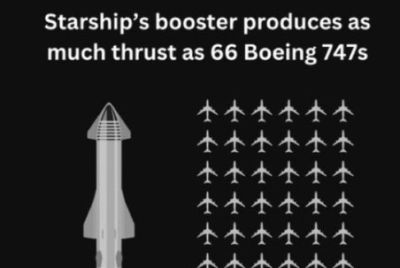
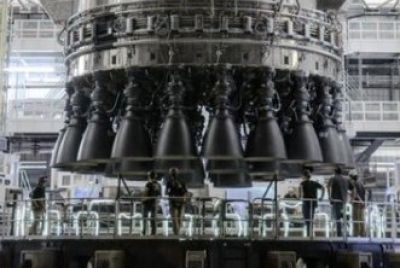
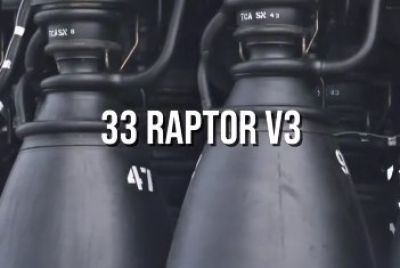
The technique saves time and money. Traditional boosters are expendable or require extensive refurbishment after ocean splashdowns. A successful tower catch allows the Super Heavy — powered by 33 Raptor engines generating more than 16 million pounds of thrust at liftoff — to be refueled, refurbished and relaunched in days rather than months. SpaceX has said the approach is essential to making Starship fully reusable and slashing launch costs to levels that could open the solar system to colonization.
Musk has long championed the idea. In earlier comments, he estimated the odds of catching a booster with the tower at 80% to 90% for the year it was first attempted. The first catch succeeded on the initial try in 2024, drawing applause from Mission Control and worldwide acclaim. By April 2026, multiple catches have been logged, including with upgraded hardware featuring the latest Raptor 3 engines. Those engines boast higher thrust, better efficiency and simplified manufacturing, Musk has noted in recent updates.
The Starship system, comprising the Super Heavy booster and the upper-stage Starship spacecraft, stands as the most powerful rocket ever built. Fully stacked, it towers nearly 400 feet and can carry more than 100 tons to low Earth orbit in its reusable configuration. NASA has selected Starship as the lunar lander for Artemis III and IV missions, while SpaceX plans uncrewed Mars flights as early as late 2026 and crewed missions in the following years.
Sunday's viral video arrives as the program accelerates. SpaceX is preparing higher-energy test flights, orbital refueling demonstrations and expanded Starlink deployments. The company has conducted more than a dozen integrated Starship flights since the first in 2023, progressing from early explosions to pinpoint landings and now reliable tower catches.
Critics once questioned the feasibility of catching a supersonic, 250-ton object with moving arms on a tower. Early test failures — including engine relight issues, grid-fin malfunctions and tower proximity challenges — fueled skepticism. SpaceX iterated rapidly, incorporating lessons from each flight. Onboard cameras, ground sensors and autonomous flight software now guide the booster through reentry plasma, sonic booms and a final landing burn with sub-meter accuracy.
Aerospace experts say the achievement rivals historical milestones like the Saturn V or the space shuttle's reusability experiments. "This isn't just a stunt," said one industry analyst who requested anonymity to speak freely. "It's the foundation for a transportation system that could make Mars accessible within a decade."
Public reaction mirrored the engineering euphoria. Replies to Musk's post flooded in with praise for the thousands of engineers at SpaceX. "No one is talking about the struggles behind this magic," one user wrote, sharing a montage of development footage. Another posted: "From explorations to excellence. Many thanks to all the life-changing engineers across the world."
Hansen, the render's creator, noted in replies that his animation captured a view not widely seen in live streams. The dramatic close-ups — showing rivets, heat tiles and the tower's intricate lattice — underscore the scale: a 250-ton object returning from space and stopping gently in the arms of a robot named after a movie monster.
Musk, who founded SpaceX in 2002 with the goal of making humanity multiplanetary, has repeatedly framed such feats as stepping stones to Mars. In recent years he has tied Starship progress to broader ambitions, including a city on the Red Planet and a self-sustaining human presence beyond Earth. The booster catch directly supports that vision by driving down costs and increasing flight cadence.
SpaceX has not commented officially on the Sunday post, but the company's livestreams have described each catch as "a day for the engineering history books." During one broadcast, a commentator exclaimed, "This is absolutely insane!" as the arms closed.
The technology also carries commercial implications. Starlink, SpaceX's satellite internet constellation, relies on frequent, low-cost launches. Dozens of Starlink missions have already flown on Falcon 9; Starship's capacity could multiply that pace exponentially. International partners, including those working on lunar bases, are watching closely.
Challenges remain. Regulatory approvals from the Federal Aviation Administration, environmental reviews at Starbase and the complexities of orbital refueling and heat-shield performance on the upper stage still must be resolved. Yet each successful catch builds confidence.
As the sun set over Boca Chica on Sunday, Musk's post continued to trend globally. It served as a reminder that, in an era of artificial intelligence and quantum computing, the oldest form of "magic" — turning raw physics into reliable machines — still captivates the world.
For SpaceX, the message was clear: what looks like magic is the result of relentless engineering, iteration and a refusal to accept limits. Musk's video, whether render or footage, captured that spirit in 22 seconds of flame, steel and precision.
© Copyright 2026 IBTimes AU. All rights reserved.
- Recommended For You