Artemis II Pilot Victor Glover Delivers Viral Easter Message on God's Creation from Deep Space
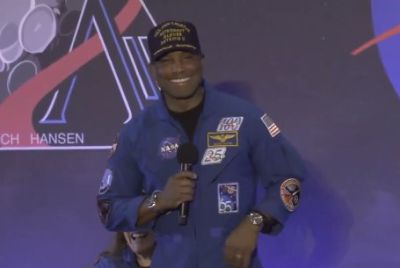
From roughly 250,000 miles away aboard NASA's Orion spacecraft, Artemis II mission pilot Victor Glover offered an impromptu Easter reflection that has resonated far beyond the lunar orbit, marveling at "the beauty of creation" and reminding Earthlings they inhabit a special "spaceship" crafted for human life amid a vast, mostly empty cosmos.

In a CBS interview and additional remarks broadcast as the crew approached the far side of the Moon on April 6, 2026, Glover — a devout Christian and veteran astronaut — spoke without notes about the profound perspective gained from humanity's first crewed lunar voyage since Apollo.
"When I read the Bible and I look at all of the amazing things that were done for us who were created, you have this amazing place, this spaceship," Glover said. "You guys are talking to us because we're in a spaceship really far from Earth, but you're on a spaceship called Earth that was created to give us a place to live in the universe and the cosmos."
He continued with quiet conviction: "And I'm trying to tell you, just trust me, you are special. In all of this emptiness, this is a whole bunch of nothing, this thing we call the universe. You have this oasis, this beautiful place that we get to exist together."
The message, delivered days into the Artemis II mission that launched April 1 from Kennedy Space Center, quickly went viral on social media and Christian outlets, drawing millions of views and heartfelt responses across faith communities.
A Historic Mission and a Personal Faith Perspective
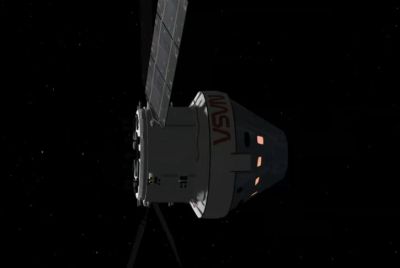
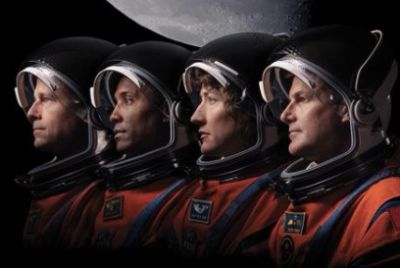
Artemis II, the first crewed flight of NASA's Artemis program, sent Glover alongside commander Reid Wiseman, mission specialist Christina Koch and Canadian astronaut Jeremy Hansen on a journey that eclipsed the Apollo 13 distance record on April 6. The crew successfully performed critical maneuvers, including a close approach to a discarded rocket stage, and captured striking images of the Moon and distant Earth.
Glover, who previously piloted SpaceX's Crew-1 mission to the International Space Station in 2020-2021 as part of Expedition 64, became the first Black astronaut to travel beyond low Earth orbit and to the vicinity of the Moon. His public expressions of faith have been consistent throughout his NASA career, including quoting Psalm 30 during his earlier ISS stay.
As the Orion spacecraft named Integrity prepared for a planned communications blackout while passing behind the Moon, Glover offered another layer to his Easter thoughts. He spoke of love as one of Earth's greatest mysteries, citing Jesus' commands to love God with all one's being and to love one's neighbor as oneself.
"To all of you down there on Earth ... we love you from the Moon," he added before the signal lapse.
The remarks came naturally when interviewers asked for an Easter message. Glover admitted he had nothing prepared but drew directly from the awe of viewing Earth against the blackness of space.
Blending Science, Exploration and Belief
Glover's reflections highlight a perspective long shared by astronauts: the "overview effect," a cognitive shift reported by those who see Earth from space as a fragile, borderless oasis. For Glover, that view reinforced rather than challenged his Christian worldview.
He emphasized humanity's unique place in creation, contrasting the barren vastness of the universe with Earth's life-sustaining environment. The message echoed biblical themes of stewardship, wonder at God's handiwork and the value of every person — ideas he has voiced in pre-mission interviews and public appearances.
"I want to use the abilities that God has given me to do my job well and support my crewmates and mission and NASA," Glover said in earlier comments about balancing faith and professional duties.
His openness has drawn praise from faith leaders and everyday believers who see in his words a bridge between modern space exploration and ancient spiritual truths. Some commentators noted the timeliness of the message during Holy Week, as Christians worldwide commemorated the resurrection.
Critics of mixing faith with NASA missions have been minimal in this case, with most responses focusing on the universal appeal of awe at Earth's beauty and calls for unity.
Crew Dynamics and Mission Milestones
The four-person international crew has worked seamlessly, conducting systems checks, scientific observations and public outreach during the roughly 10-day mission. Artemis II serves as a critical test flight for Orion ahead of future landings under Artemis III and beyond, aiming to return humans to the lunar surface and eventually establish a sustainable presence.
Glover's piloting skills were on display early in the flight when he maneuvered Orion to within about 33 feet of a discarded rocket stage in a successful demonstration.
While the crew's primary focus remains technical and scientific, moments of personal reflection like Glover's have humanized the mission for millions following along on Earth. NASA has shared select video and audio, amplifying the reach of the astronauts' perspectives.
Previous astronauts, from Apollo-era figures to ISS crews, have similarly spoken of spiritual or philosophical insights gained from space. Glover's explicit Christian framing stands out in an agency that maintains strict separation of personal belief from official messaging.
Broader Impact and Public Response
The clip of Glover's Easter message spread rapidly on platforms including Instagram, YouTube, Facebook and Christian media sites. Hashtags related to Artemis II, faith in space and God's creation trended among religious communities.
Many viewers described the remarks as timely and uplifting amid global tensions, including the recent U.S.-Iran ceasefire and ongoing economic volatility. Others saw it as a reminder of shared humanity in an increasingly divided world.
Glover has not sought the spotlight for his faith but has been consistent when opportunities arise. Before launch, he asked supporters to pray for the crew and referenced living out the Lord's Prayer in his daily work.
His message aligns with a long tradition of astronauts expressing wonder at creation. From Apollo 8's reading of Genesis during lunar orbit in 1968 to more recent ISS crews sharing Earth views, spaceflight has often prompted reflections on origins, purpose and interconnectedness.
Looking Ahead as Artemis II Concludes
As the crew prepares for re-entry and splashdown in the coming days, NASA officials expressed pride in both the technical achievements and the inspirational moments shared by the astronauts.
Artemis II paves the way for increasingly ambitious missions, including crewed landings near the lunar south pole. Glover's contributions as pilot have been praised for precision and calm under pressure.
For Glover personally, the flight represents the culmination of years of training and a chance to witness sights few humans have seen. His ability to articulate faith alongside professional excellence has resonated deeply.
In one pre-mission interview, he spoke of putting God first in his life and work. From deep space, that perspective translated into a simple yet profound reminder: Earth is a beautiful, specially prepared home — an oasis worth cherishing and sharing in love.
As the Orion spacecraft heads home, Glover's words continue to echo: in the emptiness of the cosmos, humanity's shared "spaceship" is a testament to something greater, inviting awe, gratitude and unity.
© Copyright 2026 IBTimes AU. All rights reserved.
- Recommended For You