

(VIDEO) Artemis II Crew Breaks Record in Historic Moon Flyby as NASA Returns Humans to Deep Space
HOUSTON — NASA's Artemis II mission achieved a landmark moment Monday when its four astronauts aboard the Orion spacecraft flew farther from Earth than any humans in history, breaking the Apollo 13 distance record while completing a dramatic flyby of the Moon's far side during the first crewed deep-space test flight in more than 50 years.
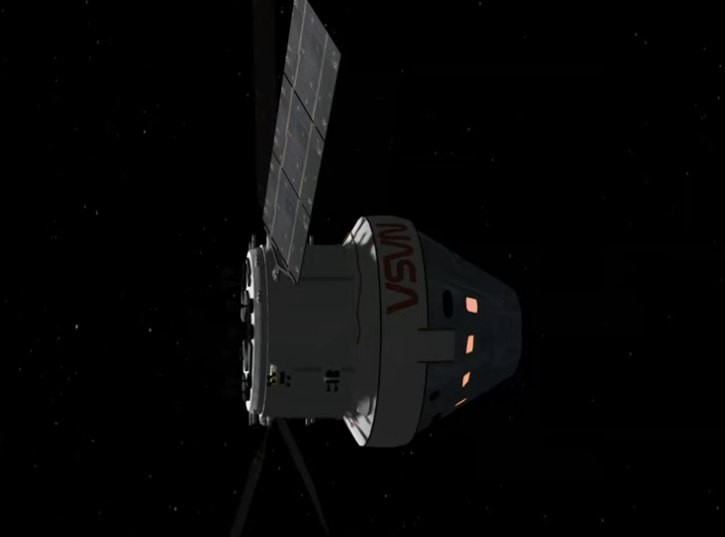
The crew — NASA astronauts Reid Wiseman, Victor Glover and Christina Koch, along with Canadian Space Agency astronaut Jeremy Hansen — launched atop the massive Space Launch System rocket from Kennedy Space Center in Florida at 6:35 p.m. EDT on April 1, 2026. The roughly 10-day mission is testing Orion's life support systems, navigation and heat shield performance with humans aboard ahead of future lunar landings.
On April 6, the astronauts surpassed Apollo 13's record of approximately 248,655 miles from Earth around 1:56 p.m. EDT. They reached a maximum distance of about 252,760 miles later that day before executing a close lunar flyby, passing roughly 4,000 miles above the lunar surface. During the pass behind the Moon, the crew experienced an expected 40-minute communications blackout as Orion lost line-of-sight with Earth.
Mission controllers in Houston cheered when contact was re-established. Koch, serving as mission specialist, radioed back: "It's so great to hear from Earth again." The crew captured stunning images of Earth rising over the lunar horizon and the Moon's rugged far side — terrain never before seen directly by human eyes from such proximity. NASA released several of those photos Tuesday, showing the astronauts peering through Orion's windows at the distant blue marble.
The Orion spacecraft, named Integrity for this mission, performed flawlessly through key maneuvers. Shortly after launch, the crew completed a translunar injection burn that sent them hurtling toward the Moon. Additional trajectory correction burns refined the path, placing the spacecraft on a free-return trajectory that would bring them home safely even without further propulsion if needed.
Wiseman, the mission commander and a veteran of previous spaceflights, praised the team's performance during daily briefings. "The views are absolutely phenomenal," he said in one update. Glover, the pilot, and Koch, who previously set a record for longest single spaceflight by a woman, monitored systems while Hansen, the first Canadian assigned to a lunar mission, contributed to international collaboration goals.
The flyby included a period of lunar observation where the crew documented surface features and tested cameras and sensors. They also experienced a rare solar eclipse from their unique vantage point as the Moon passed between them and the Sun. As of Tuesday, April 7, the crew had entered a quieter phase of the mission after the high-intensity flyby, enjoying a scheduled off-duty period while Orion continued its return journey. Splashdown in the Pacific Ocean is targeted for Friday, April 10 or 11, depending on final trajectory adjustments.
Artemis II represents the first crewed flight of NASA's Artemis program, which aims to establish a sustainable human presence on the Moon and eventually send astronauts to Mars. Unlike the Apollo era's focus on short visits, Artemis emphasizes long-term exploration, including a lunar Gateway station and commercial landers for surface missions.
The successful launch and outbound journey validated the SLS rocket's performance in its crewed configuration for the first time. The 322-foot-tall vehicle delivered more than 8.8 million pounds of thrust at liftoff, propelling Orion into a high-energy trajectory. Early post-launch reports confirmed all systems operated nominally, with the crew reporting smooth adaptation to weightlessness.
Engineers are gathering critical data on how Orion behaves with a human crew in deep space — including radiation exposure, thermal control and life support reliability over extended durations beyond low-Earth orbit. These lessons will directly inform Artemis III, currently targeted for a crewed lunar landing no earlier than 2027 or early 2028, followed by increasingly complex missions.
International partners celebrated the milestone. Hansen's participation underscores Canada's contributions to the program, including the Canadarm3 robotic system planned for the Gateway. The European Space Agency and Japan also provide key elements for future Artemis infrastructure.
Public interest surged during the lunar flyby, with NASA's live broadcast drawing millions of viewers across YouTube, NASA+, Twitch and traditional networks. Social media filled with reactions to the Earth-Moon imagery, evoking memories of Apollo 8's famous "Earthrise" photo from 1968 while showcasing modern high-resolution capabilities.
Not everything has been routine. The crew conducted systems checks, including tests of the spacecraft's reaction control thrusters for small maneuvers. One brief update noted a minor adjustment during the return leg, but officials described the mission as proceeding smoothly with no significant issues.
As the astronauts head home, attention will turn to the high-speed re-entry. Orion's heat shield must withstand temperatures exceeding 5,000 degrees Fahrenheit as the spacecraft slams into Earth's atmosphere at nearly 25,000 mph. Data from this test will confirm the shield's readiness for crewed lunar return missions.
NASA Administrator Bill Nelson called the mission a "historic step forward for humanity's return to the Moon." In a statement, he said the flight "proves that we are ready to push the boundaries of exploration once again, this time with international partners and commercial industry by our side."
Critics have questioned the program's cost and timeline delays — Artemis II was originally planned years earlier — but officials point to the complexity of developing new human-rated deep-space hardware after decades focused on low-Earth orbit operations with the space shuttle and International Space Station.
The mission also carries symbolic weight. It marks the first time since Apollo 17 in 1972 that humans have ventured beyond low-Earth orbit. For a new generation of astronauts and engineers, it represents a bridge between the achievements of the past and ambitions for a multi-planetary future.
With splashdown approaching, recovery teams are prepositioned in the Pacific. The crew will undergo medical evaluations and debriefings to capture their experiences while memories remain fresh. Engineers will begin detailed analysis of telemetry and hardware performance.
Looking beyond Artemis II, NASA continues targeting Artemis III for a crewed landing near the lunar south pole, where water ice in permanently shadowed craters could support sustained operations. Subsequent missions will test habitats, rovers and in-situ resource utilization technologies.
For now, the four astronauts aboard Orion Integrity are writing a new chapter in space exploration. Their journey around the Moon has already delivered breathtaking visuals and valuable engineering data. As they race homeward, the world watches with anticipation for a safe return and the promise of greater leaps ahead.
The Artemis program's success so far signals renewed momentum in human spaceflight. From the thunderous roar of the SLS at launch to the quiet wonder of viewing Earth from lunar distance, Artemis II has reminded millions that humanity's reach once again extends into the cosmos — not just for flags and footprints, but for long-term discovery and settlement.
As daily news conferences continue in Houston, NASA officials express quiet confidence. The crew remains healthy, the spacecraft responsive, and the mission on track. When Orion splashes down later this week, it will mark not an ending but the beginning of humanity's sustained return to the Moon and, eventually, journeys farther still.
© Copyright 2026 IBTimes AU. All rights reserved.