(VIDEO) Trump Announces 'Major Combat Operations' Against Iran, Urges Regime Change in Joint US-Israel Strikes
President Donald Trump announced the launch of "major combat operations" against Iran on Saturday, February 28, 2026, in a video message posted to Truth Social, vowing to destroy Tehran's ballistic missile and nuclear programs while calling on the Iranian people to seize the moment for regime change. The declaration came amid joint U.S.-Israeli strikes targeting Iranian leadership, military sites and nuclear facilities, escalating tensions into what officials described as a multi-day campaign.
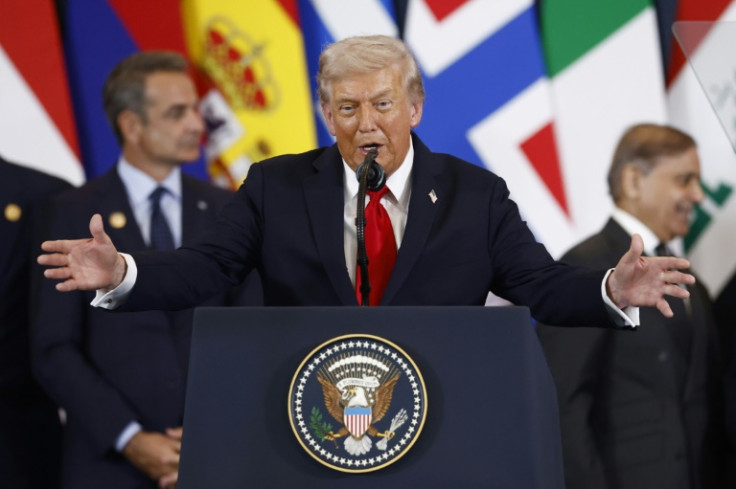
"Our objective is to defend the American people by eliminating imminent threats from the Iranian regime, a vicious group of very hard, terrible people," Trump said in the eight-minute video, filmed behind a podium in a navy suit and "USA" baseball cap. He accused Iran of decades of attacks on U.S. forces and allies, continuing nuclear development and plans for long-range missiles capable of reaching America. Trump warned of potential American casualties but emphasized the operation's necessity, dubbing it "Operation Epic Fury."
Addressing Iranians directly, Trump urged, "The hour of your freedom is at hand. When we are finished, take over your government. It will be yours to take. This will be probably your only chance for generations." He called on Iran's military to lay down arms and civilians to stay sheltered during the strikes, framing the action as liberation from a "radical dictatorship."
The strikes began around dawn Tehran time, with explosions reported in the capital and other cities including Isfahan, Qom, Kermanshah and Karaj. Targets included Supreme Leader Ayatollah Ali Khamenei's compound, President Masoud Pezeshkian's residence, IRGC headquarters and nuclear sites. Israeli Defense Minister Israel Katz confirmed the "pre-emptive attack" was the result of months of joint planning, aimed at removing an "existential threat."
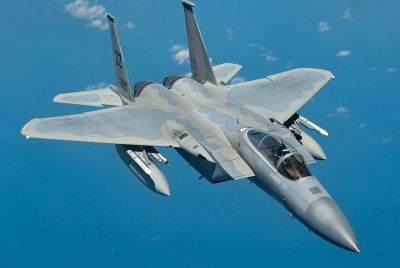
A senior U.S. official, speaking anonymously, told reporters the operation involved over 500 aircraft, including carrier-based jets and long-range bombers, and could last several days with multiple waves. The assault followed stalled nuclear negotiations and Iran's violent crackdown on domestic protests, which reportedly killed thousands.
Iranian state media reported blasts near an elementary school, claiming civilian deaths, though verification was limited amid power outages and communication blackouts. Military spokesman Amir Hatami condemned the "barbaric aggression" and promised a "crushing" response. The IRGC launched a "first wave" of missiles and drones targeting Tel Aviv, northern Israel and U.S. bases in Iraq, Syria, the UAE, Bahrain, Qatar, Kuwait and Saudi Arabia. One civilian was killed in Abu Dhabi from debris, and a man in his 50s was injured by shrapnel in Israel.
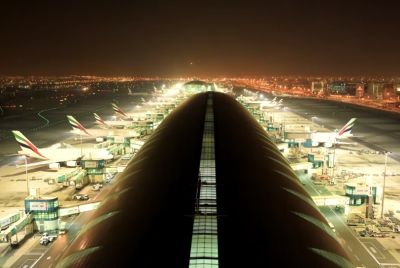
Airspaces across the region closed, grounding civilian flights and disrupting global travel. Airlines like IndiGo and British Airways suspended Middle East routes. Gulf states issued emergency alerts, with the UAE condemning the attacks and reserving response rights.
International reactions poured in. Russia and China denounced the strikes as "illegal aggression," calling for a U.N. Security Council emergency meeting. European leaders urged restraint, while U.N. Secretary-General Antonio Guterres expressed deep concern. In the U.S., congressional leaders were briefed, with bipartisan support emerging but calls for caution to avoid wider war.
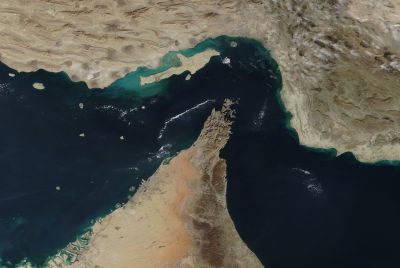
Oil prices surged over 15% on fears of Strait of Hormuz disruptions, with Brent and WTI climbing sharply. Global stocks fell, and defense shares rose amid uncertainty.
Humanitarian groups warned of civilian risks in densely populated areas. Amnesty International demanded protections, while the exiled Iranian crown prince urged protests.
Social media captured mixed sentiments, with some Iranians celebrating potential change and others decrying foreign intervention. Analysts like Aaron David Miller predicted a potential full-scale war if regime-change ambitions persist.
The operation's scope remains fluid, with Trump and Netanyahu planning further updates. As IRGC mobilizes, the Middle East braces for escalation with global ramifications.
© Copyright 2026 IBTimes AU. All rights reserved.
- MOST POPULAR IN Politics & Policy