

Treasury Secretary Bessent Says Plan to Put Harriet Tubman on the $20 Bill Is Now Indefinitely on Hold
Treasury Secretary confirms the decision, marking another setback for the decade-old proposal.
WASHINGTON — The Trump administration is no longer moving forward with a decade-old plan to place abolitionist Harriet Tubman on the $20 bill, Treasury Secretary Scott Bessent confirmed in an interview with Spectrum News, marking the latest reversal in a proposal that has repeatedly stalled across three presidential administrations.
Asked directly whether Treasury was still planning to proceed with putting Tubman on the bill, Bessent said, "We are not at present." He did not elaborate further, and a Treasury spokesperson declined to comment beyond Bessent's remark, according to Reuters.
The push to feature Tubman on the $20 bill dates back to 2016, when the Obama administration announced that she would replace seventh U.S. President Andrew Jackson on the note. Then-Treasury Secretary Jacob Lew said at the time that the decision followed thousands of responses submitted by members of the public as part of a broader public engagement process on currency redesign. Had the change been implemented, Tubman, who was born into slavery in the early 1820s and went on to help hundreds of enslaved people escape to freedom, would have become the first African American to appear on the face of U.S. paper currency.
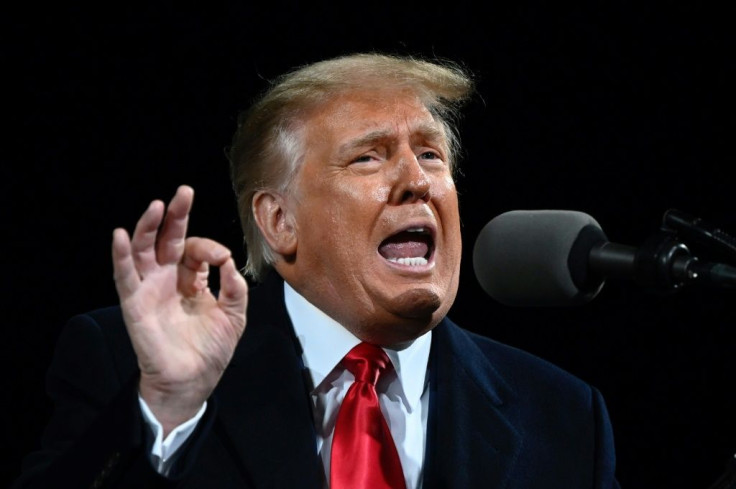
The plan has faced repeated delays since its initial announcement. During his first presidential campaign, Donald Trump criticized the proposal to replace Jackson with Tubman, calling it "pure political correctness" and suggesting she instead be featured on the $2 bill or another denomination. No progress was made on the redesign during Trump's first term in office. In 2019, then-Treasury Secretary Steven Mnuchin said the release of a redesigned bill featuring Tubman would be delayed until at least 2028, citing the need to first incorporate new anti-counterfeiting technology into other denominations.
The project saw renewed momentum after President Joe Biden took office in 2021. Then-White House press secretary Jen Psaki said at the time that the Treasury Department was "taking steps to resume efforts to put Harriet Tubman on the front of the new $20 notes," adding that the department was exploring ways to speed up the process. Biden's Treasury secretary, Janet Yellen, later revived the project but estimated in a 2022 interview that the redesigned currency would not be ready until 2030, citing the technical complexity of developing sophisticated anti-counterfeiting features for the new bill. Rep. Joyce Beatty, an Ohio Democrat, also introduced legislation aimed at requiring Tubman's image on the $20 bill by 2025, though that bill was never passed into law.
Questions about the project's status resurfaced in May 2025, when Bessent was asked directly by Beatty, in what multiple outlets described as a tense exchange, whether he could provide an update on where the Tubman redesign stood. "I can't, my staff will get back to you," Bessent responded at the time, according to reporting on the exchange.
Bessent's more definitive comments this week have drawn criticism from some lawmakers who have long supported the project. Sen. Jeanne Shaheen, a New Hampshire Democrat who has introduced legislation supporting the Tubman redesign since 2015, said in a statement that she was "extremely disappointed to hear that Secretary Bessent has halted plans to put Harriet Tubman's likeness on the $20 bill." Shaheen argued that commemorating Tubman would have been a fitting way to honor women's contributions to the country's history, adding, "Though Secretary Bessent may be more interested in illegally plastering Donald Trump's image on a $250 bill, putting a woman on a U.S. bill remains long overdue, and I will keep focusing on finding a path to honor Harriet Tubman's patriotism and sacrifice."
Shaheen's comment referenced a separate, ongoing effort by some officials within the current administration to introduce a new $250 bill featuring Trump's portrait, intended to mark the 250th anniversary of U.S. independence. When asked by Spectrum News why the Treasury Department appeared willing to move forward with preparations for a new $250 note featuring Trump while declining to advance the Tubman $20 redesign, Bessent drew a distinction between the two efforts based on the legal process required for each. "The 250 requires an act of Congress, because you can't have a living person [on U.S. currency], and it was to commit [sic] — for the 250th anniversary," Bessent said. He added, "For us to change an existing bill, whether it's $1 through $100, takes many years in advance."
No new individual has appeared on U.S. paper currency since 1928, when the current standardized designs for U.S. bills were largely established. Any currency redesign, including the proposed Tubman $20, has historically required years of technical development, particularly around anti-counterfeiting features, before a new design can enter circulation, a process cited by officials across multiple administrations as a primary factor behind the project's repeated delays.
It remains unclear whether President Trump personally directed Treasury to formally halt the Tubman redesign effort, or whether Bessent's comments reflect a broader administrative decision made independently within the department. Spectrum News reported that it had reached out to the White House for clarification on whether the president had specifically instructed Treasury to stop work on the project, though no response had been publicly reported as of this article.
The Tubman $20 bill has remained a recurring point of political debate since it was first proposed nearly a decade ago, reflecting broader disagreements over how U.S. currency should reflect the country's history and diversity. Supporters of the redesign, including Shaheen and Beatty, have continued to push for legislative or administrative action to revive the project, while the current administration has signaled no timeline for reconsidering the decision. With Bessent's comments this week marking the clearest indication yet that the redesign is not actively moving forward, the future of the proposal remains uncertain, and no new date or process for its potential reconsideration has been announced by the Treasury Department.
© Copyright 2026 IBTimes AU. All rights reserved.