Author Says Princess Diana Was Royal Family's Biggest Changemaker, Ahead of Kate Middleton and Meghan
New Biography Explores Diana's Lasting Impact Compared to Kate Middleton and Meghan Markle

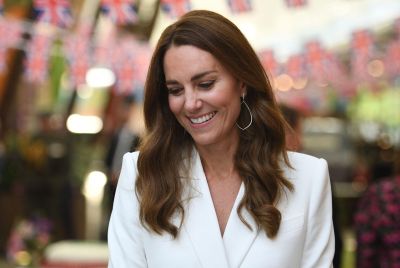
A new biography set for release this week argues that Princess Diana had a greater lasting impact on the British royal family than either Kate Middleton or Meghan Markle, the two women who followed her into marriages with future kings of England.
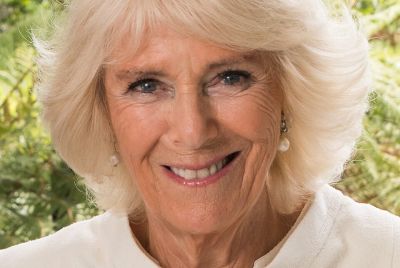
The book, "The Four Wives of Windsor," by biographer Simon Vigar, examines the influence of four women who married into the royal family: Diana, Queen Camilla, Middleton and Markle. It is scheduled for release on July 30, a date the publisher noted falls 45 years after Diana's 1981 wedding to then-Prince Charles.
In an interview with People magazine, Vigar said Diana stood apart from the other three women both in her background and in the scale of the change she brought to royal life. "Diana had a sense of destiny about her," Vigar said. "The only aristocrat of the four women, she knew a lot about it. She grew up [at Park House] on the Sandringham estate and knew the royals, and her big sister went out with Charles. But she is the biggest changemaker."
Diana grew up on the royal family's own Sandringham estate in Norfolk, England, where her father held the title of Earl Spencer, giving her an insider's familiarity with royal life well before her engagement to Charles was announced. Her elder sister, Sarah Spencer, had previously dated Charles before Diana herself became romantically involved with him.
According to Vigar, Diana's most significant contribution was reshaping how the royal family presented itself to the public, moving away from the reserved formality that had defined the institution for generations. "She made the royal family more relatable and more touchy-feely," Vigar said. "Subjectively, she brought star power."
The biographer also pointed to the way Diana raised her two sons, Princes William and Harry, as a defining part of her legacy, describing her parenting approach as a departure from the more formal, distant styles favored by previous generations of royal parents. Vigar said this shift in child-rearing philosophy within the family can still be traced through decisions made by the family in the years since Diana's death.
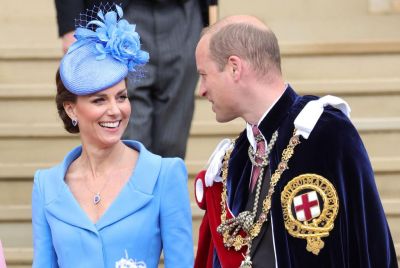
One example Vigar cited was Diana's decision that William should attend Eton College, the elite boarding school her own father and brother had attended. According to Vigar, Charles initially opposed sending William there but eventually agreed. "William had a good time there," Vigar said. "It ticked so many boxes for William and Catherine. In the age of the smartphone, it is probably better to be at an all-boys school rather than a co-ed one."
Vigar said the full extent of Diana's influence on the institution was not always understood by those working within the royal household at the time. He cited an unnamed source who had worked at Kensington Palace as saying the royal family struggled to fully grasp the scale of Diana's impact while she was alive. Vigar noted that unlike other senior royals, Diana never employed a dedicated press team, something he said reflected both her natural rapport with the public and the unconventional nature of her relationship with the media compared with other royals of her generation.
The book also examines how Diana's sudden death in a Paris car crash in August 1997 reshaped public mourning traditions surrounding the royal family, according to Vigar. He pointed to the ongoing practice of flying the Union Flag at half-mast over Buckingham Palace following a royal death, a tradition that began only after the public reaction to Diana's death, as a lasting physical marker of her influence. "There is a daily physical reminder of Diana because of the Union Flag over Buckingham Palace which only exists now because of what happened in the week after her death," Vigar said. "I call it Diana's flag because without all that anger and shock and distress, that Union Jack wouldn't be there today."
Prior to Diana's death, the royal family had faced criticism for what many viewed as an insufficiently public response to her passing, prompting the institution to reconsider its approach to displaying grief and connecting with public sentiment during moments of national mourning. Royal commentators have long pointed to that episode as a turning point in how the monarchy manages its public image during moments of crisis.
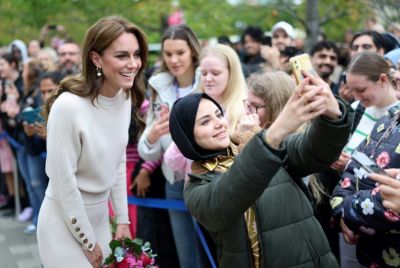
Vigar's book arrives amid continued public interest in comparisons between the royal family's more recent additions by marriage, Middleton and Markle, and their late mother-in-law, whose influence on both William and Harry has remained a recurring subject in royal commentary in the decades since her death. While Middleton, now the Princess of Wales, and Markle, the Duchess of Sussex, have each carved out distinct public roles within and outside the royal family, Vigar's book argues that neither has matched the scale of institutional change Diana brought during her relatively brief time as a working member of the family.
"The Four Wives of Windsor" is being published to coincide with the 45th anniversary of Diana's wedding, a milestone that has prompted renewed media attention on her legacy and its continued influence on the modern monarchy, more than a quarter-century after her death.
© Copyright 2026 IBTimes AU. All rights reserved.
- Recommended For You