Trump Confirms Rare US-Japan Joint Intervention to Prop Up the Yen After Its Slide to a 40-Year Low Point
Coordinated Effort Aims to Stabilise Yen Amid Global Economic Pressures

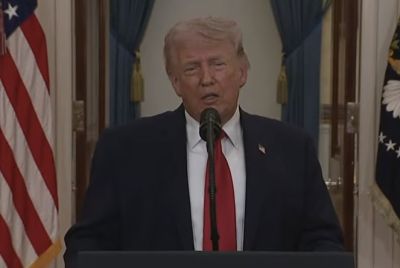
President Donald Trump confirmed Sunday that the United States had joined Japan in a rare, coordinated intervention to support the Japanese yen, describing the move as a "signal of friendship" after the currency slid to its weakest level in roughly 40 years.
The Financial Times first reported Friday that the U.S. Treasury had jointly intervened with Japan to prop up the yen, marking what the report described as the first coordinated U.S.-Japan currency intervention since 1998. Speaking to reporters aboard Air Force One on Sunday, Trump explained the rationale behind Washington's involvement. "Because we have a good relationship with Japan," Trump said, when asked why the United States moved to support Japan's currency. He went on to characterize the broader benefits of the intervention. "We're very strong — very very strong financially. They are, you know, they have a weakening yen, and they wanted a little bit of help. And we're always there for Japan," Trump said, adding that the U.S. would see "financial benefit" from the move and that "it's also good for the world economy," though he emphasized that "it was really more than anything else, it was a signal of friendship."
Japan's Ministry of Finance confirmed the joint intervention in its own statement following Trump's remarks, describing the action as necessary to address disorderly currency movements. The ministry said the yen-buying intervention with the U.S. Treasury Department "countered excessive volatility and disorderly movements in the Japanese yen in recent months," adding that "the Japanese Ministry of Finance remains attentive and in close communication with our counterparts at the U.S. Treasury."
U.S. Treasury Secretary Scott Bessent reinforced that message in a separate statement posted to X on Sunday, signaling that further coordinated action remains on the table if needed. "We will not hesitate to participate in further joint intervention," Bessent said.
The intervention came after the yen slid to 163.24 per dollar last month, its weakest level since 1986, driven by a combination of higher U.S. interest rates, rising oil prices tied to the ongoing Middle East conflict, and persistent capital outflows from Japan. The currency's rapid weakening had pushed up import costs across Japan and stoked broader inflationary pressure, squeezing household budgets and weighing on the approval ratings of Japanese Prime Minister Sanae Takaichi.
Washington's confirmed involvement followed a sharp rebound in the yen the previous week, a move that had already fueled speculation that Japanese authorities were separately intervening in currency markets even before the U.S. role became public. Analysts cited by the Financial Times estimated that Japan's own intervention may have totaled approximately 8.45 trillion yen, or roughly $52.8 billion, while the Japanese business daily Nikkei put the figure somewhat lower, in a range between 6 trillion and 7 trillion yen.
Following Trump's remarks Sunday, the dollar fell 0.2% to 157.07 yen, a significant retreat from the roughly 164-yen level the currency pair had touched late the previous month, before rebounding back to 157.70 yen after Japan's Finance Ministry issued its own confirming statement.
Analysts said the coordinated intervention reflects shared concern in both Washington and Tokyo about the broader risk of financial market spillovers stemming from a disorderly yen sell-off, including pressure on Japanese government bond markets and on already elevated U.S. Treasury yields. A weakening yen has historically been linked to disruptions extending well beyond Japan's own borders, given the currency's role in global carry trade strategies, in which investors borrow in low-yielding yen to fund investments in higher-yielding assets elsewhere; a rapid yen appreciation, of the kind triggered by coordinated intervention, can force a sudden unwinding of those trades and ripple through global markets more broadly.
The intervention's immediate market effects extended beyond currency trading. The rapid appreciation of the yen weighed directly on Japanese equities, with the Nikkei share average tumbling and reversing course from a one-week high the index had reached in the prior trading session, illustrating the tension currency intervention can create between stabilizing a weakening currency and supporting a country's stock market, given that a stronger yen tends to squeeze the profits of Japan's many export-dependent companies.
Japan has struggled for an extended period to manage the yen's persistent weakness, a challenge that intensified earlier this year amid the broader Middle East conflict and its effect on global oil prices. The country's currency had previously threaded similarly weak levels around 160 yen per dollar in April, a threshold last breached in July 2024, when Tokyo had previously intervened unilaterally to support the currency without direct U.S. participation.
With both governments now signaling readiness to take further coordinated action if the yen resumes its slide, currency traders and economists are expected to watch closely in the coming weeks for any additional signs of intervention, particularly given the currency's continued sensitivity to shifts in U.S. interest rate policy, global oil prices tied to the ongoing Middle East conflict, and the broader flow of capital in and out of Japanese assets.
© Copyright 2026 IBTimes AU. All rights reserved.
- Recommended For You